
London · Guide for make-up artists and photographers
“A make-up portfolio is judged at arm's length and at 200%. Shoot for both.”
A makeup artist portfolio shoot has a different job from a campaign. The client wants a product sold; the make-up artist needs proof of skill that an agency, a brand or a bride can read in ten seconds on a phone, then zoom into. That means texture close-ups, the work in progress, the profile and the finished face, lit so the make-up reads as it really is. This guide is for make-up artists and photographers planning a shoot together, with frames from beauty shoots in Dubai and London as worked examples.
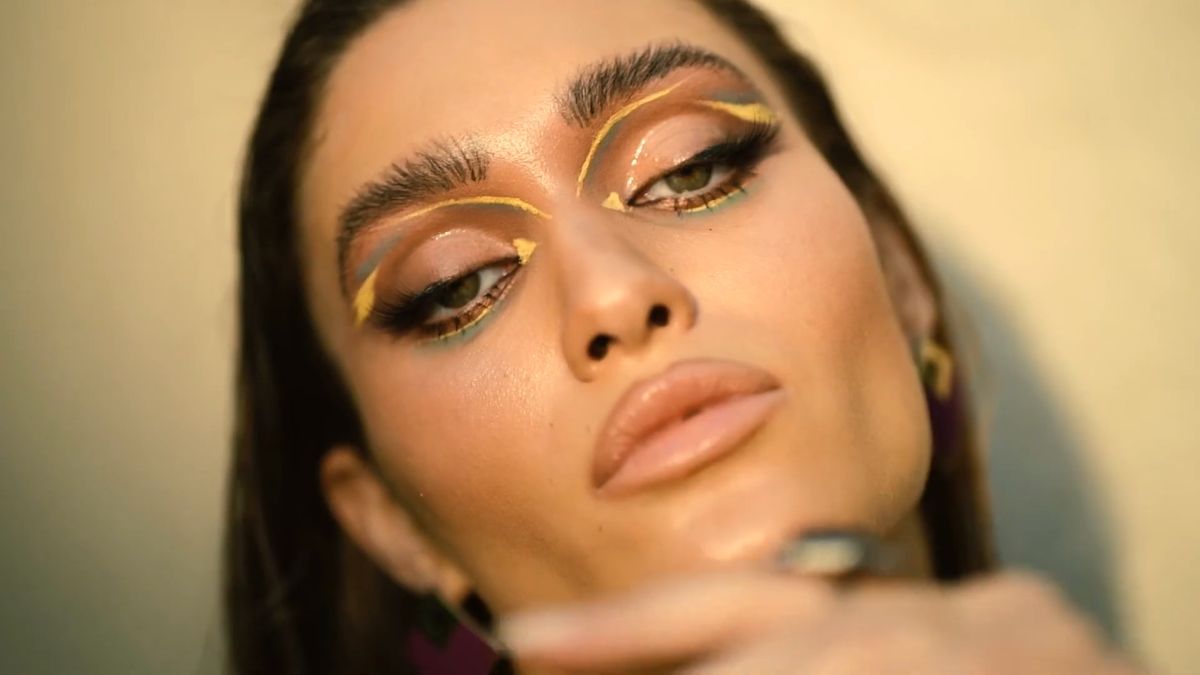
Graphic gold liner by Ido Raphael · Beauty shoot with Philipp Jelenska, Dubai
01 · The brief
Agree what the pictures are for before anyone books a studio
Most collaborations between a make-up artist and a photographer go wrong in the same place: each person wants a different picture. The photographer wants a mood, a location and a strong silhouette. The make-up artist needs the face big enough in the frame for the work to be judged. Both are fair, so write them down before the day and split the time.
| Who it's for | What they look for | What to shoot |
|---|---|---|
| Beauty brands and agencies | Clean skin, precise lines, colour that matches the product | Tight close-ups, product in hand, even light |
| Editorial and fashion teams | Ideas: graphic liner, colour, texture, a point of view | Stronger light, profile, full face and some styling |
| Bridal and private clients | Skin that looks like skin, longevity, flattering light | Soft light, natural angles, a before and after shot honestly |
| Social channels | The process, not just the result | Vertical video of the application, hands and brushes |
Pick one or two of these per shoot. A test that tries to serve all four ends up with a dozen mid shots that serve none. If a model comes from an agency, the test structure in the model test shoot guide applies too: the agency will want their own frames, so plan time for them.
02 · The shot list
The five shots every make-up portfolio needs


Application frames from the Charlotte Tilbury Eid campaign shoot in Dubai, make-up by Ido Raphael: concealer, then a winged liner over a shimmer lid.
Texture close-up
Eye, lip or cheek filling the frame, sharp enough to see the blend. This is the shot other artists and brands zoom into, so focus has to be on the work, not the lashes in front of it.
Application
A brush, sponge or liner on the face, mid-stroke. It proves the work is yours and it's the frame that makes social video worth watching.
Profile
Contour, highlight and the line of a wing only make sense from the side. Every look needs at least one clean profile.
Full face, straight on
Even light, eyes open, neutral expression. Symmetry, brows and base are judged here, and it's the frame an agency prints.
The look in context
Hair, wardrobe and a setting. It shows the make-up works as part of an image, not just on a face chart.
On the Charlotte Tilbury Eid shoot, the behind-the-scenes film covers almost exactly this list: concealer and highlighter going on, the liner, the lip, then the finished face on the starry set. The make-up station and the set build are covered in the Charlotte Tilbury billboard case study.
03 · Light
Light that shows the make-up as it is
Make-up is colour and texture, and both change with light. A warm sunset can make a nude lip look peach; a hard, small source shows every edge of a blend. Neither is wrong, but the make-up artist should know which one the portfolio is getting.
1. Start with a soft key from the front. A large softbox or beauty dish near the lens axis gives even skin and true colour. Shoot the full face and the close-ups here first.
2. Then add character. Side light, low sun or a hard source for the editorial frames. The graphic gold liner above was filmed in low, warm sun against a cream fabric backdrop, which makes gloss and metallics shine.
3. Fix white balance and keep it. Shoot a grey card at the start of each set-up so foundation shades can be matched later. A base that looks right on set and orange in the edit costs the artist credibility.
4. Watch shine. Glow is a look; shine is a mistake. Check the forehead and nose on the tether screen or monitor, not by eye, and let the make-up artist blot between frames.
5. Turn the face, not the light. Small turns of the head move highlights onto the cheekbone or off the nose without resetting stands.

A profile in low side light: the cheekbone, the brow and the skin finish read in one frame. Beauty shoot in Dubai with art direction by Philipp Jelenska.
That shoot, filmed by a pool in Dubai with make-up by Ido Raphael and hair by Dani, used a deliberately minimal kit and the sun. How the golden light and the water were used is in the Your Water Form case study.
04 · Film the process
Shoot the application on video, not just the result


Elinaz at work on the Waterproof shoot, Dubai · highlighter on the Charlotte Tilbury set
Clients book make-up artists on their Instagram as much as their book, and the process is what people watch. Plan the video alongside the stills rather than grabbing it on a phone between frames.
A wide by the window
One establishing shot of the artist, the chair and the light. On Waterproof, the opening frames show the make-up artist working by a window with the city behind.
Macro on the strokes
A tight lens on the brush or applicator, with the face filling the frame. Slow movement, the same white balance as the stills.
Give the artist a line
In the Waterproof behind-the-scenes, short captions explain the choices: the lip product, that it doesn't transfer, and that the hair goes flat to the skull "so the mouth is the only bold thing". That's the artist's thinking, on screen.
Vertical first
Frame the application for 9:16 and keep hands inside the frame. The vertical-first guide covers shooting both shapes at once.
The Waterproof project description is a useful brief in itself: "One red lip. Water on the skin. Nothing retouched into existence." One idea, one product, and a make-up artist whose work is visible in every shot.
05 · Behind the scenes
Show the artist at work, the way Ido Raphael's film does

At the mirror station · from "Ido Raphael in Dubai", a behind-the-scenes film shot handheld on a Sony A7S III
Make-up artist Ido Raphael did the make-up on several of the Dubai shoots on this site: the Charlotte Tilbury Eid campaign, Your Water Form, the beauty shoot with Philipp Jelenska and the L'Officiel Baltic film at Palazzo Versace. A separate film from 2021 follows him around Dubai, from the airport to a Vogue Arabia day, and it works as a template for an artist's own content: the arrival, the kit, the mirror station, the team, and the finished face being checked.

The finished look captured on a phone under an LED panel, on the same day
Notice the phone in the frame above. On a real job, the artist's own phone shot is often the first picture of the look that goes online. If you're the photographer, leave a minute for it; if you're the make-up artist, light it properly with a small panel rather than the ceiling lights.
06 · Credits and usage
Credits, retouching and who can use the pictures
Credit every role. The published credits on these shoots list the make-up artist, hair, photographer, video, model and agency separately. Agree the handles before the shoot and post them the same way everywhere.
Retouch the skin, not the make-up. A portfolio that has been smoothed until the blend disappears tells a client nothing. Keep texture, as the beauty retouching guide explains, and keep an unretouched close-up for anyone who asks.
Product work is advertising. If the pictures are later used to sell a cosmetic, the UK Advertising Standards Authority has ruled that filters which exaggerate what a product does are misleading. Shoot the product claims honestly from the start.
Write down usage. A collaborative test is usually for portfolio and social use by everyone credited. Selling the images to a brand, or using the model in an ad, needs a separate agreement and a release. See model release forms and usage rights.
Deliver in both shapes. High resolution stills for the book and print, plus vertical crops and short clips for social.
Source: ASA, the mis-use of social media beauty filters when advertising cosmetic products (February 2021).
Watch
Make-up on camera
 Charlotte Tilbury Eid campaign shoot
 Waterproof: one red lip
 Kelly Rutherford x Code8, behind the scenes
 Beauty retouch in five steps

More guides
Keep reading
FAQ
Common questions
What photos should a makeup artist have in their portfolio?
A texture close-up of the eye or lip, an application shot, a clean profile, a straight-on full face in even light, and the look in context with hair and styling. Add short vertical videos of the application for social.
What lighting is best for makeup photography?
Start with a large soft source near the lens for true colour and even skin, then add side light or low sun for editorial frames. Shoot a grey card for each set-up so foundation shades can be matched.
How do makeup artists and photographers collaborate on a test shoot?
Agree what each person needs from the day, split the time, share a mood board and shot list, agree credits and usage in writing, and deliver both stills and vertical clips to everyone credited.
Should makeup portfolio photos be retouched?
Lightly. Remove temporary marks and stray hairs but keep skin texture and the blend visible. If the images later advertise a cosmetic, retouching must not exaggerate what the product does.
Written by Joshua Swain, who films and photographs beauty and fashion with make-up artists in London and Dubai. See the Charlotte Tilbury Eid campaign.