
London · Guide for photographers, filmmakers and brands
“Two cameras can share a set. They can't share the same minute.”
More briefs now ask for a photographer and videographer on the same shoot: campaign stills and a film, from one set, one team and one day. It works when the light suits both, the day is split into clear blocks and everyone knows who is leading at any moment. Here's how to plan stills and video on one shoot, with real examples from Charlotte Tilbury, 111SKIN, Celine and a beauty editorial called Waterproof.
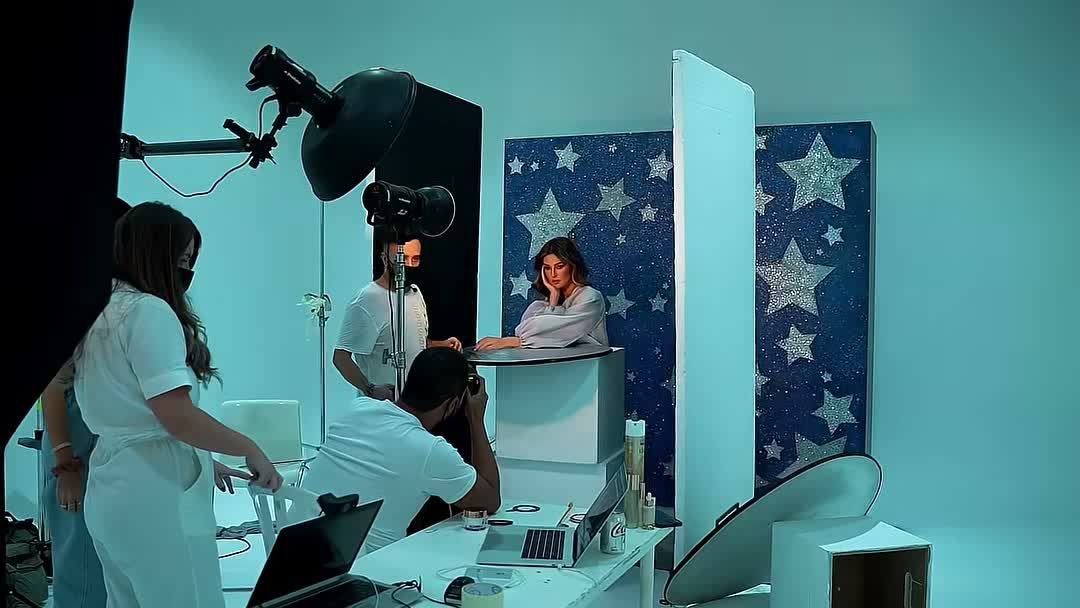
Stills block on the Charlotte Tilbury Eid set: strobes, the photographer, the tether desk
01 · The set-up
Two leads or one hybrid shooter
There are two ways to run a hybrid photo and video production. Either a photographer and a cinematographer each own their output, or one person shoots both. Both models are in the work below, and each suits a different brief.
| Project | Stills | Film | What it shows |
|---|---|---|---|
| Charlotte Tilbury Eid, Dubai | Photographer @moezachour2, under strobes, tethered | SwainUK, on the same set | A billboard brief, where stills lead |
| 111SKIN, London | Charl Marais, also art director on the gold-leaf film | SwainUK as cinematographer | The photographer sets the look, the film adds motion |
| Celine Winter '22, Dubai | Esrasam, photographer and editor | SwainUK, Sony FX3 and 85mm handheld | Two Aputure 300D lights shared by both |
| Waterproof, Dubai | SwainUK | SwainUK | One shooter, a team of three, one day |
Two leads is the safer choice when the stills carry the money: a billboard, print or a big e-commerce set. One hybrid shooter works when the team is small and the look is simple, and it keeps the stills and the film in one eye. What doesn't work is one person trying to shoot stills and film at the same time. Pick one camera per block.
02 · The light
Strobe or continuous light for stills and video
This is the first decision, because it shapes the whole day. Strobes are brighter and freeze movement, but a flash can't light video. Continuous light shows you exactly what you'll get and works for both cameras, but it's less powerful, so the photographer may need a higher ISO or a slower shutter.


A continuous set for Code8's Day to Night Foundation, London: softbox, flags and a silver reflector table
Strobes, then LED
On the Charlotte Tilbury set the stills were shot under strobes and checked on a tethered laptop, and the films were shot on the same set. Plan to swap or add continuous sources in the same positions so the film matches the stills.
Continuous for both
On Celine, two Aputure 300D lights with double diffusion lit the set, and the same set-up served Esrasam's stills and the film. No relighting between blocks.
Shutter for film
Video usually wants a shutter about double the frame rate, the 180-degree rule: 1/50 at 24 or 25fps. Stills can go faster, which is why a photographer under LEDs often wants more light than the film does.
Test for flicker
In the UK the mains runs at 50Hz, so some lights flicker on camera unless the shutter is 1/50 or 1/100. The Code8 monitor in the behind-the-scenes clip reads 1/100 at 24p, a safe combination for 50Hz. Test every light at the start of the day.
Sources: Shotkit, strobe vs continuous lighting · StudioBinder, the 180-degree shutter rule · Nikon manual, video flicker reduction and 50Hz/60Hz.
03 · The schedule
Plan the day in blocks

Make-up by Elinaz before the first frames on Waterproof, Dubai
Make-up, hair and product look their best for a limited time, so the block order matters more than the total hours. Waterproof was shot in one day in a private residence in Downtown Dubai, and the timetable shows the logic: get the clean, dry look first, and leave anything that can't be undone until last.
| Time | Waterproof, the real running order |
|---|---|
| 10:00 | Arrive, hair starts |
| 11:00 | Make-up |
| 12:30 | First frames, dry |
| 14:00 | Second look |
| 15:00 | Water on the skin |
| 16:00 | Wrap |
Inside each look, decide which camera goes first. A sensible default:
1. Hero stills first when there's a billboard, print or key visual. On a billboard day like Charlotte Tilbury's, frames are checked on the tether while the make-up is at its best.
2. Motion straight after, in the same light positions, before anyone changes the hair or the set.
3. Details and product moves next: hands, textures, a lipstick turned to camera. Both cameras can take turns here.
4. Anything messy last: water, oil, gold leaf, glitter. On Waterproof, water went on the skin at 15:00, one hour before wrap.
5. Behind the scenes throughout, from the side of the set, never in the photographer's line.
For a whole month of content from one day, the batch content shoot guide uses the same block logic at a larger scale.
04 · Who leads
One reference board, one voice to the talent

A reference print taped to the wall on the Waterproof set
A campaign looks like one piece of work when the stills and the film come from the same references. Waterproof was planned on a shared board with six frames, a team brief for hair and make-up and a timed running order, and a printed reference was on the wall on the day. For 111SKIN, Charl Marais was credited as photographer and as art director on Story of the Gold Leaf, a common split: the photographer or art director leads the look, and the cinematographer makes it move.
One board for both
Don't make a stills board and a film board. Make one, with the film moments marked on it.
One voice at a time
The talent takes direction from whoever owns the block. Two people calling poses at once slows everything down.
Stay behind the stills camera
During the stills block, the video camera works from behind or beside the photographer, so the eyeline stays on the lens that matters.
A shared screen
A tethered laptop for stills and a monitor for film let the client approve once, not twice.
The same rules apply to filming behind the scenes on a stills set; the behind-the-scenes video guide covers where to stand.
05 · Crew
Who you need on a hybrid shoot
| Role | Two-lead shoot | One hybrid shooter |
|---|---|---|
| Photographer | Owns the stills and usually the look | One person, switching cameras by block |
| Cinematographer | Owns the film, light for motion and behind the scenes | |
| Assistant or digital tech | Runs the tether, moves lights between blocks | Worth adding as soon as there's a client on set |
| Make-up and hair | Touch-ups between every block | Same: on Waterproof, make-up by Elinaz and hair by Dani |
| Producer | Keeps time and the shot list | Often the shooter, so the running order must be written down |
On a London shoot, add the location and permit questions early; the London commercial shoot guide has a brief template that covers both stills and film.
06 · Deliverables
What a stills and video shoot should deliver

111SKIN, London: a film frame from a project where Charl Marais is credited as photographer
Write the deliverables list before the shot list, because it decides how both cameras frame. Waterproof was delivered as retouched stills and a film colour-matched to the photographs, which is the standard to aim for: one grade, one campaign.
Stills: the hero frames retouched at full size, plus 4:5 and 9:16 crops for social. Billboard work needs space for copy, agreed before the day.
Film: a hero edit in 16:9 and 9:16, and short cut-downs. Frame with room on each side so the vertical works; see shooting vertical-first.
Colour: grade the film to the approved stills, not the other way round.
Behind the scenes: a vertical piece for the brand's channels.
Usage: licence the stills and the film separately, with media, territory and term for each. The usage rights guide explains the terms.

Celine Winter '22, Dubai: a film frame from the set Esrasam photographed
One word on frame grabs: stills pulled from video are useful for social, but they are shot at a film shutter, so anything moving carries motion blur. If the brief needs print or billboard stills, book a stills block. The Celine lighting case study shows how a small continuous set can serve both.
Watch
Stills and film from one set
 Charlotte Tilbury billboard shoot: BTS
 Waterproof project
 Celine Winter '22 "Dans Paris"
 Kelly Rutherford x Code8: BTS

More guides
Keep reading
FAQ
Common questions
Can a photographer and videographer work on the same shoot?
Yes, if the day is planned in blocks. Each block has one lead camera, the other camera works from behind or beside it, and both work from the same reference board and light plan.
Should I use strobes or continuous light for a photo and video shoot?
Strobes give stills more power and freeze movement, but they can't light video. Continuous LED light works for both cameras. Many shoots use strobes for the hero stills, then continuous light in the same positions for the film.
Can one person shoot both photos and video?
Yes, on smaller shoots with a simple look, as long as stills and film are shot in separate blocks rather than at the same time. Add an assistant once a client is on set.
Can you take stills from video instead of booking a photographer?
Frame grabs work for social, but they carry the motion blur of a film shutter. For print, billboards or e-commerce, book a proper stills block.
Written by Joshua Swain, who shoots stills and films beauty, fashion and commercial campaigns in London and Dubai. See the Charlotte Tilbury Eid project.