
London · Guide for sports brands, sponsors and filmmakers
“The match happens once. The brand needs content from it for months.”
Sports brand content production sits between live sport and advertising. The action is fast and can't be repeated, the athletes have little time, and every logo in the frame belongs to someone. Here is how to plan, film and deliver content for sponsors, kit brands and clubs, with three worked examples: IBV Gold's team at Polo in the Park, an aerial for Reebok x Charlton Athletic, and the KickOff football board game.
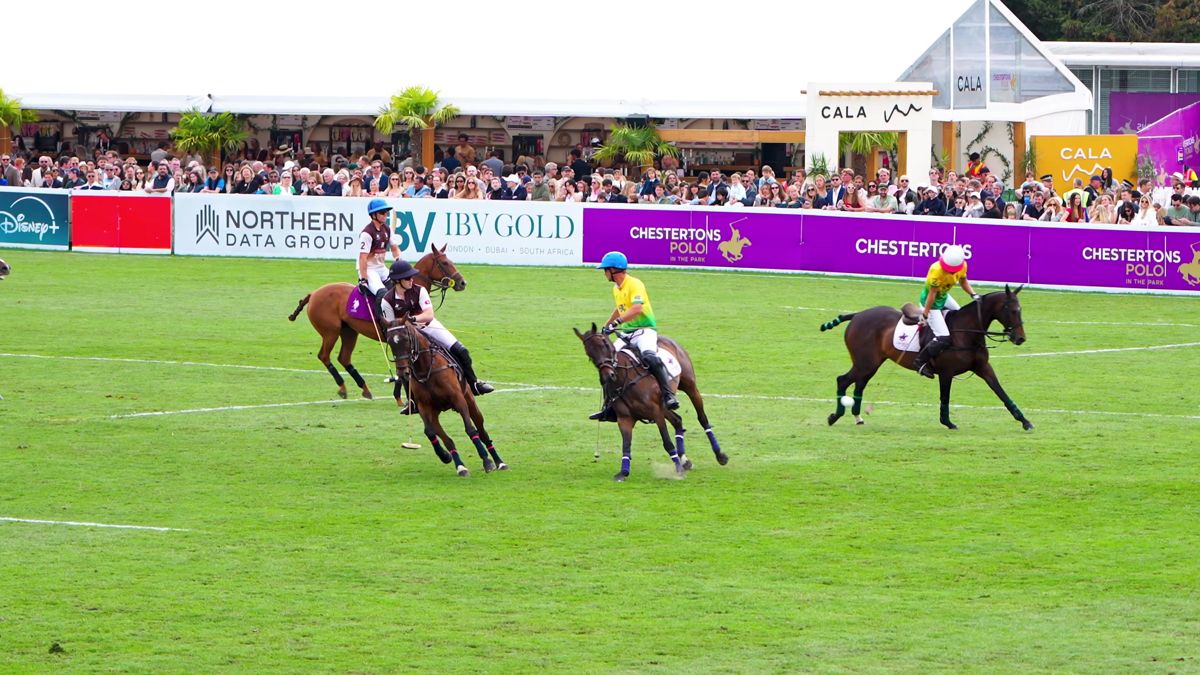
Team Cape Town in play, IBV Gold on the boards · Polo in the Park, London
01 · The brief
Who is paying, and what they need from the footage
"Sports content" covers very different jobs. A sponsor wants its name seen at an event it paid to be part of. A kit brand wants its product on athletes in motion. A club wants to feed its fans every week. A product with a sports theme, like a football game, wants the feeling of the sport without a stadium. Start by naming which one you are, because it decides where the camera stands.
| Client | What the footage must do | Where the camera goes |
|---|---|---|
| Event sponsor | Show the name in context, the team and the guests | Pitchside near the boards, hospitality, players' area |
| Kit or sportswear brand | Show the product moving, close enough to read | Long lens on the athlete, slow motion, tight details |
| Club or team | Feed the fans: the ground, the players, the moments | Everywhere, plus aerials of the ground |
| Sports-themed product | Borrow the emotion of the sport | Wherever the product is used, often a living room |
For an event sponsor the brief has its own detail: who to film, which passes you need, how fast the edits go out. The Polo in the Park case study covers that side in full. This guide is about the parts every sports job shares.
02 · Fast action
Filming sport you can't ask to repeat

A Team Cape Town rider at full gallop, filmed for IBV Gold at Polo in the Park
A commercial lets you do another take. A match doesn't. Polo is a good test: at Chestertons Polo in the Park, at Hurlingham Park in Fulham, the city teams play a shorter, faster game on a smaller pitch, and the horses cross it in seconds. The answer is position and patience, not chasing.
Follow your team, not the ball
Learn the client's colours and stay on the side where they attack. You will miss plays. That's fine if you never miss your team's best ones.
Long lens from the edge
A telephoto from the boards compresses the action and isolates one player from the crowd. It also keeps you out of the field of play.
Slow motion on the peak
The strike, the turn, the tackle. Shoot those moments at a high frame rate and the edit gets room to breathe between the fast cuts.
Shutter by purpose
A faster shutter gives crisp frames you can also pull as stills. A normal shutter keeps the motion blur that makes speed feel real. Decide per shot.

The wide: one rider, the whole pitch and the stands. It tells the viewer where they are.
Between the tight action shots, keep a few wides. They are the frames that place the brand at a known event, and they are what the edit cuts to when it needs a breath.
03 · The brand in frame
Logos belong on people and places, not on their own


A sponsor's colours on a player in motion · The aerial for Reebok x Charlton Athletic, graded to the club's red with the two logos on top
A sports brand's mark already lives on shirts, boards, kit bags and stadium walls. The strongest frames put it there naturally, inside something happening. The weakest frames are a close-up of a logo with nothing going on.
1. Before the day, list every place the brand appears: shirts, boards, banners, products, hospitality. Each one is a shot.
2. Wait for the chest to face you. A player turned side-on hides the shirt sponsor.
3. Watch the other logos. At a sponsored event the boards carry many names. Frame so your client's is the one you can read.
4. Leave space for a lockup. If the edit ends on a club and brand logo together, frame a clean area for it on the day.
The Reebok x Charlton Athletic aerial is a short example of that last point. The stadium shot was graded to the club's red and finished with the club crest and the Reebok logo side by side, so the footage and the partnership read as one image.
04 · Aerials
Drones at sports venues: the rules come first
A drone shot of a ground or a pitch is the fastest way to say "this is the place". It is also the shot with the most rules around it, because sport means crowds. In the UK, flying near uninvolved people depends on your drone's class mark and your qualifications: with the A2 Certificate of Competence, a UK2 class drone can fly no closer than 30m to uninvolved people (5m in low-speed mode), and an older drone under 2kg no closer than 50m. Flying over a full stand is a different category of operation and needs authorisation from the CAA.
Fly before the gates open
An empty ground is simpler to fly and often looks better: clean lines, no clutter. Crowd shots can come from the ground camera.
Ask the venue
Landowner permission is separate from airspace. Stadiums and event grounds usually have their own drone policy.
Grade it to the brand
Shoot a flat profile so the aerial can be pushed to the team's colours, as with the Charlton red.
FPV for energy
A low FPV pass along a pitch or a training session gives sportswear the movement a gimbal can't. Plan it as a transition.
Source: CAA, A2 Certificate of Competence.
The full UK and Dubai paperwork is in drone rules for paid shoots, and the creative side in FPV for brands and fashion.
05 · Athlete time
Plan for minutes, not hours
Athletes are on someone else's schedule: the match, the warm-up, the coach, the club's media officer. On a sponsored day you might get a few minutes between games. Treat that window like a studio booking.
1. Write the shots for the athlete window in order of value: the hero portrait in kit first, then the product details, then the extras.
2. Light and frame before they arrive. Use a stand-in so nothing is adjusted while the athlete waits.
3. Keep one person talking to the athlete and one person on the camera.
4. Get stills from the same set-up. A frame grab from a high-resolution clip can work for social, but a proper still is safer for print.
5. Grab the natural moments before and after the window: arriving, joking with teammates, walking out.

The press pen by the sponsor wall at Polo in the Park. Brand content has to work around the event's own media.
Not every sports film needs athletes at all. The KickOff film, made for ComboGame's football board game with Ori Amitai Productions, borrowed the emotion of the sport instead: children in football shirts celebrating at a dining table, with animated player cards and duel stats drawn over the live action. The planning was the same discipline, just indoors: the animation was designed before the shoot so the framing left room for it.
06 · Rights and usage
Clear the rights before you press record
Sport is crowded with rights holders: the league, the venue, the club, the athletes, the other sponsors, and the broadcaster if there is one. Getting usage wrong here is how a good film ends up unusable.
| Question | Why it matters |
|---|---|
| Can we film inside the venue for commercial use? | Accreditation for content is not the same as a ticket. Get it in writing |
| Can the athletes appear in ads? | Their image may be tied to their own deals. Releases should name the media and the term |
| Whose logos can appear? | Club crests and competition marks need their owners' permission for advertising |
| Organic, paid, or both? | Paid social and out of home are bigger licences. Agree it before the shoot |
| Who owns the raw footage? | Sponsors often want to recut later. Say what they get |
The usage rights guide explains media, territory and term, and model release forms covers the paperwork for anyone recognisable.
07 · Delivery
Fast first, polished later
Sports audiences care while the result is fresh. Plan delivery in stages: a few selects on the day, short vertical cuts in the days after, and a longer horizontal film once the noise has died down. At Polo in the Park the shoot and the edit were done by the same person, and the gallery holds horizontal films and vertical cuts from the two days. The same brand later ran a ten-ad campaign shot on an iPhone 17 Pro kit, which shows how sponsorship footage and paid ads can feed one account.
Before any sports shoot: client type and goal · colours and players to follow · every place the brand appears · passes and venue permission · drone plan and paperwork · the athlete window and its shot list · usage and releases agreed · delivery stages in writing.
Watch
Sport and brand films


More guides
Keep reading
FAQ
Common questions
What is sports brand content production?
Filming and photographing sport for a brand rather than for broadcast: a sponsor at an event, a kit brand on athletes, a club for its fans, or a product with a sports theme. The footage is planned around where the brand appears and where it will be posted.
How do you film fast sports action for a brand?
Follow the client's team rather than the ball, use a long lens from the edge of play, shoot slow motion on the peak moments, and keep a few wide shots that place the brand at the event.
Can you fly a drone over a football stadium in the UK?
Not over a crowd without authorisation. In the Open category you must keep minimum distances from uninvolved people, which depend on the drone's class and your qualifications, and you need the venue's permission. Many crews fly the empty ground before the gates open.
Who owns the rights in sports sponsorship content?
It depends on the contract. The footage licence, the athletes' image rights, club and competition logos and the venue's filming terms are all separate. Agree media, territory and term, and whether ads are included, before the shoot.
Written by Joshua Swain, who films sport, events and brand campaigns in London and Dubai. See the Polo in the Park 2026 project.