
London · Guide for fashion brands, designers, agencies and filmmakers
“A fashion film is one idea, moving. Everything else is production.”
Fashion film production in London works best when the idea is decided before the camera is booked: what the film is about, who wears it, where it happens and how it moves. This guide walks through the whole job, from concept and casting through agencies to street permissions, movement, music licensing and the cutdowns you will need afterwards, with real London films for Staccato, 1883 Magazine, Linden Staub, Nevs Model Agency and Aspinal of London as worked examples.
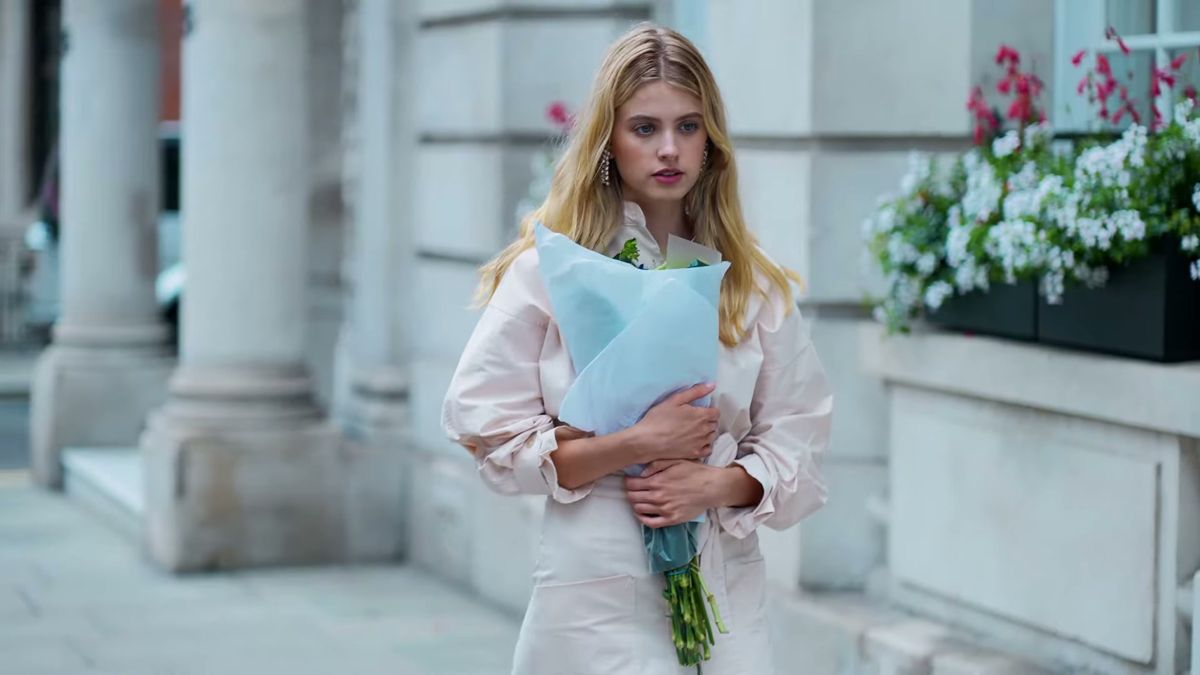
Staccato, London · natural light, one model, one walk
01 · The concept
Start with one idea you can say in a sentence
A lookbook video and a fashion film are not the same job. A lookbook shows each piece clearly so people can buy it. A fashion film gives the collection a mood, a world and a reason to watch to the end. Most brands want a bit of both, and the brief should say which one leads.
The strongest films in this guide each rest on one idea. For 1883 Magazine, Eliska Sky's “2 metres distance” turned the 2020 social distancing rule into a picture: models kept apart in an open field, joined by long ribbons of fabric, with clear plastic hoods and a transparent sphere by set designer Virna Pasquinelli. Nobody explains the idea on screen. You get it from the frame.

“2 metres distance” for 1883 Magazine, directed by Eliska Sky. The concept is carried by set design, not words.
A commercial lookbook needs an idea too, just a quieter one. For Staccato Indonesia the idea was a full shoe range, from everyday flats to evening heels, worn by one model on London streets in natural light. A second Staccato film carried the same approach into new looks: gingham trousers with a saddle bag, a pale coat with a bouquet, red brick and white stucco behind. Same model, same city, same light, so the range reads as one brand.
Write the one line
“A full range in one London walk” or “distance, shown with fabric”. If you can't write it, the edit will wander.
Decide what leads
Product clarity (lookbook) or mood (fashion film). Each frame on the shot list should serve the one that leads.
Group by look
Each look gets an outfit, a setting and a kind of movement. That becomes the structure of the film.
Keep the kit honest
A strong idea rarely needs a big kit. The Celine film was lit with two lights and one lens.
02 · Casting
Casting through London model agencies
London has a deep pool of agency models, and agencies are the normal route for a brand film. You send the brief, dates, usage and the looks; the agency sends options and handles the booking terms. For a fashion film, ask for digitals and, if possible, a short clip of the model walking and turning, because how someone moves matters more on film than in a still.
Test shoots are where that relationship starts. Alice was filmed for Linden Staub under spring blossom in Richmond, a test that also became a short film, “C'est Alice”. On the Kent coast, Vincent from Nevs Model Agency was shot for a test described as “editorial meets e-com”. Both show what a model looks like in motion, which is exactly what a casting director wants to see. The model test shoot guide covers how those tests run.

Alice for Linden Staub, Richmond. A test that also works as a moving portrait.
| Send the agency | Why it matters |
|---|---|
| The idea, looks and a mood board | So they suggest faces that fit the world, not just the sizes |
| Shoot date, hours and location | Availability and travel, especially for a coast or out-of-town day |
| Where the film will run, for how long, and where | Usage drives the booking terms; an agency test is not a commercial licence |
| Movement needed | Walking, dancing or wind work all suit some models more than others |
Whoever you cast, get a signed release that matches the agreed use before you roll. The model release guide explains what to include.
03 · Locations
London locations and permission to film
Much of London's fashion film look comes from its streets: stucco terraces, black railings, red brick mansion blocks and quiet squares. Filming there is more straightforward than people expect, as long as you plan it properly.
Streets: the borough
London has 33 boroughs, and each has a Borough Film Service for council-managed locations. Film London notes that a crew of five or fewer with hand-held kit is fairly straightforward on the street. Contact the borough anyway.
Royal Parks: always ask
Film London lists the Royal Parks among public places that always need filming permission. Apply early, especially in blossom season.
Private property: the owner
Houses, hotels, shops and studios are agreed directly with the owner. Get it in writing, with times and where you can set up.
Scout for light and sound
Visit at the time you'll shoot. Note where the sun falls, which side is in open shade, and how loud the traffic is.
A small crew also keeps the film feeling real. The Staccato films were shot in natural light on the street; the Aspinal of London lifestyle campaign moved indoors to a wood-panelled room, where the luggage, the crossbody bag and the model's tailoring sit in warm wood and tartan. For where to find London's best daylight through the year, see natural light fashion photography in London.


Aspinal of London. Vertical frames from the lifestyle film, with the product worn rather than placed.
Sources: Film London, filming permission.
04 · Movement and pacing
Give every look a movement
Clothes are designed to move, and a fashion film that only shows people standing still is a slideshow. Plan movement per look in the same way you plan styling.

Staccato, London. A turn gives the hair, the shirt dress and the bag a moment of movement between walking shots.
| Movement | What it shows | How to shoot it |
|---|---|---|
| The walk | Fit, fall of fabric, shoes | Rehearse at real speed, then a touch slower; several passes tight, mid and wide |
| The turn | The back of the garment, hair, swing of a hem | Pre-focus on the spot, roll before and after for handles |
| Wind and fabric | Lightness, texture, mood | Shoot faster than delivery frame rate so you can slow it in the edit |
| Camera move | Space and energy around a still model | Gimbal or FPV orbit; keep the model's pose simple |
The Rose Leslie film for 1883 Magazine's RISQUÉ issue shows the same rule in a studio: saturated turquoise and pink sets, hair in motion, hands reaching into frame, then an edit by Eliska Sky full of mirroring and kaleidoscope effects. That kind of edit only works if the footage is clean and steady enough to layer.

Rose Leslie for 1883 Magazine, art directed and edited by Eliska Sky. Colour from the set, energy from the hair.
Movement can also come from the camera. The Vincent test on the Kent coast was shot on a Sony A7R V with 85mm and 35mm lenses, plus a DJI Avata 2 with an ND32 filter for moving shots around the model. The FPV for brands and fashion guide explains how to combine the two on one day.

Vincent, Nevs Model Agency, Kent coast. A wide that gives the edit a breath between close frames.
Pacing comes from the cut. Cut on a step or a turn, alternate tight and wide so the viewer never loses the garment or the place, and keep each look together long enough to register before moving to the next.
05 · Music
Music licensing for a fashion film
Music sets the pace of a fashion film, and it is the part brands most often get wrong. A commercially released track needs two permissions: the recording (the master, usually from the record label or artist) and the song itself (sync, from the music publisher). Using a track in a brand video without both is a risk, wherever the film is posted.
Choose early
Pick the music, or at least the tempo, before the shoot. Movement and cuts follow the beat.
Library or commissioned
Production music libraries that own both master and publishing make licensing simple. A commissioned score fits the film exactly.
Match the licence to the use
Organic social, paid ads, website, events and broadcast can be different licences. Check territory and term.
Keep the paperwork
Save the licence with the final files, so the brand can show it if a platform flags the film.
Sources: Audio Network, music licensing for marketers.
06 · Deliverables
Plan the cutdowns before the shoot
One shoot day now has to feed a hero film, social edits, ads and the product pages. Agree the list before the day so the shot list covers it, and frame for 9:16 and 16:9 together; the vertical-first guide shows how.
| Cut | Shape | Use |
|---|---|---|
| Hero film | 16:9, often also 4:5 | Website, YouTube, launch, press |
| Short edits | 9:16 | Reels, TikTok, Stories |
| Ad cutdowns | 9:16 and 1:1 | Paid social, with the product early |
| Look loops | 4:5 or 9:16, silent | Product pages and lookbook, one per look |
| Frame grabs | Stills from the footage | Social posts and press, when there is no stills photographer |
For the product page end of this, see product video production in London. For the usage side of the deliverables, see usage rights and licensing.
07 · The brief
A fashion film brief you can copy
The idea: one sentence, plus three references and one you don't like.
Lookbook or film: which one leads, and how many looks.
Casting: agency, number of models, movement needed.
Location: street, park, house or studio, and who gives permission.
Music: track or library, tempo, and the licence it needs.
Deliverables: hero length, cutdowns, shapes and dates.
Usage: media, territory and term for the film and the music.
Working in Dubai instead? The Dubai fashion guide covers permits and locations there.
Watch
Fashion films in London and Kent


 Fashion advertising in London for Staccato
 1883 Magazine: 2 metres distance
 Rose Leslie for 1883 Magazine
 Editorial meets e-com: Vincent, Kent coast
More guides
Keep reading
FAQ
Common questions
What is the difference between a lookbook video and a fashion film?
A lookbook video shows each piece clearly so people can see fit, fabric and how to wear it. A fashion film gives the collection a mood and a story. Many brands shoot both on one day, with the shot list covering each look for the lookbook and the key moments for the film.
Do I need a permit to film a fashion video on a London street?
Contact the Borough Film Service for the borough you are filming in. Film London says small hand-held crews of five or fewer are fairly straightforward on the street, but the Royal Parks always need permission, and private property is agreed with the owner.
Can I use a popular song in my brand's fashion film?
Only with permission for both the recording (usually the record label) and the song (the publisher). Production music libraries or a commissioned score are often simpler, as long as the licence covers where and how long the film will run.
How do I find models for a fashion film in London?
Go through a London model agency with the idea, looks, dates and usage. Ask for digitals and a short clip of the model moving, and agree the booking terms for the actual use before the shoot.
Written by Joshua Swain, a fashion and beauty cinematographer working in London and Dubai. See the Staccato project.