
London · Case study for filmmakers, photographers and editors
“A magazine film is the director's vision and the editor's cut. The camera's job is to give both of them more than they need.”
In 2020 SwainUK filmed two fashion films for 1883 Magazine with Eliska Sky, who directed, art directed and edited both. One, “2 metres distance”, turned the social distancing rule into a fashion story in an open field. The other followed Rose Leslie for the magazine's RISQUÉ issue on colour-saturated studio sets. Here is how fashion magazine video production works when the director is also the editor, and what to plan when you shoot for a magazine's digital story.
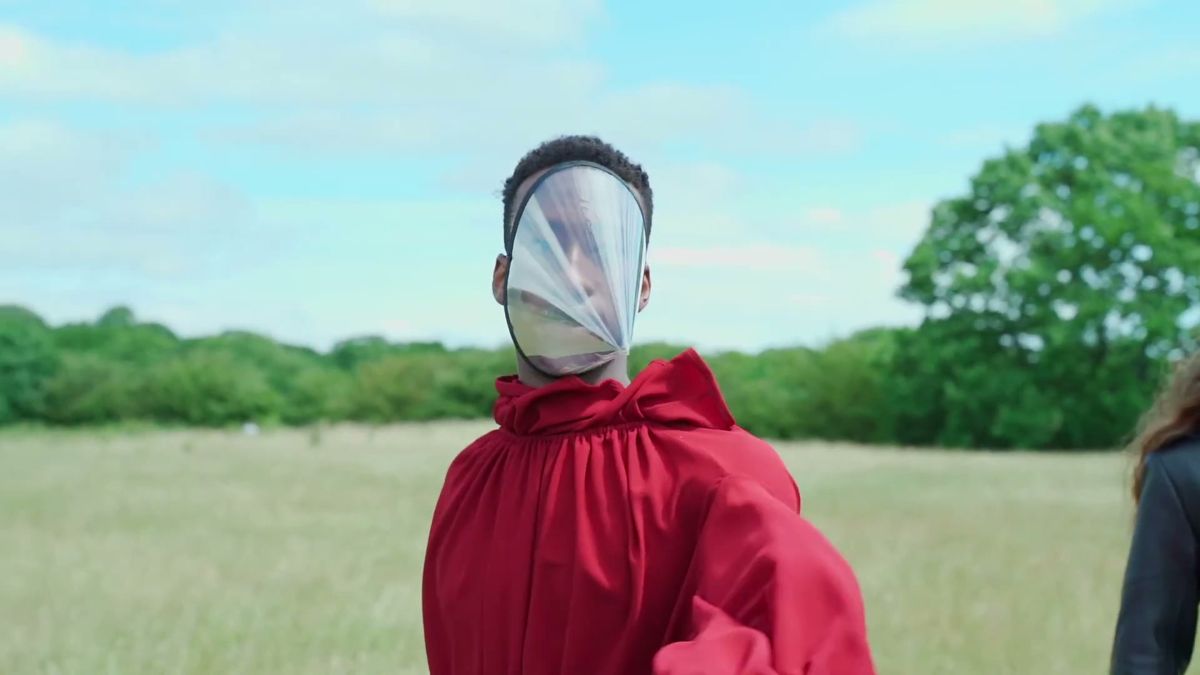
“2 metres distance” for 1883 Magazine, directed by Eliska Sky
01 · The projects
Two editorial fashion films, one director
Both films came out of the same working relationship, but they asked for very different camera work. One is outdoors, built on movement, props and distance. The other is a studio portrait of an actor, built on colour and an edit full of effects.
| 2 metres distance | Rose Leslie, RISQUÉ issue | |
|---|---|---|
| Idea | The two-metre distancing rule from the COVID period, when masks and restrictions were still new | A film to accompany the print feature, where Rose Leslie talks about her role in Death on the Nile |
| Director | Eliska Sky (direction, art direction, edit) | Eliska Sky (art direction and edit) |
| Camera | SwainUK | SwainUK |
| Setting | An open field, natural daylight | Studio sets in turquoise and pink; the credits list Indra Studios, London |
| Team | Styling by Craig Hemming, set design and masks by Virna Pasquinelli, fashion and photo assistants, retouching | Interview by Davina Catt, styling by Seonwoo Hwan, hair by Patrick Wilson, make-up by Justine Jenkins, photo and styling assistants |
02 · The relationship
Working with a director who also edits
When the director cuts the film themselves, the shoot is really the first half of their edit. Eliska Sky already knew how the pieces would fit together, and the credits on the Rose Leslie film put it plainly: art directed and edited by Eliska Sky, on camera SwainUK. That changes how a cinematographer should work on the day.
Learn the edit before the shoot
Ask what kind of cut it will be: fast and rhythmic, slow and dreamy, effects-heavy. A director-editor can tell you which moments need a long take and which only need two seconds.
Give handles, not just the moment
Roll before the action and keep rolling after it. An editor building transitions, mirrors or speed ramps needs clean frames either side of the move.
Shoot clean backgrounds
Plain backdrops, empty sky and simple floors are where titles, credits and effects will sit. Protect them: no stands, cables or crew at the edge of frame.
Offer options, then step back
Suggest the extra angle or the unexpected move, but the director owns the vision. The best thing a camera operator can hand over is more usable choices than the cut needs.
03 · 2 metres distance
Turning a rule into a picture

Fabric and space do the storytelling: the models stay apart but stay connected.
The idea came straight from 2020: everyone was being told to keep two metres apart. The film never explains that in words. It shows it through set design and masks by Virna Pasquinelli: clear plastic face shields, a transparent sphere a model walks inside, long ribbons of fabric that join people who cannot touch.
For the camera, a concept like this decides the shot list for you. Distance only reads if you can see it, so wide shots matter as much as close-ups. The field gave room for the whole group to spread out, and natural daylight kept the look fresh and unfussy, which let the colours of the styling carry the frame. For more on working with daylight in London, see natural light fashion photography in London.

Clear plastic is hard to film: it picks up sky, sun and the crew. Angle it so it reflects open sky, not people.
Wides that show the gap
Shoot the group from far enough back that the space between people becomes part of the composition.
Let props move
Ribbons, plastic sheets and loose coats come alive in wind. Shoot slightly faster than the delivery frame rate so you can slow movement down in the edit.
Watch the reflections
Every clear shield and sphere is a mirror. Check each angle for the camera, the crew and hard sun before you roll.
Masks still need eyes
When faces are half covered, posture and hands carry the emotion. Direct the body, and find the frame where the eyes still read.

Movement first: a plastic sheet trailing in the wind gives the edit a natural rhythm.
04 · Rose Leslie for the RISQUÉ issue
Filming an actor for a magazine story

Rose Leslie for 1883 Magazine's RISQUÉ issue, art directed and edited by Eliska Sky
The second film accompanied 1883 Magazine's feature with Rose Leslie, timed to her role as Louise Bourget, Linnet's maid, in Kenneth Branagh's adaptation of Agatha Christie's Death on the Nile. The interview itself was by Davina Catt for the print feature; the film's job was to carry the mood of the shoot into the magazine's video channels.
Here the look came from the set, not the location: saturated turquoise and pink backdrops, flowers, butterflies and hands reaching into frame. Eliska Sky's edit then pushes it further with mirrored and kaleidoscope effects. A look like that is only possible if the footage is clean and steady enough to be mirrored and layered, which goes back to the point above: shoot for the editor.


A wide for scale, a detail for texture: both are cut into the final film
Time with talent on a cover shoot is shared between the photographer, the interviewer, hair and make-up and the video. On a shoot like this you would plan the film around the photo set-ups rather than ask for separate ones: film during the same looks and backdrops, grab the moments between frames, and keep a short list of must-have shots so nothing depends on an extra ten minutes that may not come.
Sources: Wikipedia, Death on the Nile (2022 film): director, cast and release.
05 · The delivery
Shooting for a magazine's digital cover or story
A fashion magazine film lives online next to the print feature, so it has to work on its own and alongside the photographs. Before the shoot, agree the following with the director and the magazine.
1. Formats: a horizontal film for the main release, and whether vertical cut-downs are wanted. If so, frame for both from the start; see shooting vertical and horizontal from one shoot.
2. Who edits, who grades and what they need from you: codec, frame rate, a look reference.
3. The credits list. Magazine films credit everyone, from stylist to assistants and designers worn. Collect names and handles on the day.
4. Usage: where the film will appear and for how long. See usage rights and licensing explained.
5. Releases for every model and featured person. See model release forms for UK shoots.
06 · What to take from it
Copy this, avoid that

“2 metres distance”: a simple walk to camera, made distinctive by styling and masks
| Copy | Avoid |
|---|---|
| One clear idea the audience gets without words | A film that only makes sense with a caption |
| Props and set design that carry the concept | Props that reflect the crew in every shot |
| Clean frames and handles for a director-editor | Cutting takes short to “save time” |
| Planning the film around the photo set-ups | Asking talent for a separate video session |
Watch
The two films
 1883 Magazine: 2 metres distance, directed by Eliska Sky
 Rose Leslie for 1883 Magazine's RISQUÉ issue
More guides
Keep reading
FAQ
Common questions
What is an editorial fashion film?
A short film made for a magazine or editorial story rather than a brand advert. It is led by a concept and a mood, credits the whole creative team, and usually runs alongside a photo story or interview.
How do you shoot a fashion film for a magazine?
Agree the idea, formats and edit style with the director first, shoot wide and close coverage with clean handles, plan the video around the photo set-ups, and collect every credit on the day.
What does a cinematographer do when the director edits the film?
They shoot for the director's cut: long takes with frames either side of the action, clean backgrounds for titles and effects, and extra options the editor can choose from.
Who directed the 1883 Magazine Rose Leslie film?
Eliska Sky art directed and edited the film for 1883 Magazine's RISQUÉ issue, with camera by SwainUK.
Written by Joshua Swain, a fashion and beauty cinematographer working in London and Dubai. See the 2 metres distance project.