
London · Case study for filmmakers, photographers and fashion brands
“Shoes sell in motion. Put the camera where the shoe lives: on the ground.”
Staccato Indonesia wanted a footwear commercial video shot in London: clean styling, natural light, one model, and the full shoe range from everyday flats to evening heels. Here's how a shoe film like this is planned and shot, with frames from the finished commercial: why low angles do most of the work, how to film walking so the shoe stays sharp, and how to cover a whole range without the edit feeling like a catalogue.
Staccato footwear commercial, London
01 · The brief
What a footwear commercial has to do
A fashion advert can lean on mood. A shoe advert can't, because the product is small, near the ground and usually out of frame in a normal fashion shot. The brief for Staccato was simple to say and hard to execute: show a full range, from everyday to evening, in a way that feels like one film rather than a product list. The styling was kept clean so the shoes did the talking, and the whole film was shot in natural light on London streets, with video and edit by SwainUK.
Before any camera talk, sort the range into looks. Each look gets an outfit, a setting and a type of movement that suits the shoe. In the finished film you can see how that maps out:
| Look | What's on screen | Why it works |
|---|---|---|
| Everyday | White shirt dress, two-tone ballet flats, railings behind | A quick, light walk. Flats read best in a side-on stride at pavement level |
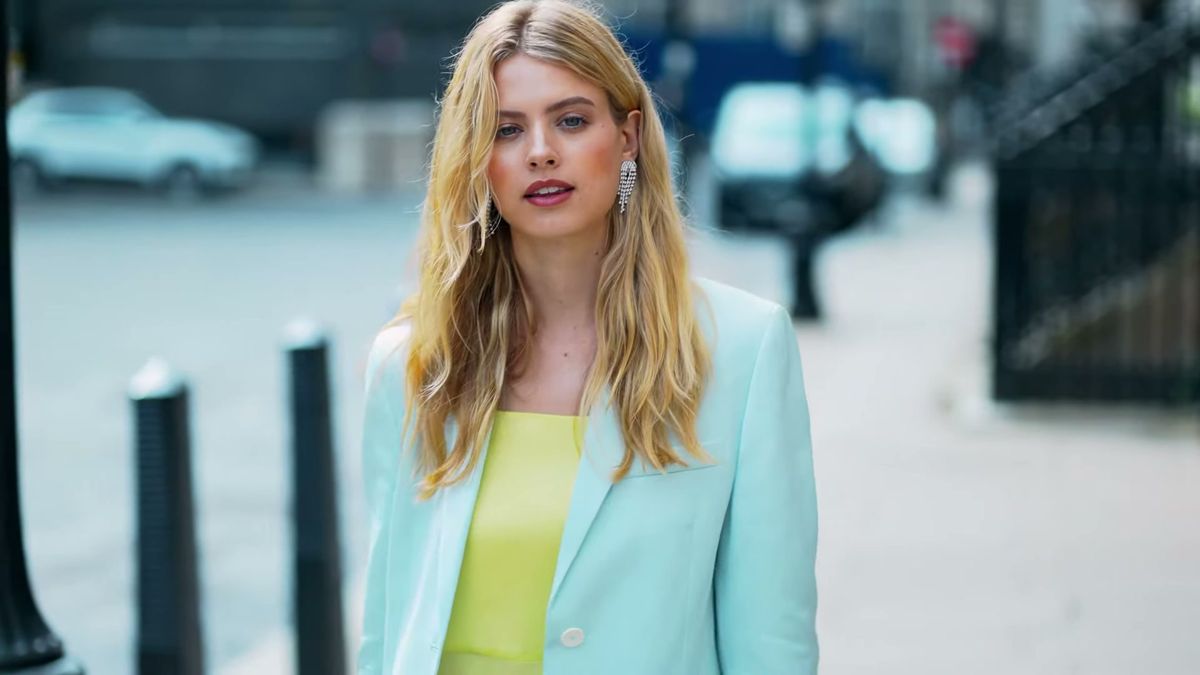
| Day to evening | Mint blazer, yellow satin slip dress, pale pointed heels | The satin moves with every step, which pulls the eye down to the shoe |
| Evening | Sequin dress, two-tone heels | Sequins and a metallic heel catch the same soft light, so the look holds together |
02 · Low angles
Get the camera down to shoe height

Lens a few centimetres off the road: the heel, the stride and the hem of the dress in one frame.
Most of the useful shots in a shoe film are taken with the lens close to the ground. From standing height a shoe is a small shape at the bottom of the frame. From ankle height it becomes the subject, the road turns into texture and the background falls away.
Ground level, side on
The classic stride shot. Both feet, the heel shape and the sole are all readable, and the movement crosses the frame.
Walking towards the lens
The toe shape and pointed silhouette come straight at camera. Pre-focus on a mark and let the model step into it.
Low and wide on the look
Tilt up from near the ground to show the full outfit against the architecture. The shoe stays in frame and the model looks tall.
Keep a clean background
At shoe height, kerbs, drains and road markings are right next to the product. Choose the spot of pavement as carefully as the location.

Walking into the lens: the toe shape is the whole shot.
03 · Movement
Filming walking without losing the shoe
Walking is the point of a shoe, so almost every shot should have a step in it. It is also the hardest thing to keep sharp, because the feet are the fastest-moving part of the body and the camera is close to them.
1. Rehearse the walk at real speed, then ask for slightly slower. A natural but unhurried pace keeps the foot readable.
2. Mark the spot where the shoe lands and focus there, rather than chasing focus on a moving foot.
3. Shoot several passes of the same move: one tight on the feet, one mid shot with the hem, one wide.
4. Use fabric. A satin skirt or a sequin hem that swings on each step adds movement above the shoe and leads the eye down.
5. If you shoot some moves in slow motion, save it for the moments that show the shoe best, such as the heel touching down.

The evening look: the sequin hem swings on each step and the eye follows it down to the heel.
04 · Range coverage
Covering a full range without a catalogue feel
When a client asks for "the full range", the risk is a film that plays like a list. The fix is to give every shoe the same set of shots, so the edit has choices, and then to cut the looks together by movement rather than by product.
| Shot | What it shows |
|---|---|
| Detail on the ground | Shape, material, heel. The product shot inside the film |
| Stride, side on | How the shoe moves and how it fits the foot |
| Hem and shoe | The shoe with the outfit it belongs to |
| Full look, low angle | The whole person, so the viewer knows when they'd wear it |
| Wide with location | Context, and a breather in the edit |

The everyday end of the range: flats against London railings.
Flats and heels need different treatment. Heels give you a strong silhouette from the side; flats look best in a quick, light step where the shape of the toe and the colour contrast carry the shot. Plan the walk for the shoe, not the other way round.

A low, wide full look: the outfit, the architecture and the shoe in one frame.
05 · Location and light
London streets in natural light

A wide of the location gives the edit room to breathe between product shots.
Natural light suits footwear on the street because soft, even daylight shows material honestly: satin, metallic leather and patent all read as they would in a shop. Open shade and overcast skies are your friends, since hard sun throws the model's shadow across the shoe and burns out pale leather. The London streets in this film give clean stone, white stucco and black railings, neutral backgrounds that make any shoe colour stand out. The natural light fashion guide covers where and when to shoot in London, and the London commercial guide covers permits for filming on the street.
06 · The edit
Cutting a shoe film
Cut on the step
Cut as a heel touches down. The rhythm of the walk becomes the rhythm of the film.
Alternate tight and wide
Feet, full look, feet, location. The viewer never loses the product but always knows where they are.
Group by look
Keep each outfit together long enough to register, then move on. Mixing looks shot by shot confuses the range.
Brand at the end
A short logo over a final stride is enough. The shoes have already done the selling.
Plan the crops early too. A shoe shot framed for 16:9 often loses the foot in a 9:16 crop; the vertical-first guide explains how to frame for both from one shoot.
07 · Checklist
Before you film footwear
1. Clean the soles and edges, and bring spare pairs or wipes. Low angles show every scuff.
2. Check the fit on the model before the shoot. A loose heel shows in every stride.
3. Write a shot list per shoe using the five shots above.
4. Bring something to kneel or lie on, and a low support for the camera.
5. Scout the pavement as well as the street: surface, kerbs, drains and road markings.
6. Get a signed release from the model before you start. See the model release guide.
Watch
Staccato films


More guides
Keep reading
FAQ
Common questions
How do you film shoes for an advert?
Get the camera down to shoe height, film the model walking so the shoe is always moving, and give every shoe the same set of shots: a detail, a side-on stride, the hem and shoe, a full look and a wide with the location.
What is the best angle to film shoes?
Low. A lens a few centimetres off the ground makes the shoe the subject, shows the heel and sole, and turns the street into a clean background. Side-on strides and walks towards the lens are the two most useful shots.
How do you keep feet sharp when filming someone walking?
Ask for a natural but slightly slower walk, focus on a marked spot where the foot lands, and shoot several passes of the same move. Slow motion helps for the moments that matter most.
Can you shoot a footwear commercial in natural light?
Yes. Soft daylight in open shade or under cloud shows materials honestly and suits street locations. Avoid hard midday sun, which throws shadows across the shoe and burns out pale leather.
Written by Joshua Swain, who films fashion and commercial work in London and Dubai. See the Staccato project.