London · Guide for photographers and skincare brands
“Nobody can touch a cream through a screen. The photograph has to do the touching.”
Skincare product photography has two jobs that pull in different directions. The packshot has to be exact: true colour, a straight label, the same look across every product in the range. Everything else has to make people feel the formula: how a gel catches light, how a cream holds a peak, how a mask sits on skin. This guide covers the shot list, lighting bottles and jars on white, shooting texture swatches, handling gloss and glare with hard light, soft light and polarisers, product on skin, and what changes between e-commerce and social, with Seacra and 111SKIN as the examples.

Seacra Red Algae Infused packshot on white
01 · The shot list
Seven stills every skincare product needs
| Shot | What it shows | Where it's used |
|---|---|---|
| Packshot on white | The product, exactly, front-on | Product page main image, marketplaces, press |
| Hero in a set | The product in its world: stone, water, a shelf | Website banners, campaigns, social |
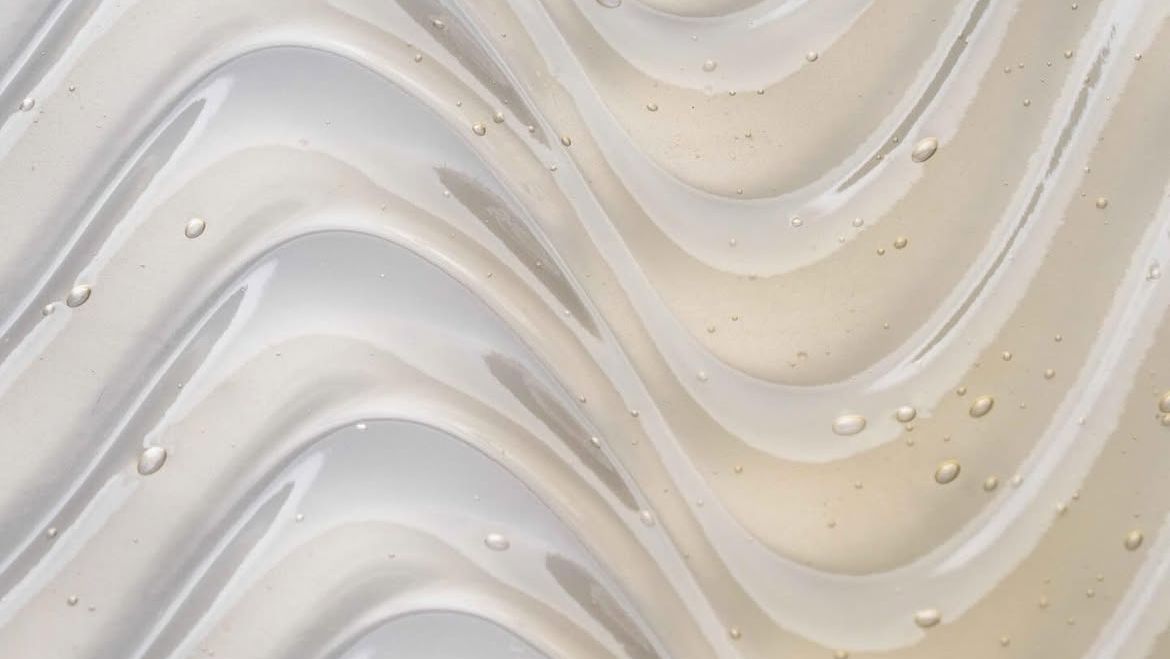
| Texture swatch | The formula itself: peaks, ripples, bubbles | Product page, ads, carousel slide two |
| Product in hand | Scale, and a person using it | Social, ads, product page |
| On skin | The product applied, real texture kept | Ads, social, product page |
| Routine or flat lay | Several products in order of use | Bundles, the "how to use" section |
| Ingredient | The one thing that makes the formula special | Campaigns, story pages, launches |
Shoot them in that order. The packshot needs the cleanest product and the most precise set; texture and skin shots make a mess you can't undo.
02 · Packshots
Bottles and jars on white
Skincare packaging is hard to light because it is rarely one material. The Seacra bottles combine a frosted, printed body, a chrome collar and a clear cap, and each one wants something different from the light.
Two big sources, one each side
Large softboxes or strip lights either side of the product draw clean bright edges down the bottle and keep the front even.
Light the background separately
A white sweep lit on its own gets you true white without blowing out a frosted bottle. Then a white or acrylic base adds a soft reflection.
Treat chrome like a mirror
A chrome collar reflects the room. Put white card or black flags where you want its lines, and nothing messy in the reflection.
Lock the set for the range
Same lens, height, distance and lights for every product, so every product in the range sits side by side on the page like a family.
Clean every product with a lint-free cloth and gloves before each frame; dust and fingerprints show far more on a still than in a video. If you sell on Amazon, its main image rules ask for a pure white background (RGB 255, 255, 255) with the product filling about 85% of the frame, so build the packshot to that from the start.
Sources: Amazon Seller Central, product image requirements · Photoroom, Amazon product image guide.
03 · Texture
Swatches and macro: let people feel the formula
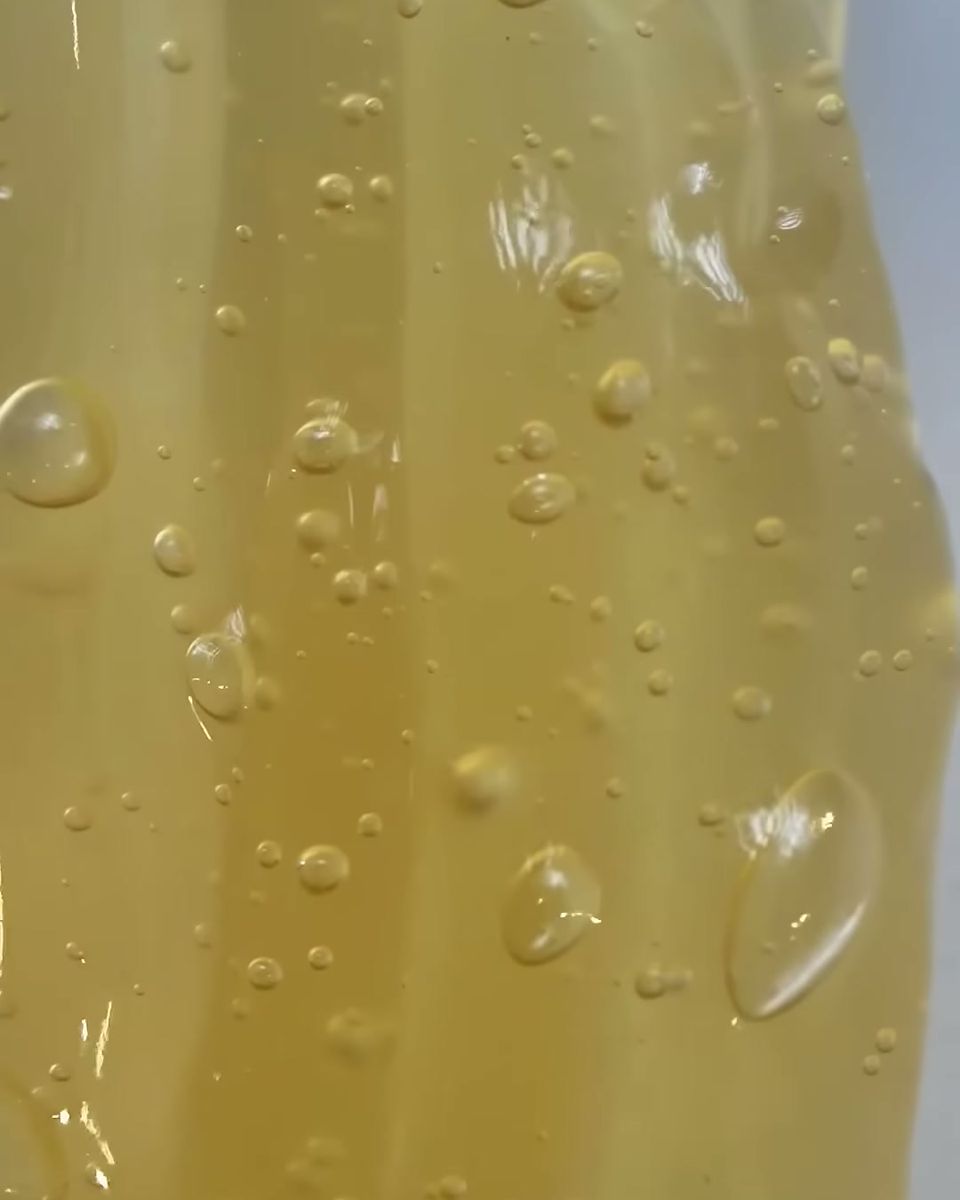
A clear gel shot close: the trapped bubbles show it's a gel, not a liquid. Seacra.
The texture shot answers the question people ask before they buy skincare: what does it feel like? Gels and creams need opposite light to answer it.
| Formula | Light | Why |
|---|---|---|
| Clear gel or serum | From behind or below, through the product | Shows clarity, colour and the air bubbles that say "gel" |
| Cream or balm | Low and from the side, fairly hard | Raking light casts small shadows that show peaks, ripples and thickness |
| Oil | A defined highlight from above | Oil is all about shine; one clean highlight reads as slip |
| Mask or clay | Soft key plus one small hard accent | Shows the surface without turning it into a black or grey hole |
Work fast: creams form a skin and gels lose their bubbles within minutes under lights. Swirl the swatch with a spatula onto glass, acrylic or a clean tile, shoot, then wipe and make a new one. For a whole swatch sharp at macro distances, stop down to around f/8 to f/11 or focus-stack several frames.
04 · Gloss and glare
Hard light, soft light and polarisers
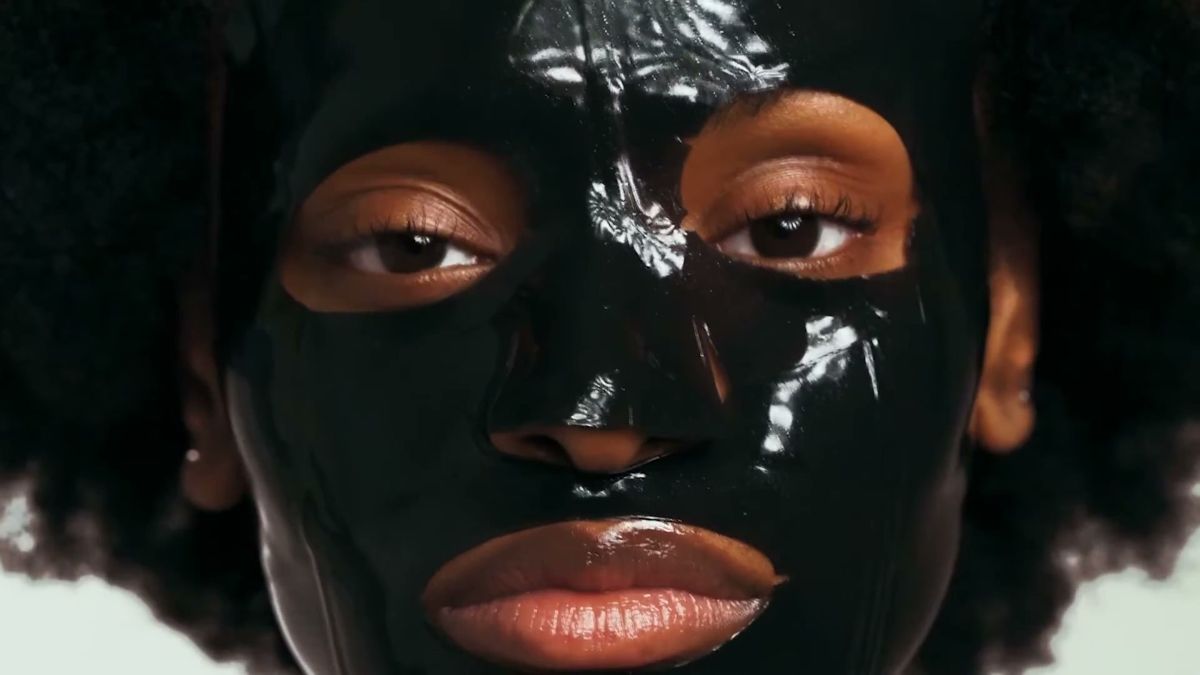
111SKIN: on a glossy black mask, the highlights are the texture. Without them the mask would read as flat black.
Gloss is only visible as reflection, so the question is never "how do I get rid of the shine" but "which shine do I want". The 111SKIN mask frames show the point: the bright, broken highlights across the forehead and nose are what tell you the mask is wet and glossy.
Soft light for even skin
A big, close, diffused source keeps skin smooth and the packaging even. It's the default for faces and frosted bottles.
Hard accents for texture
A small, hard source makes crisp highlights on gloss, peaks in cream and sparkle in gel. Use one, placed deliberately.
A polariser for glare
A circular polariser on the lens cuts glare from glass, lacquered caps and wet skin. Turn it until the reflection you don't want fades, and stop before the product looks dull.
Cross-polarise for full control
Polarising film on the lights as well as the lens can remove reflections almost completely. The method is the same as for jewellery: see jewellery photography without reflections.
05 · On skin
Product on real skin, honestly
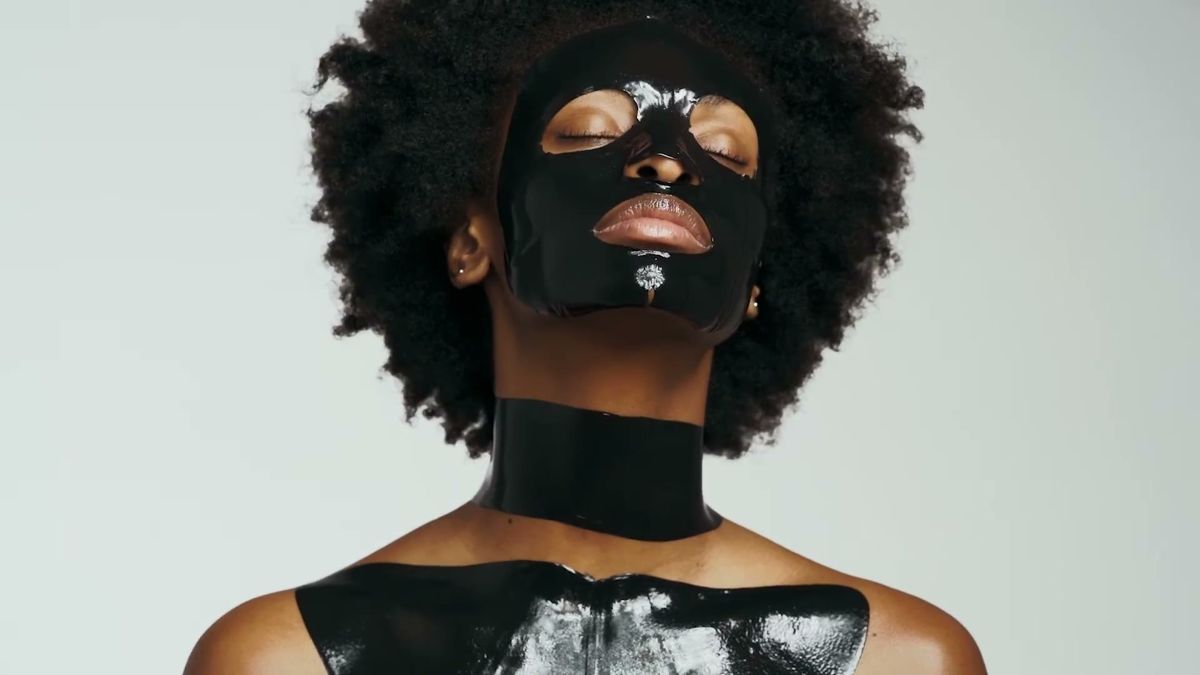
111SKIN's masks on face and neck against a pale grey backdrop, one of the two sets in the commercial.
On-skin stills are where skincare photography gets into trouble. In February 2021 the UK's Advertising Standards Authority ruled that filters shouldn't be applied to beauty-product ads if they're likely to exaggerate the product's effect. In practice: remove dust and stray hairs, keep pores and fine lines, and never retouch the area the product claims to improve.
Same light, same angle: if you show a before and after, shoot both in identical conditions.
Real colour: match the product's colour on screen to the product in the hand. The vectorscope method is in colour grading skin tones.
Keep the texture: how to clean up skin without plastic results is in beauty retouching that keeps skin texture.
Range of skin: shoot the product on more than one skin tone if your customers have more than one.
Sources: RPC, ASA upholds use of filters in beauty ads as misleading · Cosmetics Business, ASA rules on misleading filters.
06 · Ingredients
Make one ingredient the picture

111SKIN, Story of the Gold Leaf: dark backdrop, low warm light, the ingredient on the skin.
When a brand has a hero ingredient, a still of that ingredient often does more than a list of claims. For 111SKIN's Story of the Gold Leaf the gold leaf sits on the eyelids against a dark grey backdrop in low, warm light, so the only bright thing in the frame is the ingredient. Seacra's equivalent is the sea and red algae, carried through water, stone and bubbles. Pick the one image that stands for your formula and repeat it. How the 111SKIN films were lit and crewed is in the 111SKIN case study.
07 · Delivery
E-commerce stills vs social stills
| E-commerce | Social | |
|---|---|---|
| Background | White or one consistent brand colour | A set, a place, a person |
| Goal | Consistency across the whole range | Variety, so the feed never repeats |
| Ratio | 1:1 or the shop's template | 4:5 for feed, 9:16 for Stories, with space for text |
| Detail | Sharp label, true colour, zoomable size | Texture and feeling first, label once |
| Retouching | Clean product, dust removed, colour matched | Natural, with skin texture kept |
Plan both on the same day and you only build the set once. If you're making video at the same time, the formats and a one-day schedule are in product video production for e-commerce, and the texture, application, result sequence for ads is in skincare content that converts.
Watch
Skincare product films


More guides
Keep reading
FAQ
Common questions
How do you photograph skincare products?
Start with a packshot on white, lit with two large soft sources either side and the background lit separately. Then shoot the product in a set, a texture swatch, the product in hand and on skin, and an ingredient still. Keep the packshot set identical across the whole range.
How do you photograph cream texture?
Swirl the cream onto glass, acrylic or a tile with a spatula and light it low from the side with a fairly hard source, so small shadows show the peaks and ripples. Work fast, before it forms a skin under the lights.
How do you stop reflections on skincare bottles?
Decide which reflections you want first: clean edge highlights usually help. Control the rest with flags and white card, a circular polariser on the lens, or cross-polarisation with film on the lights for almost complete control.
What background is best for skincare product photos?
Pure white for product pages and marketplaces, where consistency matters. For social and campaigns, a set that tells the brand's story, such as stone, water or a bathroom shelf, works better than white.
Written by Joshua Swain, who photographs and films skincare and beauty in London and Dubai. More of this work is in the 111SKIN project.