
London · Guide for hair brands, salons and filmmakers
“Hair sells on three things: shine, movement and volume. If the light can't see them, the camera can't sell them.”
Hair is the hardest thing in beauty to film well. It reflects like metal, moves on its own, changes shape every hour and looks flat the moment the light comes from the wrong side. This guide covers hair campaign video production from the brief to the edit: how to light for shine, how to build movement with fans, how to keep continuity across a long day, how to use slow motion, and how to show a result honestly. The worked examples are a label.m film from London and beauty shoots in Dubai with hair by Dani.

label.m · London, 2019
01 · The brief
Decide what the hair has to prove
Every hair brand video makes a claim, even when nobody writes it down. A shampoo promises shine, a texture spray promises grip and volume, a salon promises a cut that moves. Agree the claim first, because it decides the lighting, the frame rate and the shot list.
| The claim | The shot that proves it |
|---|---|
| Shine and health | Backlit or edge-lit lengths, a slow turn of the head, a tight shot of the hair catching a highlight |
| Movement and swing | A head turn or a walk in slow motion, a fan for lift, hair settling back into shape |
| Volume and hold | Root lift in profile, a full-length silhouette, the style still in place at the end of the take |
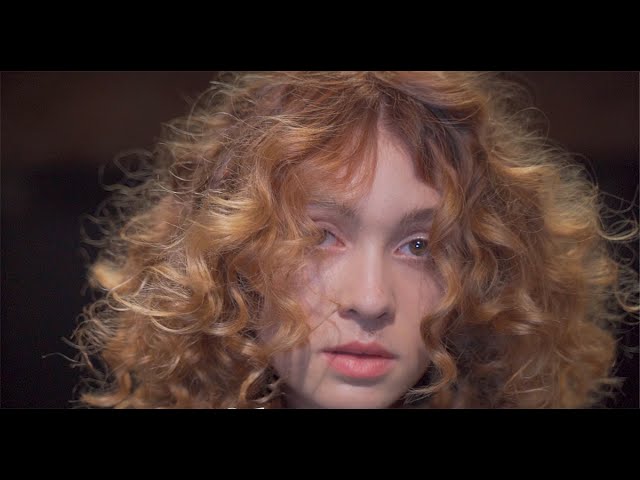
| Texture and definition | Curls or waves in close-up with side light, fingers working product through |
| The salon's skill | Sectioning, the round brush, the scissors, the stylist's hands, then the finished look |
For a salon brand film, the process is the product. For a haircare launch, the result is. Most good hair campaigns need both: a few seconds of hands at work, and a finish that holds up in a close-up.
02 · Light
Lighting hair for shine
Hair behaves like a curved mirror. Light from the front, near the camera, flattens it: the colour goes dull and the lengths merge into one shape. Light from behind and from the side picks out the strands and puts a band of shine across them. The basic hair set-up is a soft key on the face and a separate light just for the hair.
Backlight first
A light behind the model, above head height and out of shot, rims the edges and separates the hair from the background. It does more for hair than any key light.
Edge light for lengths
A strip softbox to one side, slightly behind, draws a long highlight down straight or waved hair. Move it until the shine sits on the lengths, not the forehead.
Dark behind blonde, light behind dark
Blonde reads best against a darker background; very dark hair needs a rim or a lighter background, or it disappears into the shadows.
Watch the colour
Warm practicals turn ash blonde brassy and cool light makes brunette look grey. If the brand sells a colour, shoot a reference of the real hair under neutral light.


Wet-look hair in golden light, sleek hair at dusk: beauty shoot in Dubai with art director Philipp Jelenska, make-up by Ido Raphael, hair by Dani.
In the Dubai beauty shoot with art director Philipp Jelenska, hair was by Dani and make-up by Ido Raphael. The footage shows two hair looks that both handle light well: a wet look, where every strand carries a highlight so low golden sun from the side is enough to make it shine, and sleek hair pulled back, which reads as one clean, glossy shape against the dark of a pool at dusk. Dani is also credited on hair for the Charlotte Tilbury Eid billboard and the Waterproof editorial. On a shoot where the hair is part of the look rather than the product, the hair stylist's job is to keep it consistent; on a hair campaign, it is the star, and the lighting should be planned around it.
03 · Movement
Wind, fans and slow motion


From the Short “Wind or not?”: the same model, with and without the hair moving.
The Short “Wind or not?” asks the question every hair shoot has to answer. With the hair lifting, the portrait feels alive and the backlight catches loose strands. With the hair still, the face and the cut are cleaner. Neither is wrong, but a hair campaign usually needs both: movement to sell swing and lightness, stillness to show the shape of the cut.
Use a fan you can control. A variable-speed fan on a stand gives you the same breeze take after take. Natural wind changes direction, and continuity goes with it.
Aim it low and to the side. A fan blowing straight into the face closes the eyes and flattens the fringe. From below and to one side, it lifts the lengths away from the face.
Start soft. Too much air turns hair into a mess that reads as weather, not product. Build up until the ends just move.
Shoot it in slow motion. A high frame rate played back at normal speed turns a head turn into a long, clean swing. Plan the move to finish with the hair falling back into place, which is the proof that it holds.
Forget sync sound. Fans are loud. Record voice-over or interviews separately, away from the fan.
Slow motion needs more light, because each frame gets a shorter exposure. Plan the lighting for the highest frame rate you will use, not for normal speed.
04 · Salon brand film
Filming the work: label.m in London

The round brush in close-up: process shots carry a salon brand film.
label.m is the professional haircare range created by the founders of TONI&GUY, and the first product line to carry the London Fashion Week name under an endorsement deal with the British Fashion Council. The film made for label.m Israel in London in October 2019, titled for London Fashion Week SS20, follows the team's whole trip: Salon International at ExCeL London, the TONI&GUY 2020 Trend Report show, a label.m demonstration at the TONI&GUY London Academy and the label.m awards dinner at the ME Hotel London.

A live hair demonstration on stage at ExCeL London.
A trip film like this is mostly documentary, but the strongest shots are the ones a hair campaign would want: the round brush pulling tension through the lengths, a stylist sectioning, a demonstration on natural afro texture under stage light, and the finished blow-dry. The lessons carry over to any salon or hair education film:
Hands, tools, hair
Get tight on the brush, the scissors and the fingers. The stylist's technique is what a salon is selling.
Show every texture
Straight, wavy, curly and coily hair all need filming. A brand that only shows one hair type is speaking to one customer.
Stage light is a gift
Shows and demos come with strong backlight and coloured wash. Use a long lens from the side of the stage to pick out the hair against it.
Finish on the result
Every sequence ends with the look: the head turn, the swing, the stylist's last touch. That is the shot that gets cut into ads.
Backstage at a show the rules are different again: the room is crowded and the stylists are on the clock. The fashion week backstage guide covers access and how to work in that room.
05 · Continuity
Keeping the hair the same all day

The finished look: this is the version every later shot has to match.
Hair drops. Curls loosen, volume sinks, flyaways appear, and a fan or a hat undoes an hour of styling in a second. On a campaign, shots from the morning and the afternoon end up side by side in the edit, so continuity needs a system.
1. Photograph each finished look from the front, both sides and the back, and keep the photos on the hair stylist's phone and the monitor.
2. Keep the hair stylist on set, not in the make-up room. Last looks before every take, the same way make-up does touch-ups.
3. Shoot the hero hair shots first, while the style is at its best. Wide shots and anything with a fan come later.
4. Keep the parting, the side the hair falls on and the fan direction the same across shots that will cut together.
5. Note what product went in and how much, so the look can be rebuilt after a break or on a second day.
06 · Honesty
Before and after without misleading anyone
Before-and-after is the most persuasive hair format and the easiest one to get wrong. In the UK, the Advertising Standards Authority's guidance on cosmetics says styling is generally fine, but the excessive use of hair extensions or inserts that significantly adds volume in a haircare ad is not permitted unless the effect can be achieved on natural hair. Retouching that changes what the product appears to do carries the same risk.
Same light, same lens
Shoot the before and the after with the same lighting, angle and lens. Changing the light changes the result more than any product.
Real hair for product claims
If the ad claims volume or length, the hair on screen should be the model's own. If extensions are used for a look, say so.
Retouch the stray, not the claim
Cleaning a few flyaways is tidying. Adding shine or density the product didn't give is a claim. The beauty retouching guide covers where that line sits for skin.
Keep the raw files
Hold on to the ungraded, unretouched footage. If a claim is ever challenged, it is your evidence.
Agree the usage before the shoot too: a salon's social film and a paid haircare campaign need different model and stylist agreements. The usage rights guide explains media, territory and term.
Sources: ASA, cosmetic production techniques · British Fashion Council, London Fashion Week product launch with label.m · Marketing Week, London Fashion Week's first branded product line.
07 · Checklist
Before a hair shoot
Brief: the one claim the film has to prove, and the hair types the brand wants to show.
Team: a hair stylist on set all day, plus an assistant if there are several looks.
Light: a soft key for the face, a backlight and an edge light for the hair, flags to keep them off the lens.
Movement: a variable-speed fan on a stand, and a camera that shoots a high frame rate in the light you have.
Formats: vertical and horizontal planned together; see shooting vertical-first.
Paperwork: releases, usage and any extensions disclosed in the brief.
Watch
Hair on film



More guides
Keep reading
FAQ
Common questions
How do you light hair for a video shoot?
Use a soft key light for the face and separate lights for the hair: a backlight above and behind the model to rim the edges, and an edge light to the side to put a long highlight down the lengths. Front light alone makes hair look flat.
How do you make hair move on a shoot?
Use a variable-speed fan on a stand, aimed low and to one side, and build the speed up slowly. Shoot at a high frame rate for slow motion, and finish each move with the hair settling back into place.
Can you use hair extensions in a haircare advert?
In the UK, the ASA's guidance says excessive extensions or inserts that significantly add volume are not permitted in haircare ads unless the effect can be achieved on natural hair. Styling is generally fine. Check the current guidance before a campaign.
What should a salon brand film include?
The stylists' hands and tools at work, a range of hair textures, the finished look in motion, and a few words from the stylist or salon owner. Plan vertical and horizontal versions together.
Written by Joshua Swain, who films beauty, hair and fashion in London and Dubai. See the jewellery and beauty editorial in Dubai.