
London · Guide for brands, agencies and producers
“Same camera, different job. The question is who owns the look, and who owns everything else.”
Cinematographer vs videographer is one of the most common questions brands ask before a shoot, and the honest answer is that the titles describe roles, not people. A cinematographer, or director of photography, shapes how a film looks for a director. A videographer usually runs the whole job: planning, filming, sound and often the edit. Plenty of filmmakers do both in the same month. This guide explains what each role covers, when a brand needs which, and how to brief either one, using real credits from SwainUK projects in London and Dubai.
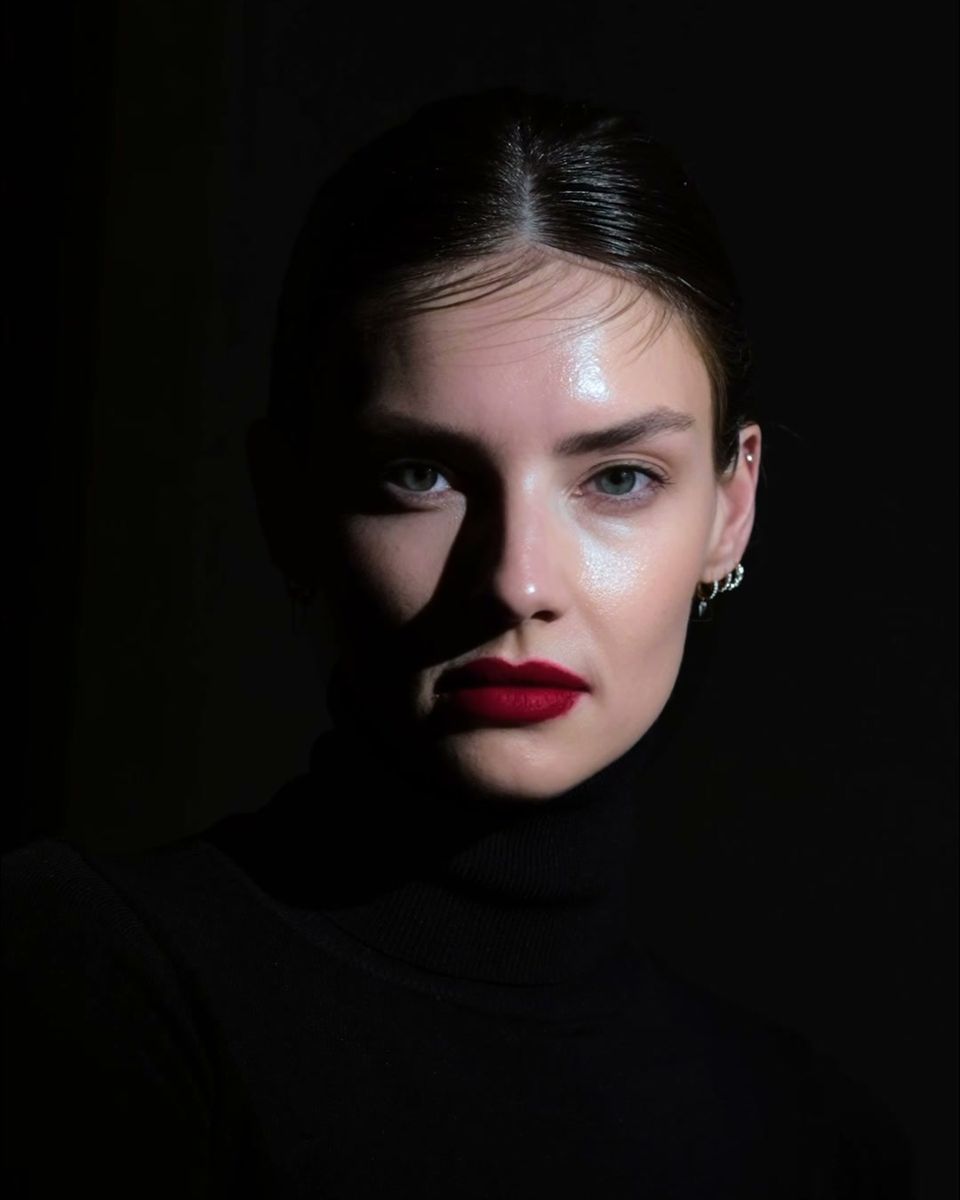
One hard light and a lot of shadow: a lighting decision, which is the cinematographer's call · Waterproof beauty editorial, Dubai · SwainUK
01 · The difference
What a cinematographer does, and what a videographer does
In film and TV, the director of photography (DoP) is responsible for the photographic heart of a production. ScreenSkills describes the job as working with the director on the look and feel, then working out how to create it through lighting, framing and camera movement, and what kit and crew that needs. On the day they lead the camera, lighting and grip teams, and after the shoot they work with the colourist.
"Videographer" grew up as the video equivalent of the film cinematographer. On smaller productions such as corporate and event work, a videographer often works alone with a single camera. Digital cameras have blurred the technical line between the two, so today the difference is mostly about the job, the crew and who makes the decisions.
| Cinematographer / DoP | Videographer | |
|---|---|---|
| Works for | A director, inside a production | The client directly, often as the whole crew |
| Owns | The look: light, lens, framing, movement | The job: plan, film, sound, often the edit |
| Crew | Usually leads camera and lighting assistants | Often solo or with one assistant |
| Typical work | Campaigns, fashion and beauty films, commercials, music and narrative | Events, conferences, interviews, social content, corporate films |
| Hands over | Footage to an editor and colourist | Often the finished, edited film |
Sources: ScreenSkills, Director of photography (DoP) job profile · Wikipedia, Videographer.
02 · Real credits
One filmmaker, several roles

Rose Leslie for 1883 Magazine: art directed and edited by Eliska Sky, on camera SwainUK · London, 2020
The clearest way to see the difference is to look at credits. These are SwainUK projects, and the role changes with the job.
| Project | Credit | What that meant |
|---|---|---|
| Rose Leslie, 1883 Magazine | On camera, for director and editor Eliska Sky | Pure cinematography: shoot for someone else's vision and someone else's cut |
| Damas Jewellery campaigns, Dubai | Cinematographer, with director Yehia Bedier and production by 1602 Studio | Part of a crewed production, owning the camera side |
| Celine Winter '22, Dubai | Video by SwainUK, with Esrasam as photographer and editor | The look on a small kit: Sony FX3, 85mm handheld, two Aputure 300D lights |
| Staccato, London | Video and edit by SwainUK | Camera and edit in one pair of hands |
| Polo in the Park 2026, London | Cinematographer and editor | Event coverage turned into sponsor content |
| Affiliate World x Shinz, Dubai | Cinematographer, filming the closing party | Classic event videography: follow the night, deliver the film |
The Rose Leslie film is the textbook DoP job: the story of how a director-editor shapes the shoot is in the 1883 Magazine case study. The Celine film shows that "cinematic" is about decisions rather than crew size; the setup is broken down in the Celine lighting post. And the Damas campaigns show how the camera role fits inside a bigger production, in the Damas case study.
03 · When you need a cinematographer
Jobs where the look is the product


Still and motion from the same beauty editorial: skin, lip colour and shadow all have to hold up in a close-up · Waterproof, Dubai · SwainUK
Book a cinematographer when how the film looks is the thing you are paying for, and when someone else (a director, an agency creative, an art director) is leading the idea.
Campaigns and billboards
Frames have to survive large formats, retouching and a grade. Light and lens choices can't be fixed later.
Beauty and skincare
Skin texture, product colour and reflections are decided by the lighting. A close-up exposes every shortcut.
Fashion films
Movement, rhythm and a consistent look across set-ups. The director needs someone to translate the mood board into light.
Crewed productions
When there is a director, a producer and a production company, the DoP is the camera department's head, not the whole crew.
For beauty specifically, what to check before you hire is in hiring a beauty videographer in London.
04 · When you need a videographer
Jobs where coverage and turnaround matter most
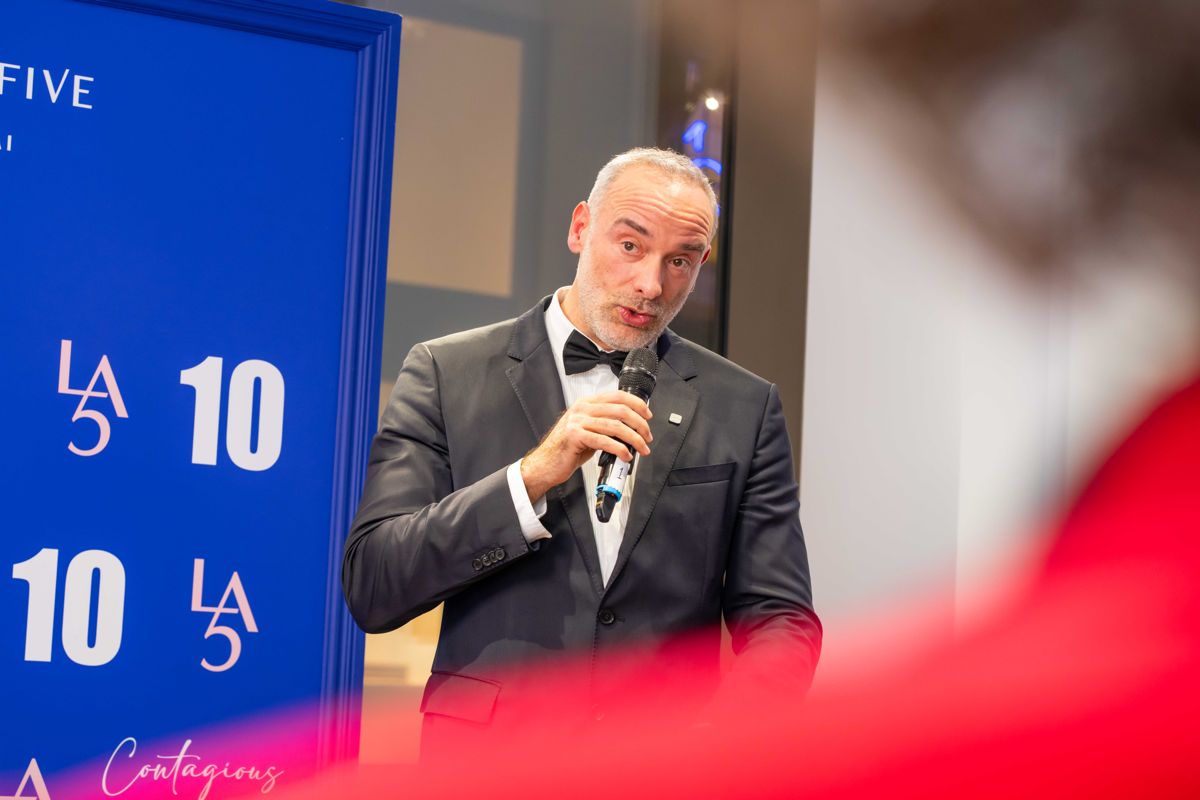
A speech at the L'Atelier Five launch, Opera Gallery London, covered by SwainUK. Live events reward one person who can read the room.
A videographer is the right booking when the job is to capture something real, well, and deliver it fast, and there is no separate director. Events, conferences, interviews, podcasts, social content and corporate films usually fit here. The skills are different, not lesser: sound, reading a room, being in the right place without rehearsal, and editing on a deadline.
Events and launches
Nothing happens twice. You need someone who plans the run of show and covers it alone if needed.
Interviews and talking heads
Clean sound and a calm subject matter more than an elaborate setup.
Social content
Volume, vertical framing and quick edits. One person filming and cutting keeps the cost and the turnaround down.
Corporate films
A short brief, a few locations and a finished film. The client usually wants one point of contact.
How that looks at a real event is in the Polo in the Park case study, and the planning side of event filming is in the event videographer guide.
05 · The kit question
Why the camera tells you less than you think
Brands often judge the role by the kit list. The credits above show why that doesn't work: the same filmmaker uses very different kit depending on the job.
| Project | Kit (as published) |
|---|---|
| Celine Winter '22 | Sony FX3, 85mm handheld, two Aputure 300D with double diffusion |
| Kelly Rutherford x Code8, London hotel | Sony A9 Mark III, Sony 28-70mm f2, DJI RS4 Pro gimbal, one Aputure 300D |
| Vincent test shoot, Kent coast | Sony A7R V, 85mm f/1.8, Samyang 35mm f/1.4, DJI Avata 2 |
| IBV Gold ads, London | An iPhone 17 Pro kit |
A campaign was lit with one light, and a set of paid ads was shot on a phone. What separates the roles is the decisions: where the light goes, what the frame leaves out, and who is accountable for the look. Ask to see how someone lit a job like yours, not which camera they own. The phone case is in shooting paid ads on an iPhone 17 Pro, and the one-light hotel shoot is in the Code8 case study.
06 · The brief
How to brief either one, so you get the right person
Most mismatches start with a brief that doesn't say who is doing what. Answer these before you contact anyone.
Who directs? If you have a director or agency creative, you need a cinematographer. If not, you need someone who can direct talent as well as film.
Who edits? Say whether you want rushes for your editor, or a finished film.
Who lights? Is there a gaffer, or is the camera person also lighting? This changes the kit and the schedule.
Is there a photographer too? Then agree who gets the light and when. See photo and video on the same shoot.
What do you need delivered? List every cut, length and ratio, and the date.
Where will it run? Billboard, website, paid social and organic social have different needs for resolution, framing and usage.
Then ask for a portfolio that matches the role: credits where they were the DoP for a director, or finished films they planned, shot and cut. The full question list is in how to hire a videographer in London.
Watch
The roles in practice
 Celine Winter '22: two lights, one lens
 Kelly Rutherford x Code8: behind the scenes
 Charlotte Tilbury billboard shoot
 L'Officiel Baltic fashion film


More guides
Keep reading
FAQ
Common questions
What is the difference between a cinematographer and a videographer?
A cinematographer, or director of photography, creates the look of a film for a director: light, lens, framing and movement, usually leading a camera and lighting crew. A videographer usually handles the whole job for the client, from planning and filming to sound and often the edit, frequently working alone.
Is a cinematographer better than a videographer?
No, they are different jobs. A cinematographer is the better choice when the look is the product and a director leads the idea. A videographer is the better choice for events, interviews, social content and corporate films where coverage, sound and fast delivery matter most.
Do I need a cinematographer for a brand video?
If you have a director or agency and the film is a campaign, a beauty or fashion film, or anything for large formats, yes. If you need one person to plan, film and edit a short brand or social video, a videographer is usually the right fit.
Can one person be both a cinematographer and a videographer?
Yes, and many are. The same filmmaker can be the DoP on a crewed campaign one week and film and edit an event alone the next. Ask which role they played on each portfolio piece.
Written by Joshua Swain, a cinematographer who also films and edits as a videographer in London and Dubai. The beauty frames in this guide are from the Waterproof editorial.