
London · Guide for brands, agencies and marketing teams
“A showreel shows you someone's best day. The questions tell you what they'll do on yours.”
To hire a videographer in London well, you need five things sorted before the day: a portfolio that matches your kind of work, straight answers to a short list of questions, a one-page brief, a plan for locations and insurance, and usage agreed in writing. This guide covers each one, with a brief template you can copy, the questions to ask, and the red flags. The examples come from real London shoots: a footwear film on the streets, a skincare commercial, a conference, a sponsor's weekend at the polo and a beauty campaign in a hotel.
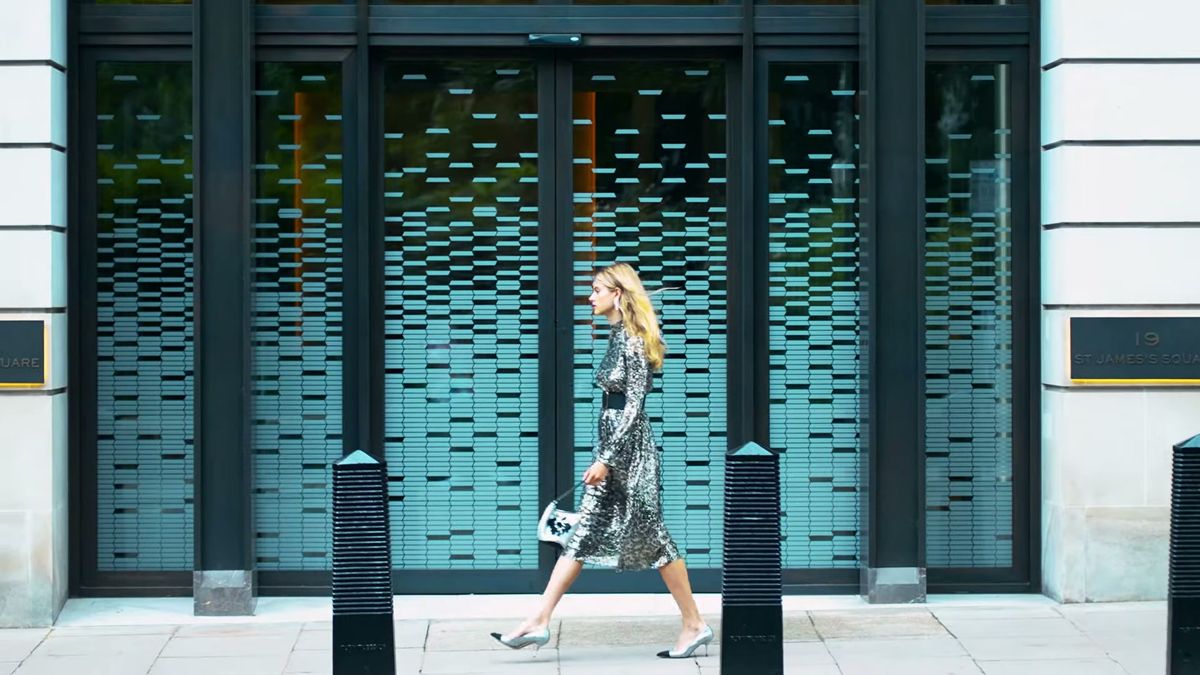
One location chosen for its texture and light · Staccato, London
01 · The portfolio
What a London videographer's portfolio should prove
A showreel is cut to impress, so watch it, then ask for two or three full projects. A complete film shows you what a reel hides: whether the cuts flow, whether the sound is clean, and whether the last shot is as good as the first.
Work like yours
A commercial videographer in London might shoot fashion on Monday and a conference on Thursday. Look for at least one project close to your product, your format and your budget level.
Vertical as well as wide
Most brand video now lives on phones. Ask to see 9:16 cuts, not just 16:9 films cropped later. Our guide to shooting vertical and horizontal explains why that matters.
Credits and names
Real projects come with real teams: a brand, an art director, make-up, a director. Credits show the work was made, and that the person can work inside a crew.
The edit, not just the camera
Ask who edits and grades. If it's someone else, see their work too. A great shoot can be lost in a rushed cut.


Range in one portfolio: sponsor content at Polo in the Park, framed for 9:16 · a fashion film for 1883 Magazine directed by Eliska Sky.
02 · The questions
Videographer questions to ask before you book
A good videographer answers these quickly and specifically. Vague answers here usually mean vague answers on the day.
| Ask | A good answer sounds like |
|---|---|
| How will you plan the shoot? | A treatment or moodboard, a shot list and a timed schedule, agreed before the day |
| Who is on the crew? | Named roles: camera, sound, lighting, hair and make-up, or a clear reason why a small crew is enough |
| Which camera and lights, and why? | A choice that fits the job, not the biggest kit list. A one-light hotel shoot can be the right call |
| Who handles locations and permissions? | A plan for each location, proof of public liability insurance, and who contacts the borough or venue |
| What will we receive? | A list of films, lengths, aspect ratios, captions and file formats, with dates |
| How many rounds of edits? | A set number, with what counts as a change and what counts as a new brief |
| What usage is included? | Media, territory and term written into the quote, and who owns the copyright |
03 · The brief
How to brief a videographer
The brief is what makes quotes comparable. Send the same page to everyone you're talking to and you'll see quickly who has read it.
Product or story: what we're filming, and how many products or people need their own hero moment.
One sentence: what should the viewer feel or do afterwards?
Where it runs: organic social, paid ads, website, in store, out of home, TV.
Deliverables: one hero film plus cut-downs, and the formats: 9:16, 4:5, 16:9.
References: three films you love and one you don't.
Locations: studio, your space, a venue, or the street.
Dates: shoot date, first cut, final delivery, and any launch it ties to.
Budget range: so the plan fits from the start.
A tight brief lets the shoot be tight too. The Kelly Rutherford x Code8 campaign was filmed in a London hotel in three hours with a single Aputure 300D, because the idea, "beauty but simple", was clear before anyone arrived. For the creative side of the brief and a half-day schedule, see shooting a commercial in London.
04 · Locations and permits
Permits, insurance and where you can film
London is easy to film in if the plan is honest about size. Film London's guidance lets a small crew of five or fewer, handheld and not blocking anyone, shoot on public streets without a formal permit, though you should still let the borough's film service know. Royal Parks, the Tube and private venues all need permission in advance. The full breakdown, place by place, is in our London commercial guide.
Whatever the location, insurance comes first. Film London is clear that every production needs proof of public liability insurance to get permission to film or shoot commercial photography. Ask your videographer for the certificate before you book a location, not the night before.
Streets
Small crew, light kit, early mornings. Staccato's shoe film was shot on London streets in natural light, which kept the crew small and the schedule flexible.
Venues and hotels
The owner's written OK and a location release. Hotels give you lamps, wood and depth for free.
Events
The organiser grants access, but agree in advance where you can stand and what you can film.
Sources: Film London, media insurance · Film London, advice for small crews. Rules change, so check with the borough before you book.
05 · Usage and copyright
Agree usage before you agree a date
Paying for a film doesn't automatically mean owning it. Under UK copyright law, when you commission a professional, the copyright usually stays with the person who made the work unless a written agreement says otherwise. What you are really buying is a licence: where the film can run, where in the world, and for how long.
That isn't a trick. It's the normal way commercial work is priced, and it protects both sides. Just make sure it's written down, and that talent and music are licensed for the same use as the film. If the edit will be boosted as a paid ad, say so now. Our usage rights and licensing guide explains how media, territory and term work, and model release forms covers the people on camera.
Source: UK Intellectual Property Office, copyright notice on digital images and photographs.
06 · Warning signs
Red flags when hiring a videographer
Only a reel
No full projects, no credits, no brand names. You can't judge an edit from 30 seconds of highlights.
No questions back
A videographer who quotes without asking where the film will run hasn't thought about framing, formats or usage.
"Permits are fine"
No insurance certificate, no plan for the location. If something goes wrong on a London street, it's your brand in the story.
Unlimited everything
Unlimited edits and unlimited usage for a small fee sounds generous. It usually means nobody has thought it through.
No delivery list
If the quote doesn't list the films, lengths and formats, you'll find out what's missing after the shoot.
Music "sorted later"
Commercial music needs a licence for commercial use. Agree the track, or a licensed library, before the edit starts.
07 · Worked examples
What different London briefs need from a videographer
The right person depends on the job. These London projects show how different the skills are from one brief to the next, and what to look for in a portfolio for each.

The full panel under a coloured stage wash · KEN Talks, artsdepot, London
| Brief | Example | What to look for |
|---|---|---|
| Product in real life | Aspinal of London: handles, stitching and leather, then the bags out in the city | Macro detail and lifestyle in one portfolio |
| Fashion on the street | Staccato: a full shoe range shot in natural light on London streets | Movement, low angles, and calm with a small crew |
| Skincare commercial | 111SKIN: two films under 20 seconds, with art director Charl Marais | Skin, texture, and working to someone else's frame |
| Beauty with talent | Code8 Beauty: a hotel shoot in three hours with one light | Speed, light control and a light touch with talent |
| Conference or panel | KEN Talks: a panel evening at artsdepot, North Finchley | Coloured stage light, and frames for organisers, speakers and sponsors |
| Sponsor content | Polo in the Park: filmed and edited for IBV Gold, sponsor of Team Cape Town | Brand moments in context, and fast turnaround |

The sponsor's colours in the action · Chestertons Polo in the Park, June 2026
Notice what changes between rows. A skincare film needs patience and control in a studio. A polo weekend needs someone who can read a fast sport, find the brand in the crowd and deliver while the event is still news. Both are "a videographer in London", and you'd brief them very differently.
Watch
London commercial work


More guides
Keep reading
FAQ
Common questions
How do I hire a videographer in London?
Shortlist people whose full projects match your kind of work, send them all the same one-page brief, compare how they plan, crew and deliver, and agree usage, edits and dates in writing before you book.
What questions should I ask a videographer before booking?
How they plan the shoot, who is on the crew, who handles locations and insurance, exactly what you'll receive and when, how many rounds of edits are included, and what usage is covered.
How do I brief a videographer?
One page: the product or story, the one thing viewers should feel or do, where the film will run, the deliverables and formats, three references you like and one you don't, locations, dates and a budget range.
Do I need a permit to film a commercial in London?
A small handheld crew of five or fewer can usually film on public streets without a formal permit if it doesn't obstruct anyone, but the borough should be told. Parks, the Tube and private venues need permission, and every shoot needs public liability insurance.
Written by Joshua Swain, a commercial cinematographer working in London and Dubai. See the portfolio.