Dubai · Guide for photographers, make-up artists and beauty brands
Beauty Photography Lighting Setups: Clamshell, Butterfly, Side Light and Hard Sun, With Dubai Examples
Clamshell for skin, butterfly for lips, side light and hard sun for drama. How to build each beauty lighting setup and pick the right one for the brief.
- Words and camera
- Joshua Swain
- Published
- Reading time
- 7 min
- Filed under
- Guide
In brief
- Every setup below is defined by where the shadow falls on the face, and that decides what the picture is good for.
- Clamshell is the default for skincare and complexion work because it hides almost nothing and flatters almost everyone.
- Take the bottom reflector away from a clamshell and you have butterfly light: one source, straight on, above the eye line.
- Side light is the fastest way to make beauty look editorial.
- Hard light is usually avoided in beauty because it shows every pore.
Contents 9 sections
Clamshell, butterfly, 45-degree, side light, hard sun: beauty photography has a handful of classic setups, and each one does a different job for the skin, the make-up and the product. This guide explains how to build each of them, what they look like, which one to choose for which brief, and how they translate to shooting in Dubai, where the strongest light on set is often the sun. The examples are real SwainUK shoots: the Waterproof red-lip editorial in Downtown Dubai, a pool editorial with art direction by Philipp Jelenska, and the Seacra skincare portraits.
Every beauty lighting setup answers one question: how much shadow does this face, and this product, need?
Five beauty lighting setups at a glance
Read the shadows first. Every setup below is defined by where the shadow falls on the face, and that decides what the picture is good for.
| Setup | How it's built | What you see | Best for |
|---|---|---|---|
| Clamshell | A soft key above the lens, a reflector or second soft light below | Even, glowing skin, few shadows, catchlights top and bottom | Skincare, foundation, lashes, close-ups where the product is on the skin |
| Butterfly | One source straight in front and above the face | A small shadow under the nose, defined cheekbones and jaw | Classic beauty portraits, lipstick, sculpted make-up |
| 45-degree key | A soft source to one side and a little above | Shape in one cheek, the other side falls darker | Campaign portraits, a little more mood |
| Side light | The source at 90 degrees to the face | Half the face lit, texture everywhere | Editorial drama, profiles, gloss and metallics |
| Hard sun | Direct, low sunlight, often broken by hands or props | Crisp shadows that become part of the picture | Summer editorials, graphic make-up, jewellery |
Clamshell: light for skin and product
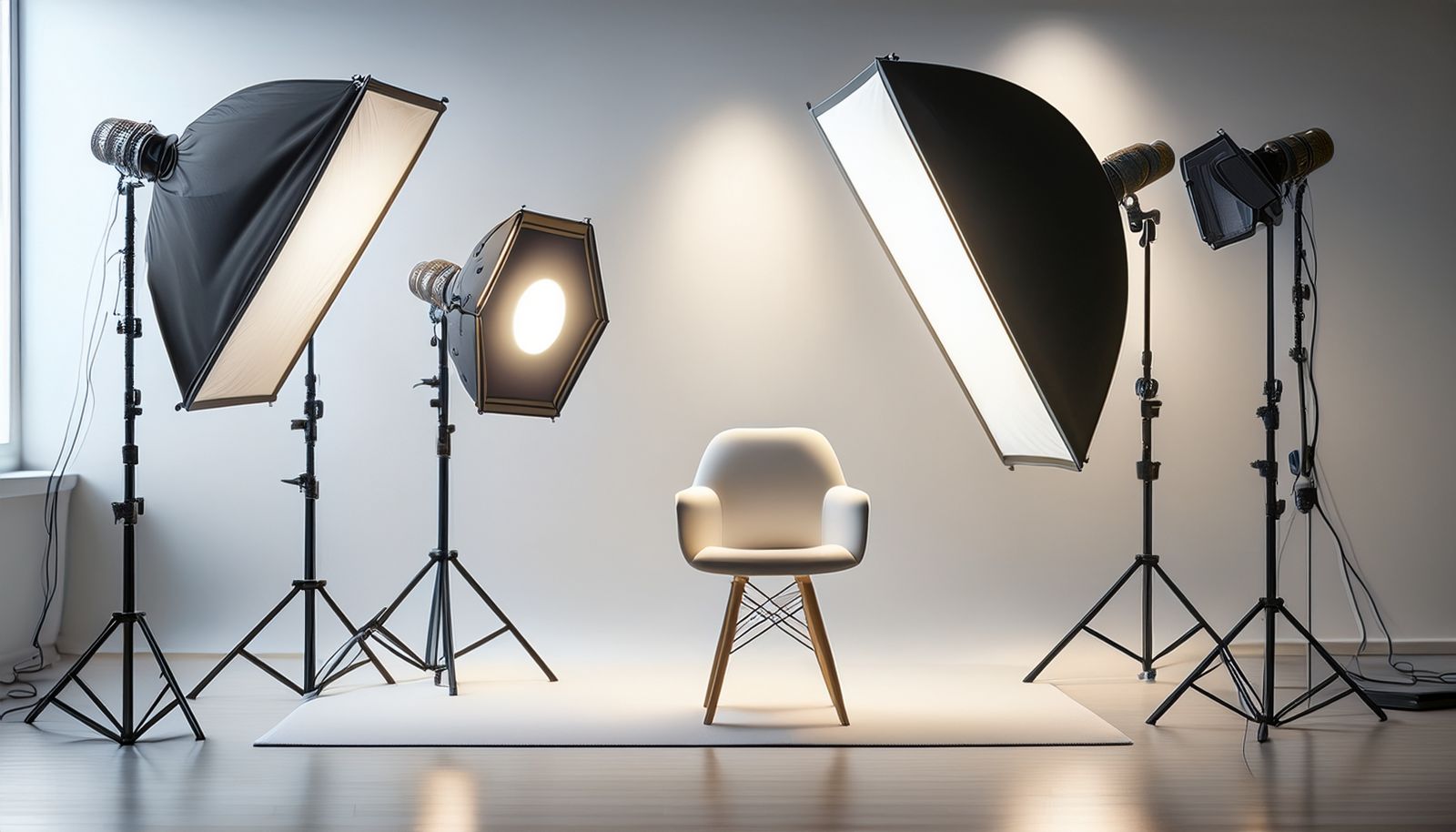
Clamshell is the default for skincare and complexion work because it hides almost nothing and flatters almost everyone. Profoto describes it as two frontal sources that minimise shadows: a key in a butterfly position in front of and above the model, raised until the shadow sits about halfway between the nose and the upper lip, and a reflector underneath the face to even out the light from above. Choose the reflector so it doesn't put a distracting catchlight in the bottom of the eyes.
1. Key: a large softbox or octa, centred on the face, angled down from just above the lens.
2. Fill: a white or silver reflector held flat under the chin, or a second, weaker soft light pointing up.
3. Camera: shoot through the gap between the two.
4. Ratio: keep the bottom weaker than the top, or the face starts to look lit from below.
5. Check skin: clamshell shows texture honestly, so you and the make-up artist see the same thing the client will.1
Butterfly and the 45-degree key
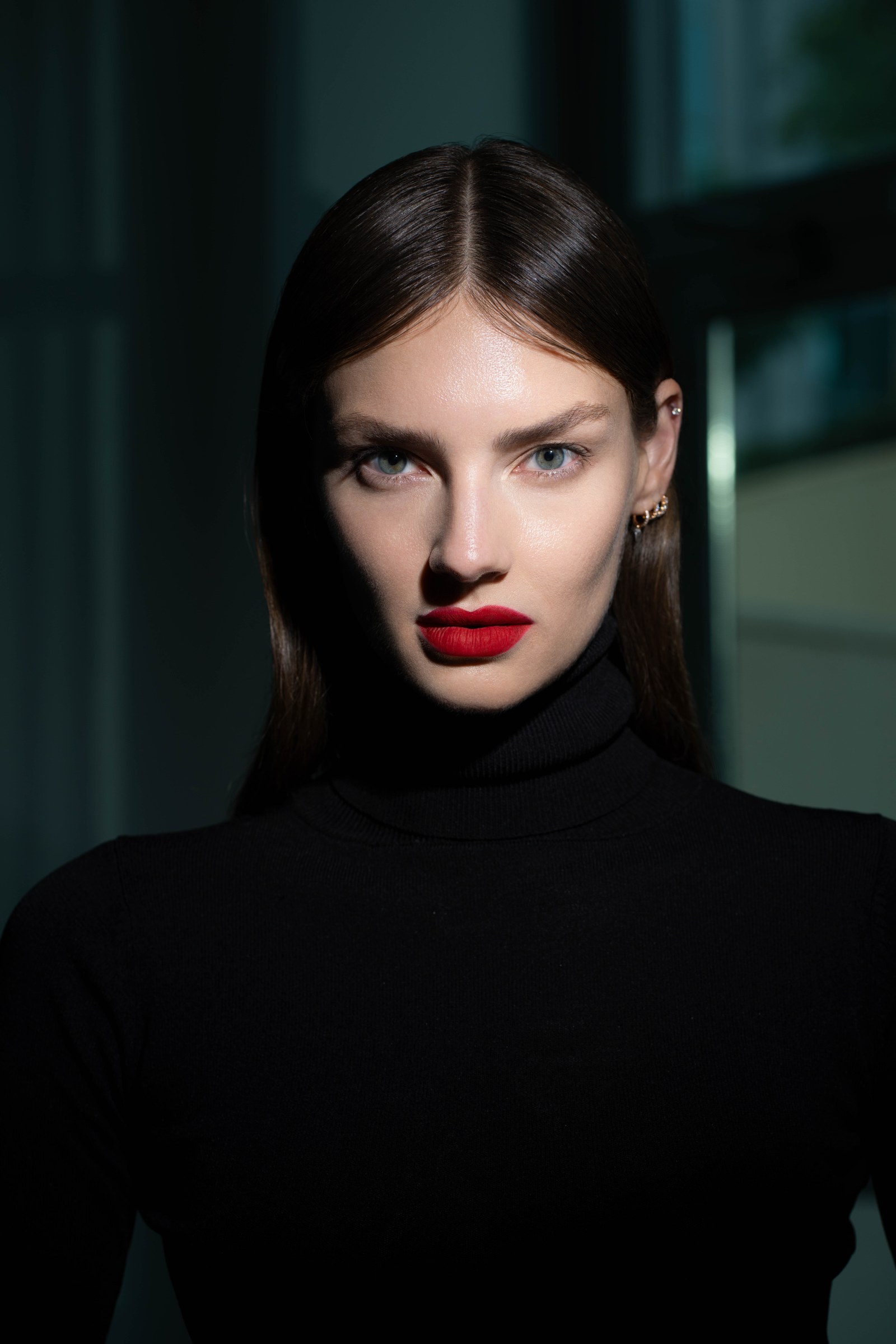
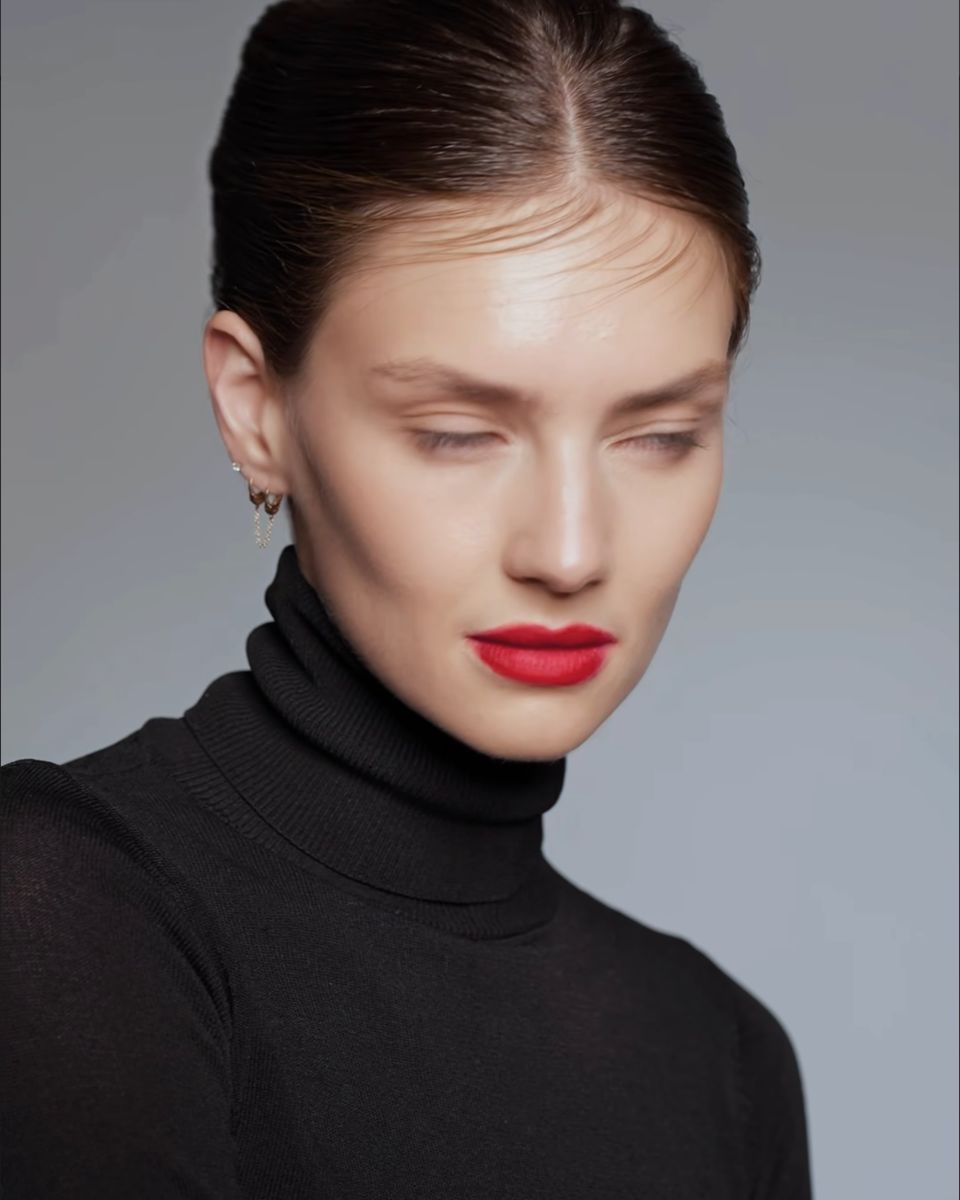
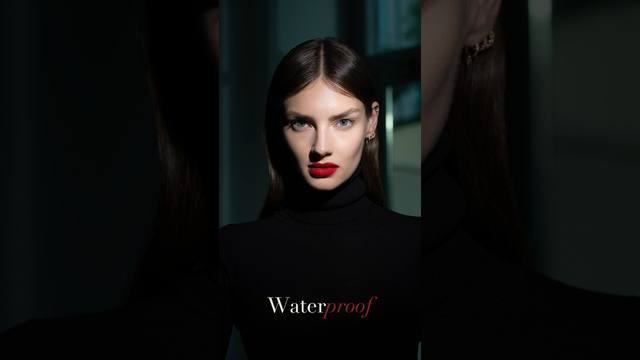
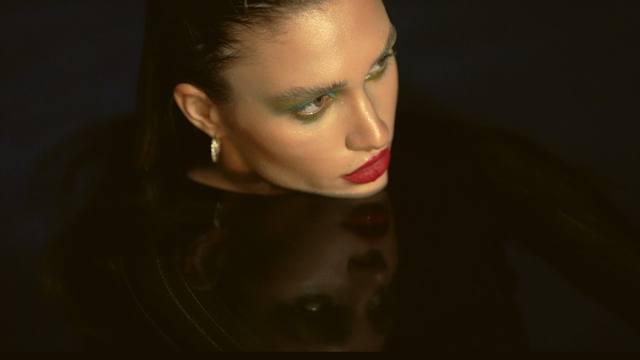
Take the bottom reflector away from a clamshell and you have butterfly light: one source, straight on, above the eye line. Look at the hero frame from Waterproof: the light falls evenly across both sides of the face, the cheekbones read, and there is a soft shadow under the nose and under the chin. That is the look you want when the lip or the brows are the story. Waterproof was a red-lip editorial, so the face had to be clean and the mouth bold; the black turtleneck and plain grey background left the red as the only colour in the frame. The full story of that shoot is in the Waterproof red-lip editorial.
Move the same light to about 45 degrees and it starts to model the face: one cheek catches the light, the other falls a stop or so darker. It's the setup for campaign portraits that need a little more mood than a clamshell.
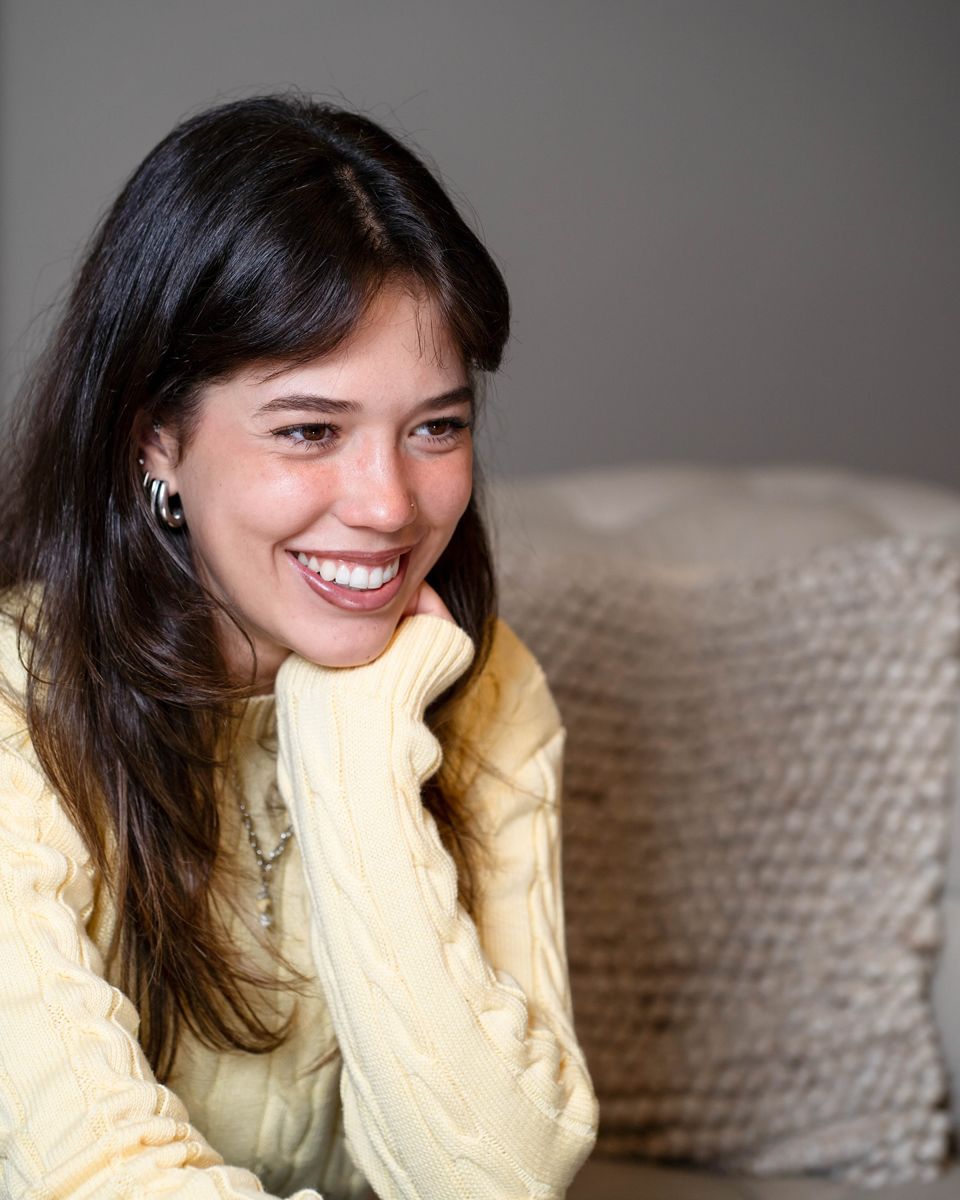
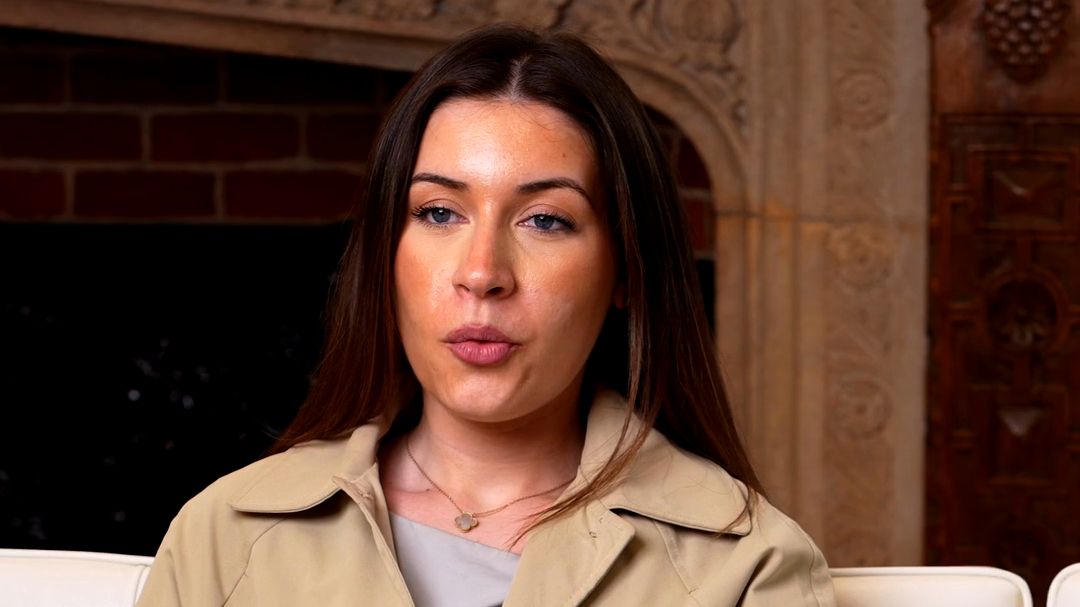
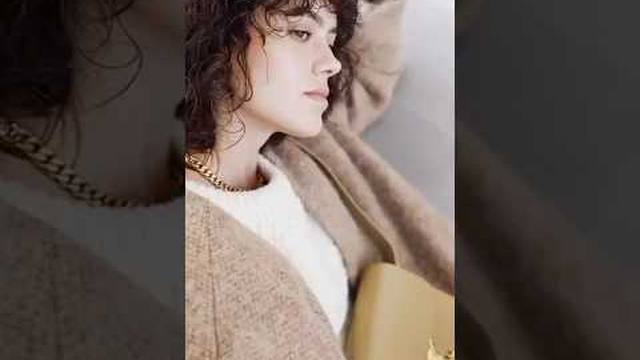
The Seacra skincare portraits show how gentle a side key can be. A soft, warm source, a plain wall and a sofa for the model to lean on: the light comes from one side, so the face has shape, but it's large enough that the shadow side never goes hard. That suits skincare, where the skin has to look healthy rather than dramatic. The whole series is in the Seacra social content case study.
Side light and low sun
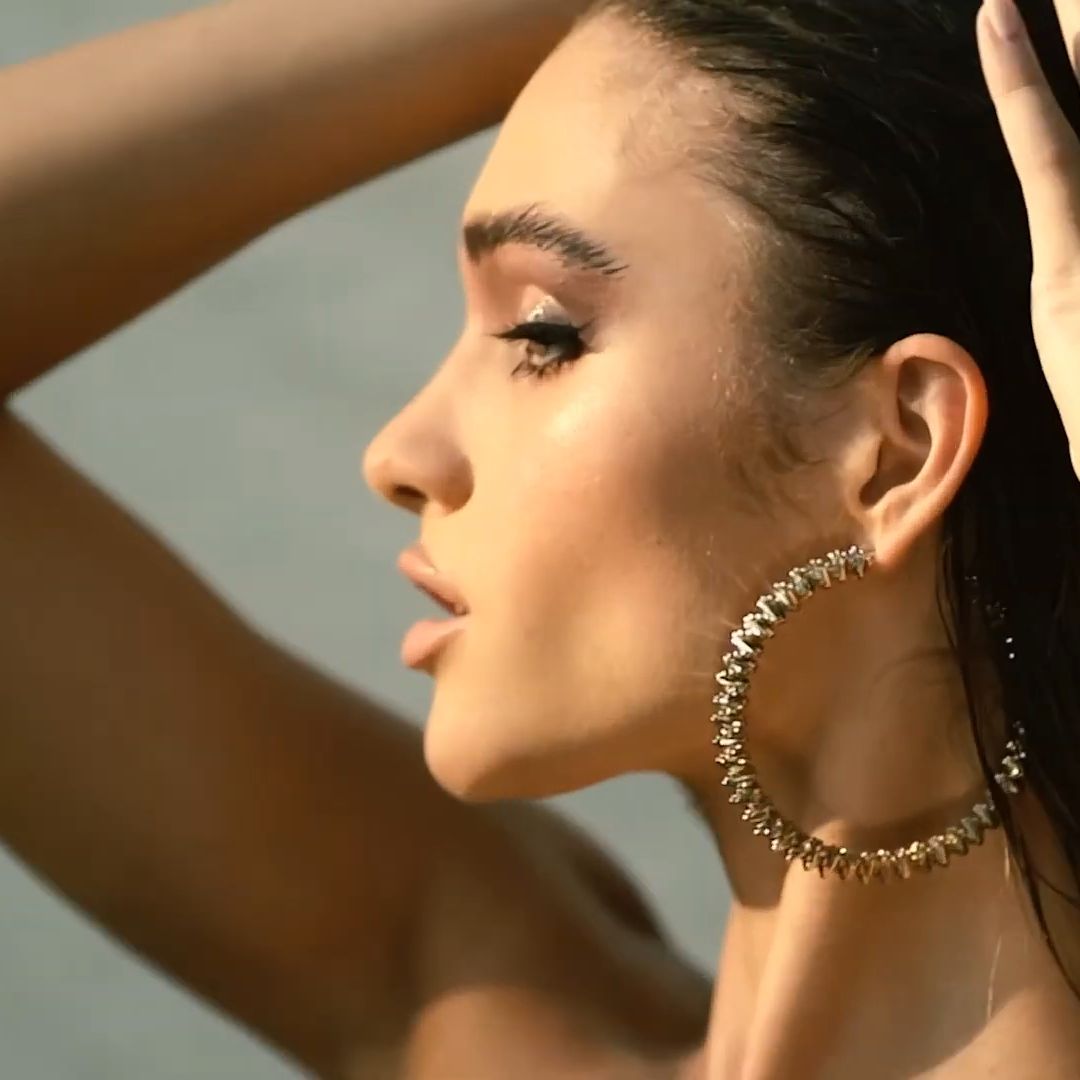
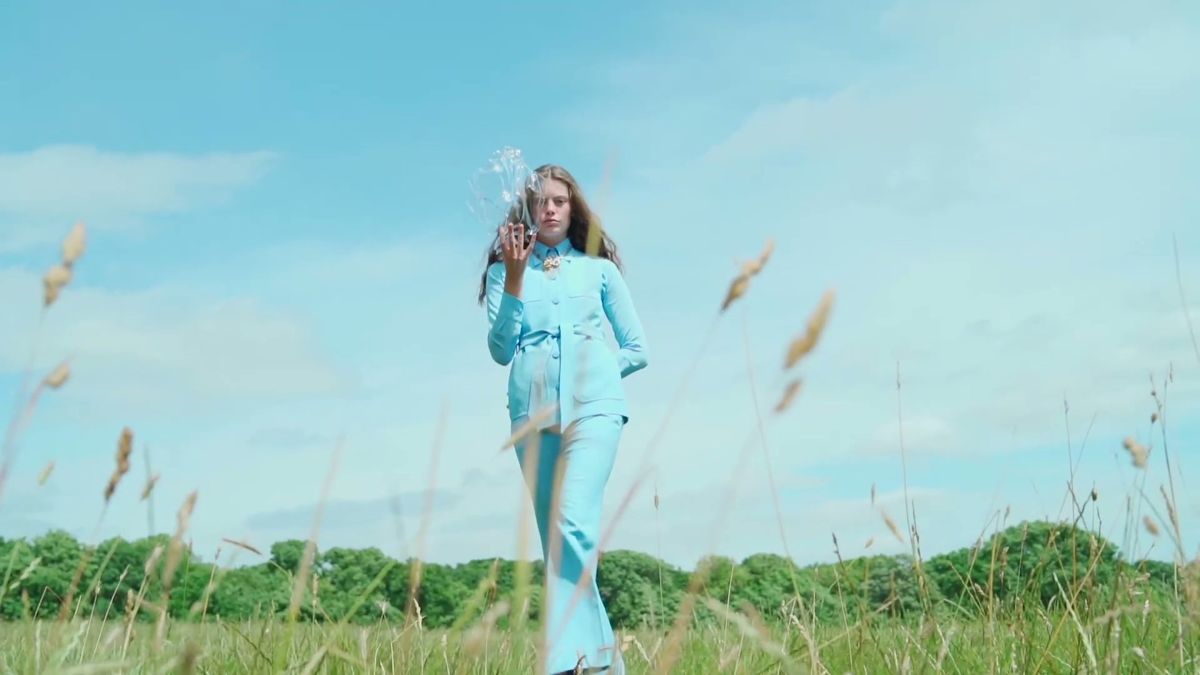
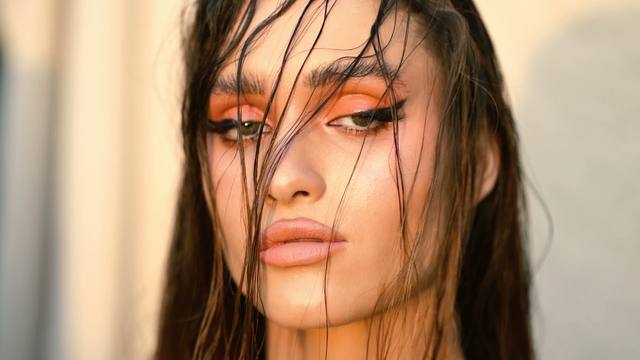
Side light is the fastest way to make beauty look editorial. Put the source at 90 degrees and the face splits into light and shadow; every bit of gloss, glitter and metal catches it. In Dubai, the sun does this for free late in the day. On the pool editorial with art direction by Philipp Jelenska, make-up by Ido Raphael and hair by Dani, the kit was a Sony A7 III with an 85mm f/1.8, and the lighting was kept "simple and dramatic to create a golden reflective atmosphere around the model". Low sun across a cream fabric backdrop did most of the work. More in the Your Water Form case study.
Turn the face, not the sun
You can't move the sun. Turn the model a few degrees at a time until the highlight sits on the cheekbone, not the nose.
Gloss needs a source
Glossy lids, wet hair and gold only shine if there's something bright for them to reflect. Side light gives them one.
Watch the shadow side
A white card or the fabric backdrop bounces a little light back. Too much and the drama goes; too little and the eye disappears.
Shoot late
Midday sun in Dubai is overhead and harsh. The useful side light arrives in the last hours before sunset.
Shadows as part of the picture
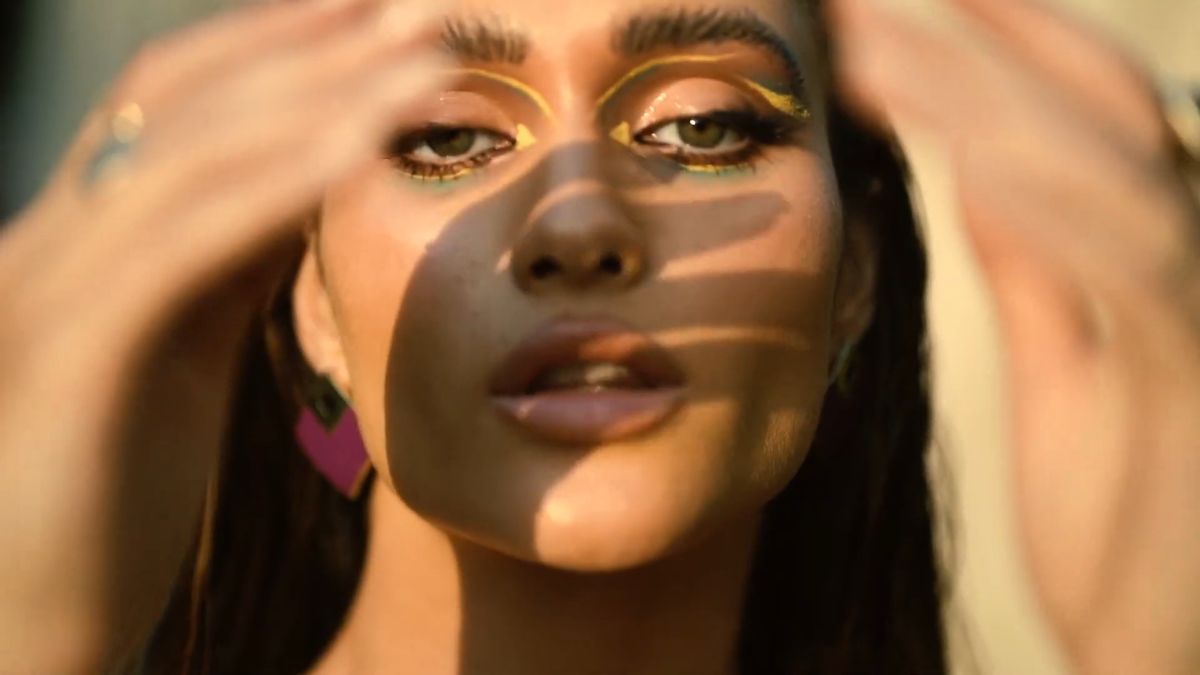
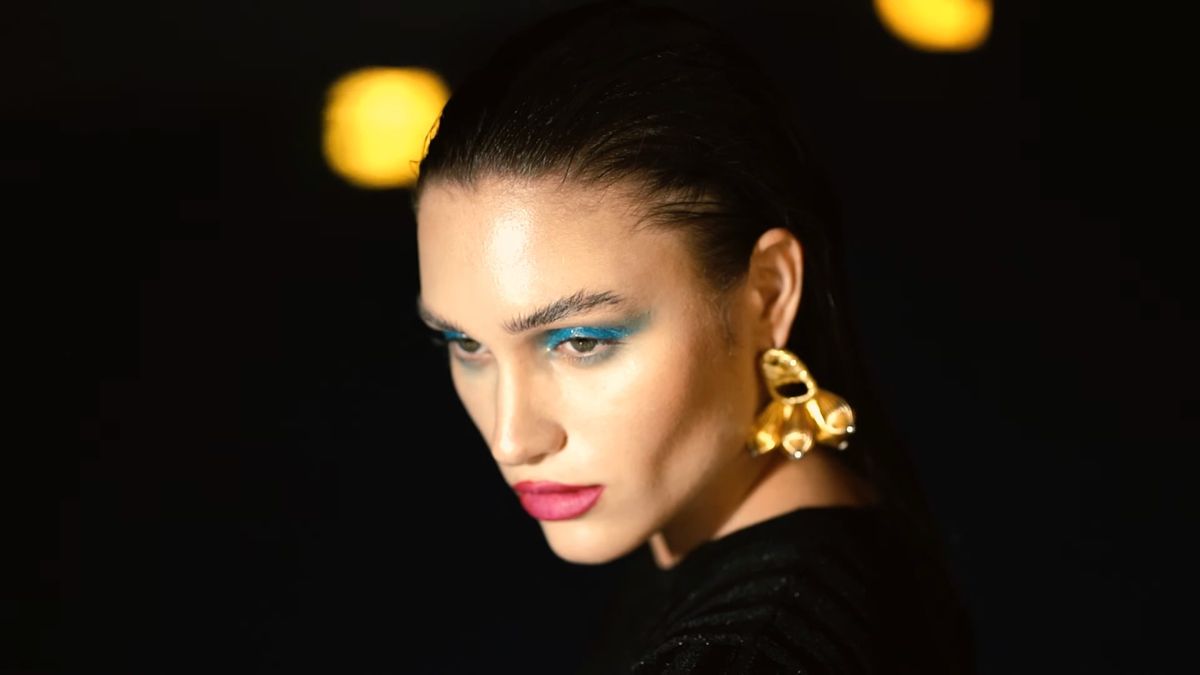
Hard light is usually avoided in beauty because it shows every pore. Used on purpose, it gives you graphic pictures nobody can make with a softbox. In the frame above, the model's hands break the low sun into stripes across the face, and the graphic gold liner is lit in the gaps. The rules are simple: keep the eyes in light, keep the shadow edges clean, and pose the hands deliberately rather than letting them land anywhere.
After dark the same principle works with one small hard source and the pool or city lights behind as soft circles. The pool editorial did exactly that for its night looks.
Choosing the setup for the brief
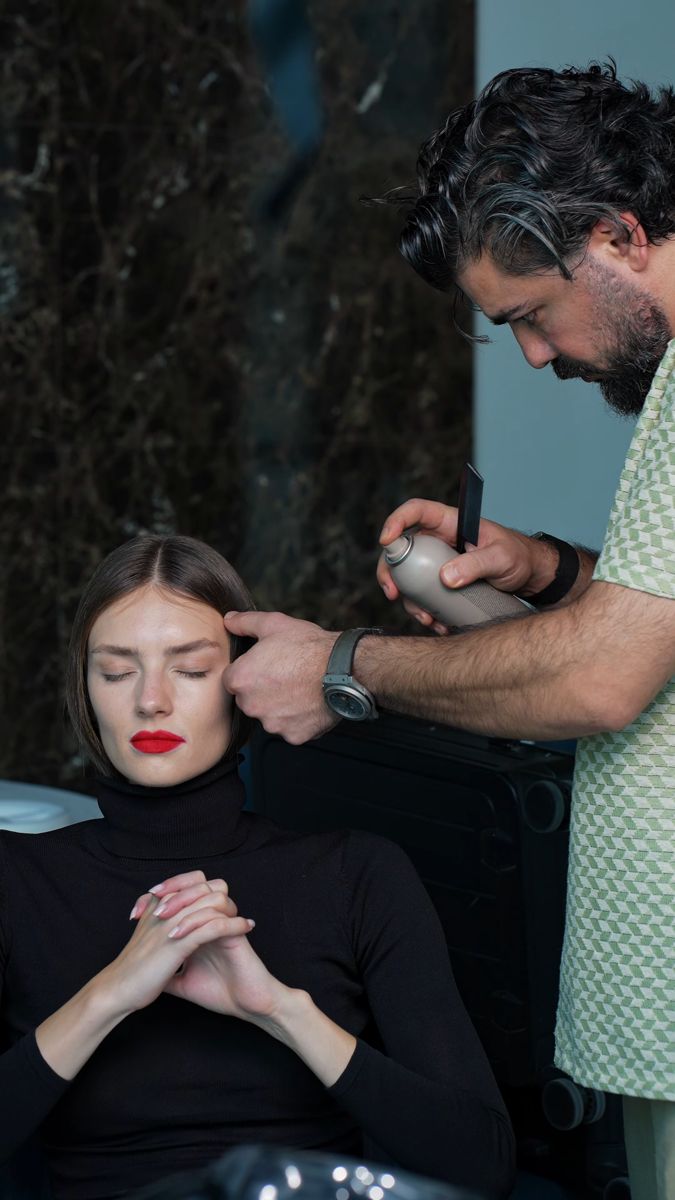
Waterproof was shot in Downtown Dubai with natural window light and a darker, low-key set, by a small team: model Vika Levina, make-up by Elinaz, hair by Dani, for Fashion League UAE. Two lighting moods from one day is a good pattern for any beauty shoot: start soft and even while the make-up is fresh, then move to the moodier setup for the editorial frames.
| Brief | Start with | Then add |
|---|---|---|
| Skincare, serum, SPF | Clamshell | A soft side key for the campaign portrait |
| Foundation and shade range | Clamshell, fixed white balance | Nothing that changes between models |
| Lipstick, brows, sculpted make-up | Butterfly | A side-lit profile |
| Editorial, graphic make-up | Side light or low sun | Hard light and shadows |
| Jewellery on a model | Side light for sparkle | A soft fill so the skin stays clean |
Shoot a grey card for every setup, so colour and skin tone can be matched in the edit.
Light for the make-up artist too. They need to see what the camera sees; touch up under the key light, not a mirror bulb.
Keep texture. Good light means less retouching. For how to keep skin real afterwards, see beauty retouching that keeps skin texture.
In Dubai, plan around the sun: soft setups indoors in the middle of the day, side light and hard light outside late. Locations and permits are in where to shoot fashion and beauty in Dubai.
Beauty lighting on film
Questions
What is the best lighting for beauty photography?
For skincare and complexion work, clamshell lighting: a soft key above the lens and a reflector below, which gives even, glowing skin. For lipstick and sculpted make-up, butterfly light. For editorial drama, side light or low sun.
What is clamshell lighting?
Two frontal sources around the lens: a soft key in front of and above the face, and a reflector or weaker light underneath. It minimises shadows and is the standard setup for skincare, foundation and beauty close-ups.
What is the difference between butterfly and clamshell lighting?
Butterfly is one light straight in front and above the face, which leaves a small shadow under the nose and defines the cheekbones. Clamshell adds a reflector or second light below to fill those shadows for a softer, more even look.
Can you shoot beauty photography in natural light in Dubai?
Yes, if you time it. Use window light or open shade in the middle of the day, and low side sun in the last hours before sunset. Overhead midday sun is too harsh for faces, and in summer the heat shortens how long talent and make-up can work outdoors.
Sources
Work with SwainUK
Planning a beauty shoot?
Beauty film and stills for brands, make-up artists and clinics, lit for real skin and delivered for every format you post.