London · Guide for brands, marketers and filmmakers
iPhone vs Cinema Camera for Brands: iPhone 17 Pro or Sony FX3, and Which Jobs Suit Each
An iPhone 17 Pro and a Sony FX3 compared for brand work: what each does better, which jobs suit which, and how to mix them on one shoot.
- Words and camera
- Joshua Swain
- Published
- Reading time
- 7 min
- Filed under
- Guide
In brief
- Both record 4K at up to 120 frames per second and both shoot a flat log profile for grading.
- On a phone screen in a feed, a well-lit iPhone shot and a well-lit FX3 shot can be hard to tell apart.
- For IBV Gold, a London gold company, SwainUK shot a series of ten short Meta ads on an iPhone 17 Pro kit from LighRent, then did the animation and the edit.
- The Celine Winter '22 "Dans Paris" film for Savoir Flair, made in Dubai, is close to the opposite brief.
- Plenty of campaigns shoot the hero film on a cinema camera and the vertical extras and BTS on a phone the same day.
Contents 10 sections
- 01iPhone 17 Pro vs Sony FX3: the specs that matter
- 02Where the difference actually shows
- 03IBV Gold: ten ads on an iPhone 17 Pro
- 04Celine on an FX3, and a podcast on three
- 05Which camera for which brand job
- 06Making iPhone and cinema footage cut together
- 07Five questions for your brief
- Phone and cinema camera work
- Questions
- Sources
iPhone or cinema camera is now a real question on brand shoots, not a joke. The iPhone 17 Pro records ProRes RAW and Apple Log 2; a compact cinema camera like the Sony FX3 brings a full-frame sensor, real lenses and proper audio inputs. This guide compares them on paper and on screen, shows which jobs suit each, and uses two real SwainUK projects as the examples: ten IBV Gold ads shot on an iPhone 17 Pro, and a Celine fashion film shot on a Sony FX3.
The camera is the last decision, not the first. Start with where the film will be watched.
iPhone 17 Pro vs Sony FX3: the specs that matter
Both record 4K at up to 120 frames per second and both shoot a flat log profile for grading. The differences are in the glass, the sensor, the sound and how the camera is built to be used all day.
| iPhone 17 Pro | Sony FX3 | |
|---|---|---|
| Sensor and lenses | Three fixed 48MP cameras: 13mm ultra wide, 24mm main at f/1.78, 100mm (4x) telephoto at f/2.8 | Full-frame 10.2MP back-illuminated Exmor R sensor for video, with interchangeable lenses |
| Video | 4K Dolby Vision up to 120 fps on the main camera; ProRes up to 4K 120 fps with external recording | Up to 4K 120p (with a small crop); 4K 60p in 10-bit 4:2:2 or 16-bit RAW output over HDMI to an external recorder |
| Grading profile | ProRes RAW, Apple Log 2, ACES | S-Log3 and S-Cinetone, with 15+ stops of dynamic range |
| Multi-camera | Genlock support, to keep several devices in sync | Several matched bodies, so colour lines up between angles |
| Sound | Four built-in microphones | Detachable handle with two XLR/TRS inputs |
| Built for long days | Sensor-shift stabilisation; rigged in a cage with external power and storage | 5-axis in-body stabilisation, a cooling fan for uninterrupted 4K 60p, tally lamps, five 1/4-20 mounting points; 715g with battery and cards |
Where the difference actually shows
On a phone screen in a feed, a well-lit iPhone shot and a well-lit FX3 shot can be hard to tell apart. The gap opens up in five places.
Background separation
A full-frame sensor with a fast portrait lens drops the background into soft blur optically. On a phone that look is computed, and it shows at the edges of hair and glass.
Lens choice
The iPhone gives you three fixed focal lengths. A cinema camera gives you any lens: an 85mm for compression and flattering faces, a macro for product, a zoom for speed.
Light and highlights
In difficult light, windows behind a face, night exteriors, shiny product, a bigger sensor holds more before skin gets noisy or highlights clip.
Sound
Built-in microphones are for reference. For anyone speaking to camera you want wireless mics into a proper input, which the FX3's XLR handle is made for.
Endurance
A cinema body is built to roll for hours with a fan, tally lights and mounting points. A phone needs a cage, external power and an SSD to work the same day.
How it feels to the subject
A phone feels casual, which helps real people relax in an office or a car. A cinema camera tells talent and crew that this is a production. Both can be useful.
IBV Gold: ten ads on an iPhone 17 Pro


Two of the ten IBV Gold ads, shot on an iPhone 17 Pro kit: one presenter, one product, one point per ad.
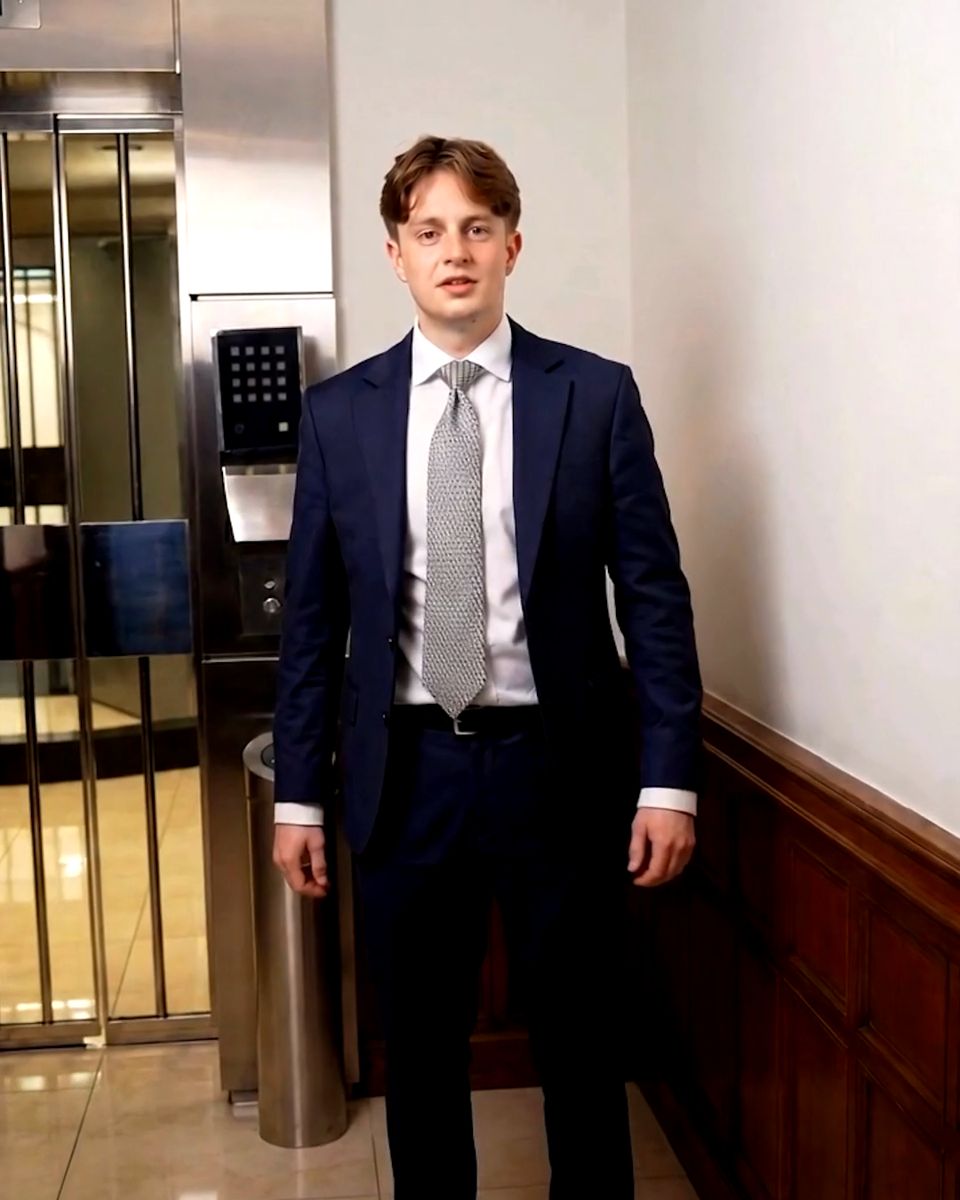
For IBV Gold, a London gold company, SwainUK shot a series of ten short Meta ads on an iPhone 17 Pro kit from LighRent, then did the animation and the edit. The ads were always going to live on phones, in the feed, with the sound off. That is the job a phone is best at: each ad makes one point, with a presenter to camera, a product close-up and animated figures on screen, filmed in real London places.
The reasons the phone made sense are the reasons it makes sense for most paid social:
Many ads, one shoot. A small rig resets in minutes, so a whole series fits into the time a single cinema set-up might take.
Feed-native look. Ads shot the way people film themselves don't announce that they're ads in the first second.
Tight spaces. Offices, cars and doorways that would need a cut-down crew and a lot of negotiation with a cinema camera.
The finish is in the edit. Captions, animated numbers and graphics carry the message, so the picture only has to be clean, well lit and well framed.
It still needs to be treated as a real camera: a cage, wireless microphones on whoever speaks, a soft light for faces, and external storage, because ProRes files fill a phone fast. The full rig and the settings are in the iPhone 17 Pro paid ads guide.
Celine on an FX3, and a podcast on three
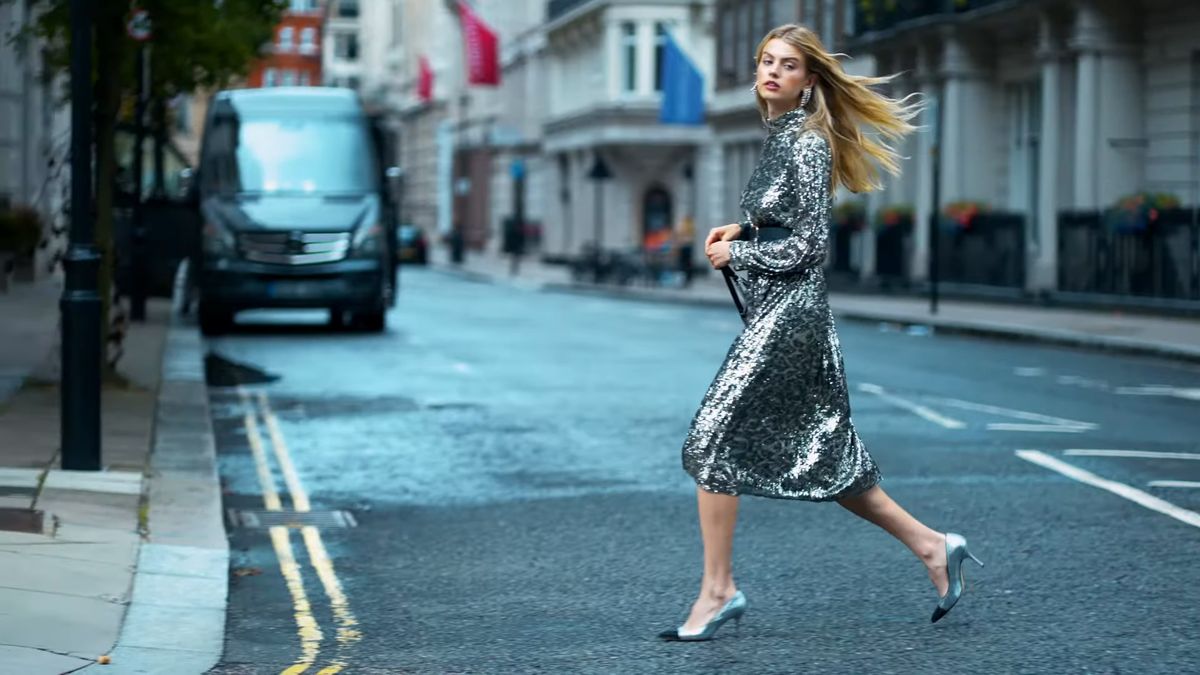
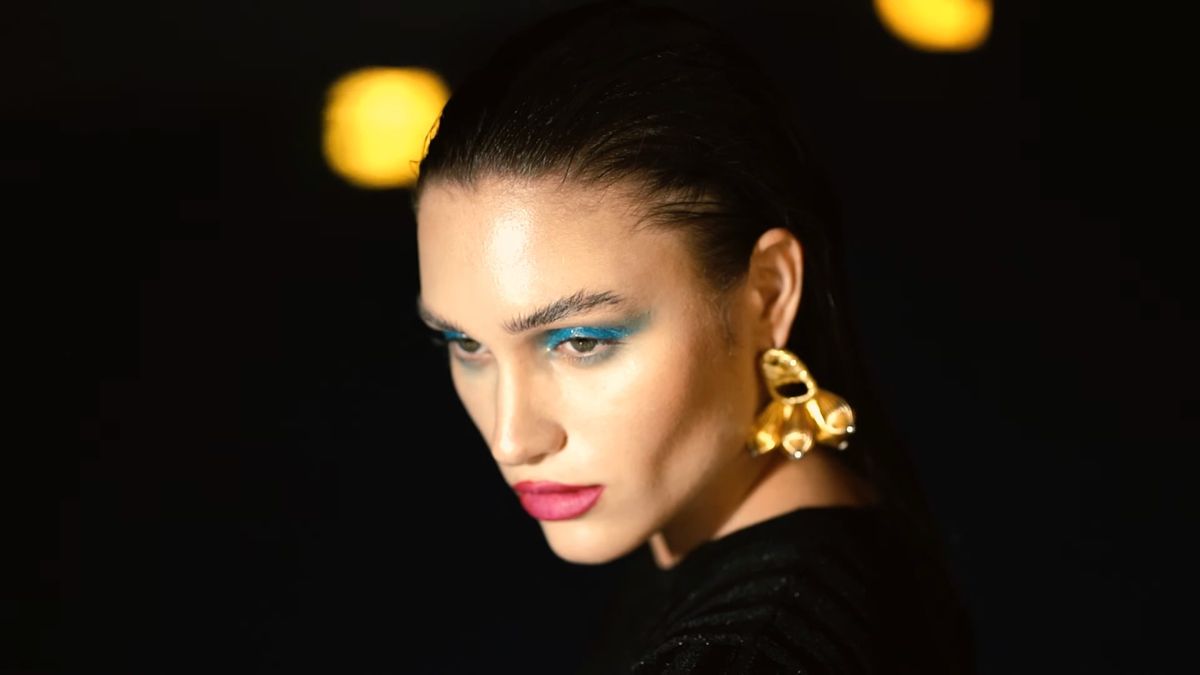
The Celine Winter '22 "Dans Paris" film for Savoir Flair, made in Dubai, is close to the opposite brief. It is fashion: the fabric, the cut and the attitude are the product, and the film has to make a small set look like a big production. It was shot handheld on a Sony FX3 with an 85mm lens, lit by two Aputure 300D lights through double diffusion. The 85mm gives the compressed, flattering perspective fashion likes and keeps every shot in the same visual family, from a gold tag to a full look. That is a lens decision a phone can't make for you. The full breakdown is in the Celine lighting case study.
The other case for a cinema body is the long, multi-camera job, such as a video podcast or an interview series filmed with a wide and a single on each person. Using the same model on every angle means the colour matches without a fight in the edit, and each camera has proper audio inputs and is designed to roll for a whole session.
Which camera for which brand job
| Job | Better choice | Why |
|---|---|---|
| Paid social ads, a series of short spots | iPhone 17 Pro, rigged | Speed, feed-native look, many set-ups in a day |
| Creator-style or UGC-style content | iPhone | It should look like a person filmed it |
| Behind the scenes on a bigger shoot | iPhone | Small, quick, and free to wander while the main camera works |
| Fashion and beauty films | Cinema camera | Lens choice, skin, fabric texture and background separation |
| Hero brand film, website or big screen | Cinema camera | Image quality holds up at any size |
| Interviews, podcasts, long multi-camera sessions | Cinema camera | Audio inputs, endurance, matched bodies |
| Night, mixed light, shiny product | Cinema camera | More room in the highlights and shadows |
If the answer is "both", that's normal. Plenty of campaigns shoot the hero film on a cinema camera and the vertical extras and BTS on a phone the same day. For how to frame one shoot for 9:16 and 16:9, see shooting vertical-first.
Making iPhone and cinema footage cut together
Same light, same white balance
Lock white balance on both cameras to the same value. Auto white balance on a phone will drift between shots.
Log on both
Shoot Apple Log 2 on the phone and S-Log3 on the FX3, then grade both into the same look. Apple's ACES support helps the match.
Match the frame rate
Agree one project frame rate before the day, and the same shutter, so motion feels identical between cameras.
Give each camera a job
Don't intercut the two on the same shot size. Let the phone own the vertical, handheld and POV moments, and the cinema camera the hero frames.
Five questions for your brief
1. Where will this run: feed, website, TV, a screen at an event, print stills?
2. How many separate pieces do we need, and in which shapes?
3. Does anyone speak to camera, and for how long?
4. Is the product something that needs real lens work: fabric, skin, jewellery, glass?
5. Should it feel like an advert or like a person filmed it?
Answer those and the camera usually chooses itself. A good production company will ask them anyway; if one recommends a camera before asking where the film will run, ask why. For the rest of the brief, see how to hire a videographer in London.
Phone and cinema camera work



Questions
Is an iPhone good enough for a commercial?
For paid social and short feed ads, often yes. The iPhone 17 Pro records ProRes RAW and Apple Log 2 and supports genlock. Rig it with proper sound, light and storage. For fashion, beauty and hero films for big screens, a cinema camera is still the better tool.
iPhone 17 Pro vs Sony FX3: which is better for video?
They suit different jobs. The FX3 has a full-frame sensor, interchangeable lenses, XLR audio inputs and a body built to record for long sessions. The iPhone is faster, smaller and looks native in the feed. Choose by where the film will run.
Can you mix iPhone and cinema camera footage in one edit?
Yes. Lock white balance on both, shoot log on both (Apple Log 2 and S-Log3), match frame rate and shutter, and give each camera its own kind of shot rather than intercutting them on the same framing.
Do brands take iPhone footage seriously?
They take results seriously. A well-lit, well-planned phone shoot made for the feed can do the job better than a cinema shoot made for a screen nobody watches it on. The plan matters more than the logo on the camera.
Sources
Work with SwainUK
Planning a shoot like this?
Commercial film and photography in London and Dubai: concept, crew, lighting, shoot and edit, from one team.