
London · Case study for skincare brands, creators and content teams
“One hero ad won’t carry a skincare brand for a month. Ten honest formats will.”
Seacra is a skincare brand whose Red Algae Infused bottle appears in most of these videos, and its social channels talk to people dealing with redness, rosacea and sensitive skin. Over 2024 and 2025 SwainUK and Swain PR made a steady stream of short-form content for it in London: studio product films, a makeup artist explaining skin prep, talking-head testimonials, a creator by the sea, street interviews outside West End theatres, and an in-house influencer series. This case study breaks that mix down into formats you can plan, shoot and repeat, and shows how to build a month of varied skincare content from it.
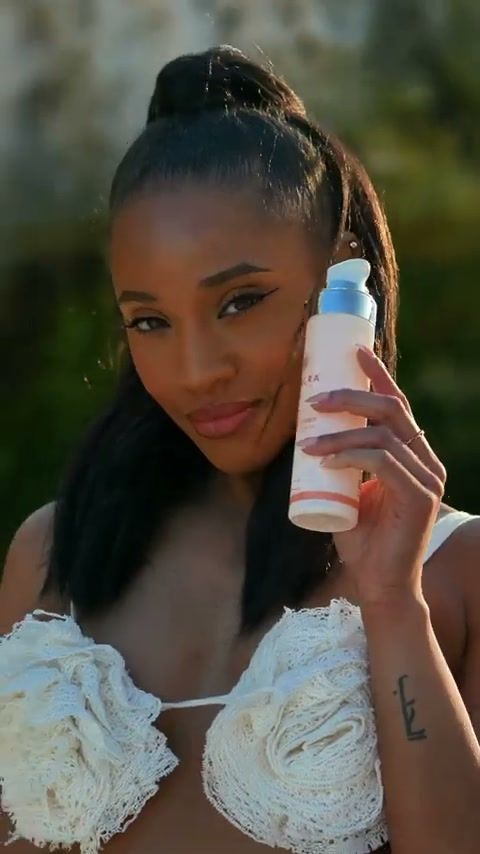
Seacra · creator content by the sea
01 · The brief
Why skincare needs a content system, not a single ad
Skincare is bought on trust. People want to see the texture, hear from someone with skin like theirs, and believe the result before they spend. No single video can do all of that, and the feed punishes repetition. The answer is a small set of formats, each with one job, shot in batches and released through the month.
The Seacra work shows that mix in practice. The project gallery holds twelve videos published on Seacra’s own channel between November 2024 and May 2025, with titles like “Soft contrast. Balanced skin. No flare-ups.”, “Skin reset starts in 1, 2, 3… go!” and “Cold weather skin protection?”. In June 2025 Swain PR added an in-house influencer series for Seacra, described as leaning into a “less is more” philosophy with a clean, relatable tone.
| Format | Its job | Seacra example |
|---|---|---|
| Product film | Make the bottle and the texture desirable | The Red Algae Infused bottle in bubbles, cream on skin |
| Expert | Borrow authority and explain why | A makeup artist on skin prep before foundation |
| Testimonial | Show a real person and a real routine | Talking heads about redness and cold-weather skin |
| Creator (UGC style) | Feel native to the feed | A creator on the beach: “Protected by the sea, not from it” |
| Street | Start conversations with strangers | Vox pops outside the Sondheim Theatre and on London streets at night |
02 · Product
Product films: make the bottle and the texture work


Two ways to say “sea”: the bottle in bubbles in the studio, and the product carried down to the water.
A product film is the one format the brand fully controls, so it carries the brand idea. Seacra’s idea is the sea, and the films keep coming back to it: the bottle surrounded by bubbles, a water lily, red algae, and a beach shoot with the product in hand. Pick one visual idea for your brand and repeat it until people recognise it without the logo.
Texture is the hero
A pump of gel onto the back of a hand, spread slowly with one finger, tells the viewer more than any claim. Shoot it macro, against skin, with soft side light.
Label straight to camera
At least one clean, readable shot of the bottle front. People screenshot it to find the product later.
A world, not a white sweep
Water, stone, sand or a styled shelf give the product a story. Keep the props on theme.
Shoot vertical first
Most of this content lives at 9:16. Compose for it from the start (see shooting vertical and horizontal video).

“Soft contrast. Balanced skin.”: the studio film, with make-up going on over prepped skin.
03 · Expert
Expert content: borrow authority, keep it human

“Makeup artists, STOP skipping this step!”: an expert video aimed at professionals.
The makeup artist film speaks to a specific audience, other makeup artists, with a hook that is a warning: stop skipping this step. It is tagged with Seacra and CODE8, a make-up brand, which is a neat way for two brands to share one piece of expert content. Swain PR’s later expert-style videos follow the same logic: a middle-aged, authoritative presenter, simple framing and one clear explanation, made for paid ads, a homepage and organic reels.
1. One problem per video. Skin prep, redness, cold weather. Experts lose people when they try to cover everything.
2. Seat them, light them softly. A warm practical lamp behind, soft key from the side, eyeline just off the lens. It should feel like a consultation, not a lecture.
3. Show while they tell. Cut to hands, product and skin during the explanation, so the viewer sees the step being described.
4. Check every claim with the brand. Experts sound convincing, which is exactly why what they say must be something the brand can back up.
04 · Testimonial and creator
Testimonials and UGC-style videos


Talking head and routine: plain backgrounds, natural light, skin that looks like skin.
UGC-style content looks easy and is easy to get wrong. The Seacra testimonials work because they are simple: one person, a plain wall or a home setting, a clear question in the first second (“Have you ever gone red after only one glass of wine?”), then the routine. The creator video on the beach adds a credited UGC creator and the line “Protected by the sea, not from it”.
Hook with the problem
Open on the viewer’s problem, in their words, not the product name.
Phone-native, not phone-quality
Framed like a selfie, lit like a commercial. A window or a soft source in front of the face keeps skin honest and flattering.
Don’t over-retouch
Visible texture is the proof. A smoothed face makes a skincare result unbelievable.
Disclose the partnership
Paid creators and in-house talent should be clearly labelled as advertising. In the UAE that comes with its own licence, covered in the UAE advertiser permit guide.
05 · Street
Street interviews: real people, real reactions
Street content turns a brand into a conversation. Seacra’s street videos include vox pops outside the Sondheim Theatre in the West End and a night-time series asking strangers “What’s the grossest thing your skin touches?”, with the product in the interviewee’s hand. One video replies to a viewer’s comment by putting the question (“What’s your skincare routine?”) to people on the street, which turns the comment section into the next brief.
Ask one question everyone can answer. Routines, bad habits, the weather on your skin. Easy questions get honest, funny answers.
Use a handheld mic with a branded flag or a clean look. It tells passers-by this is a shoot and gives the video a recognisable look.
Get releases on the spot. Everyone who appears needs to agree, in writing, before the clip goes out.
Mix with product shots in the edit. A few seconds of texture between answers keeps the brand present.
The full method, from kit to consent, is in street interview videos for brands.
06 · The month
A month of skincare content from two shoot days
Here is a plan you can copy. It batches the formats into two shoot days and releases them across four weeks so the feed never repeats itself. It is a template built from the formats above, not a record of Seacra’s own calendar.
| Week | Posts | Shot on |
|---|---|---|
| Week 1 | Product film, expert tip, testimonial | Studio day |
| Week 2 | Street interview, texture close-up, reply to a comment | Street day and studio leftovers |
| Week 3 | Creator video, second testimonial, routine | Studio day |
| Week 4 | Street interview, expert follow-up, best performer recut as an ad | Street day and the edit |
Studio day: product and texture in the morning while the set is clean, then talking heads, expert pieces and routines with two or three different people.
Street day: a two-person crew, one question, a bag of product and a stack of release forms. Afternoon into early evening, when streets are busy and the light is soft.
The edit: watch what performs in weeks 1 and 2, and recut the winner as a paid ad. More on which formats convert in skincare and beauty content that converts.
Watch
Seacra content
 Product: soft contrast, balanced skin
 Creator: protected by the sea
 Testimonial: cold weather skin
 Street: outside the Sondheim Theatre
 Street at night: be honest
 Skin reset: replying to comments
 Less is more: Seacra influencer series
 Expert-led skincare ad, Swain PR

More guides
Keep reading
FAQ
Common questions
What kind of social media content works for skincare brands?
A mix of formats, each with one job: product and texture films, expert explainers, testimonials, UGC-style creator videos and street interviews. Rotating them keeps the feed fresh and builds trust from several angles.
How do you make UGC-style skincare videos look natural?
Frame them like a selfie but light them properly, open with the viewer’s problem, keep real skin texture, and let the person talk in their own words. Label paid partnerships clearly.
How many skincare videos do you need a month?
That depends on the brand’s posting plan, but two well-planned shoot days, one in the studio and one on the street, can supply a month of varied posts plus material for paid ads.
Do street interviews work for beauty brands?
Yes, when the question is simple and relatable and the product appears naturally. Get a signed release from everyone who appears before the video goes out.
Written by Joshua Swain, who films beauty, skincare and social content in London and Dubai. See the Seacra social media content project.