London · Guide for filmmakers, creators and brands
“You can't script a stranger's first reaction. That's what brands are paying for.”
Street interviews work because the reactions are real: a passer-by trying a product, answering a question, laughing on camera. To make them for a brand you need a tight question, light kit, a small crew so you can film on London's streets without a permit, and a signed release from everyone who ends up in the edit. Here is how to plan, shoot and cut them.
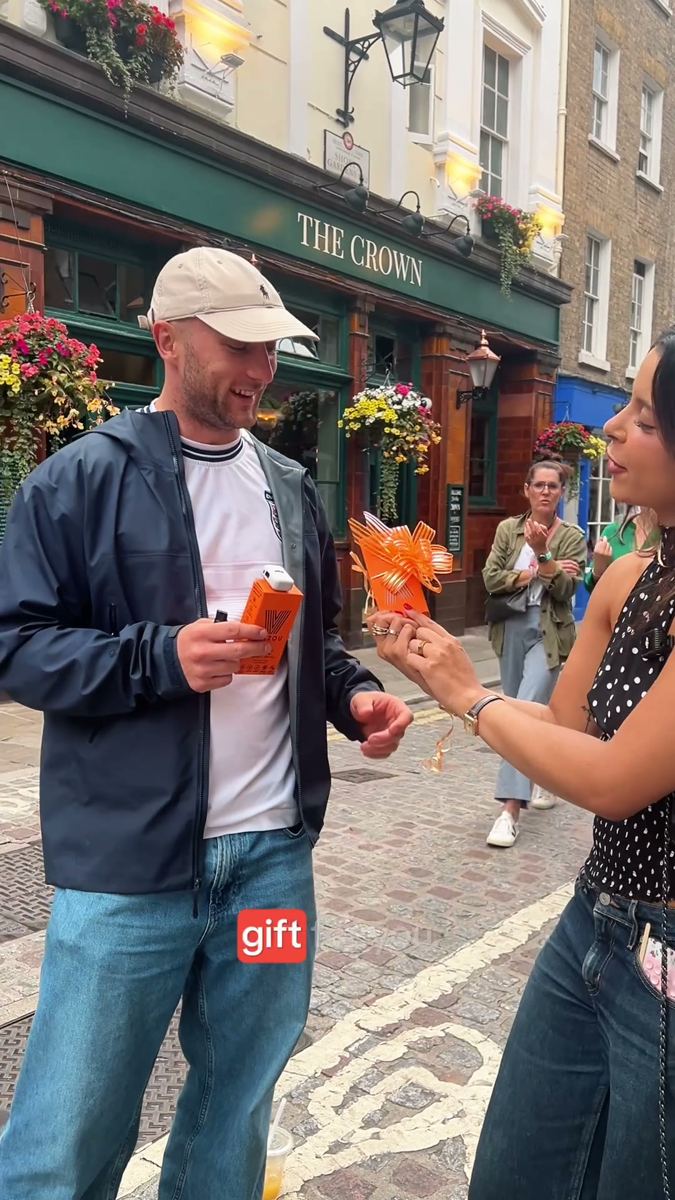
Vitzou street interviews · London
01 · Why it works
Why brands buy street interviews
Real reactions
A stranger's honest first impression is more believable than any script. It's the opposite of a generated ad.
Native to the feed
Vertical, fast, captioned. Street interviews look like content people already watch, not like an advert.
Many videos from one day
One afternoon on the street can produce a whole series. For Vitzou we delivered thirteen separate interview videos.
Product in hand
The product isn't on a table; it's in someone's hand while they react to it. That's what sells it.
02 · The question
One question, asked well
The whole series lives or dies on the question. It should be short, easy to answer in a few seconds, and lead straight to the product.
Good: "Have you ever tried vitamin D as a spray?" (easy yes or no, then the product comes out)
Good: "Rate this smell out of ten." (a number gives a clean ending for the cut)
Weak: "What do you think about wellness?" (too open, long answers, nothing to cut to)
Write three questions and test them on the crew before you go out. Keep the one that gets the quickest honest reaction.
03 · Kit and crew
Small crew, light kit
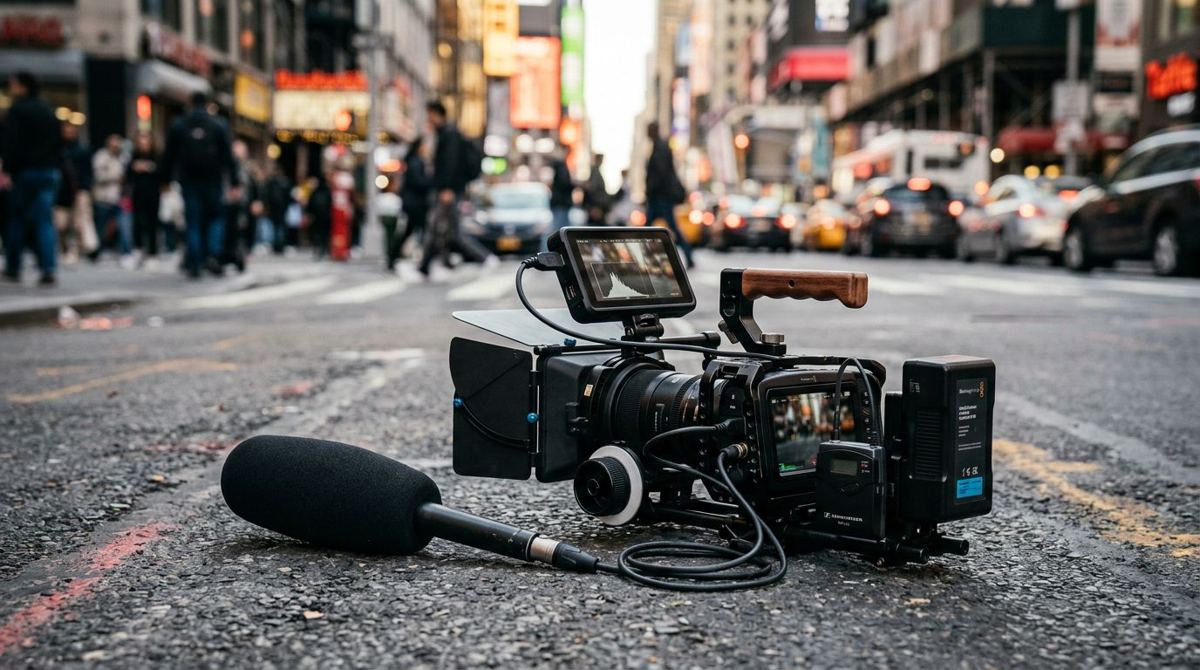
In London a crew of five or fewer, handheld and not blocking the pavement, can film on the street without a permit. Keep it that way: it's faster, and people are more relaxed talking to two or three people than to a full crew.
| Role | Kit |
|---|---|
| Interviewer | Handheld microphone with a branded flag, or two wireless lavaliers |
| Camera | Small cinema camera or phone rig, shooting vertical, gimbal optional |
| Producer | Release forms (paper or a QR code), product stock, water, spare batteries |
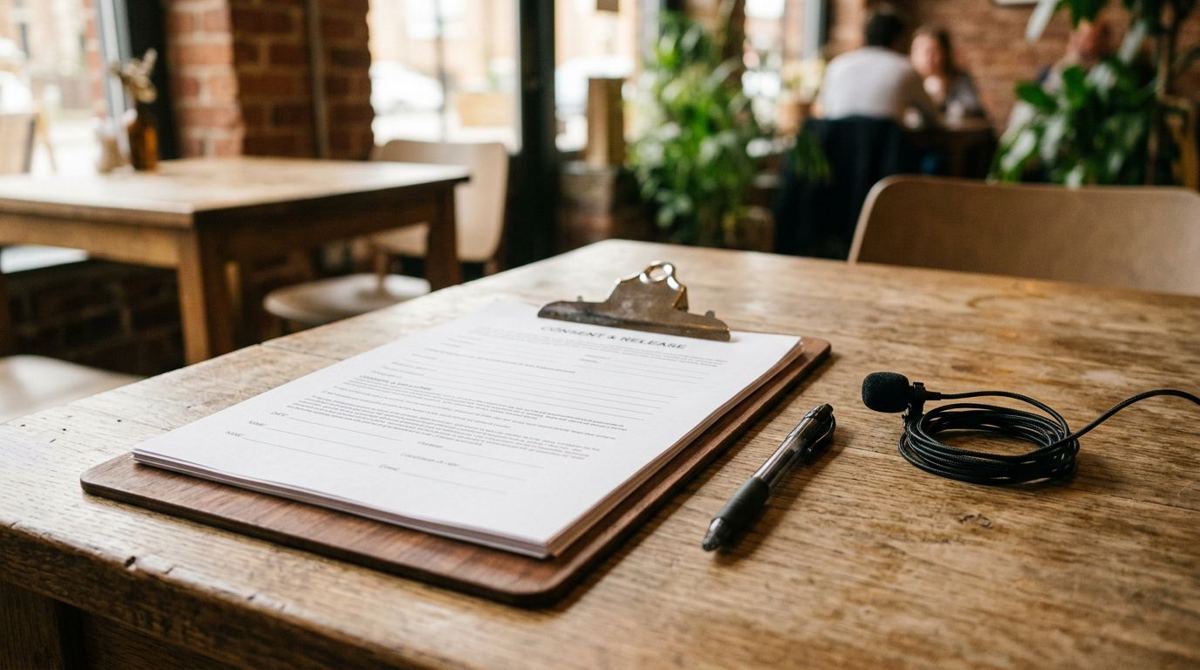
Illustration (AI): the release form comes before the first question.
Source: Film London, advice for small crews. See also shooting a commercial in London.
04 · Consent
Releases: the part you can't skip
Filming in a public place is generally lawful in the UK, but using an identifiable person in a brand's content is different: you need their consent, and under UK GDPR you need to handle their footage and details properly. In Dubai it's stricter still: filming or publishing someone without consent can carry heavy fines and even prison.
Ask first, film second
Explain who the video is for and where it will appear, then start recording once they agree.
Sign on the spot
A short release covering use, platforms and duration. A QR code to a digital form saves paper in the rain.
Watch the background
Frame tightly or use a shallow depth of field so passers-by behind aren't identifiable.
No children
Don't interview under-18s without a parent's signed consent. In practice, avoid it.
Sources: Sprintlaw, filming people in public in the UK · BSA Law, UAE privacy law. This isn't legal advice.
05 · Worked example
Vitzou: thirteen interviews in central London
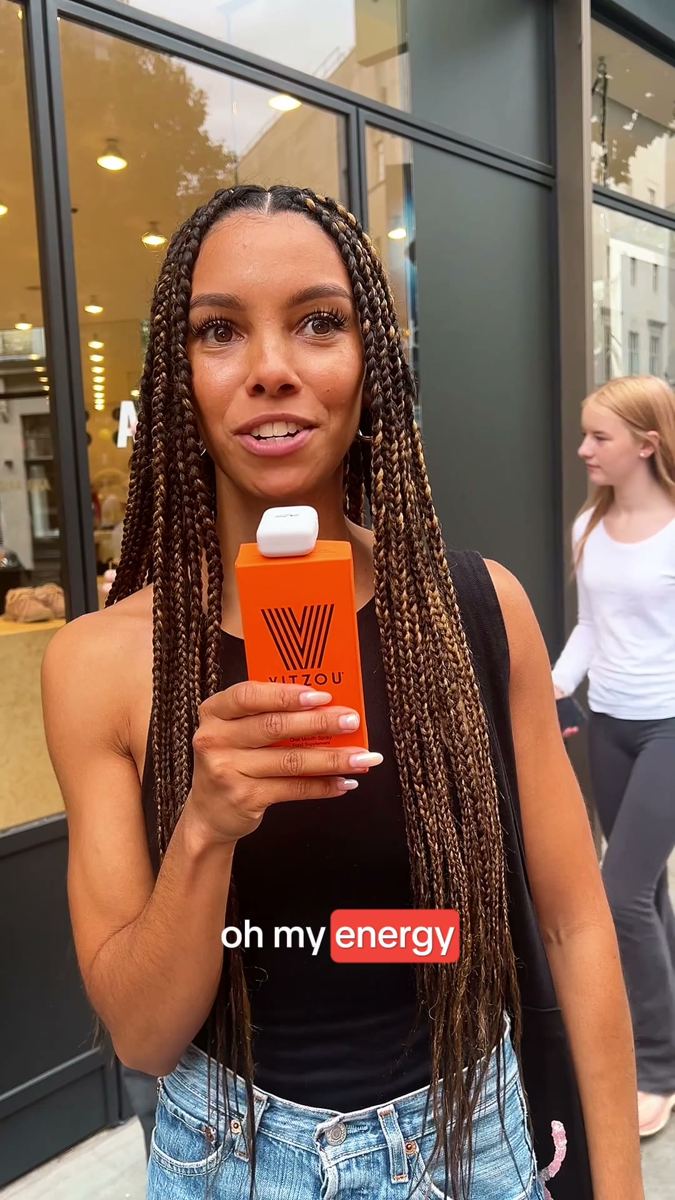
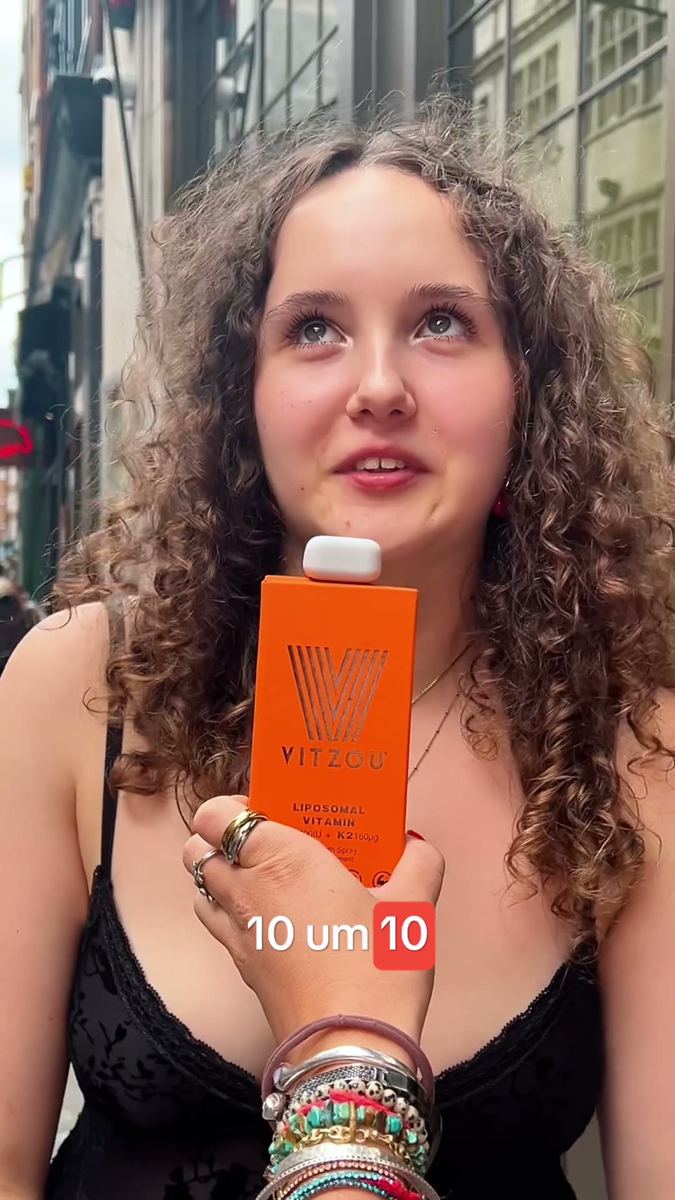
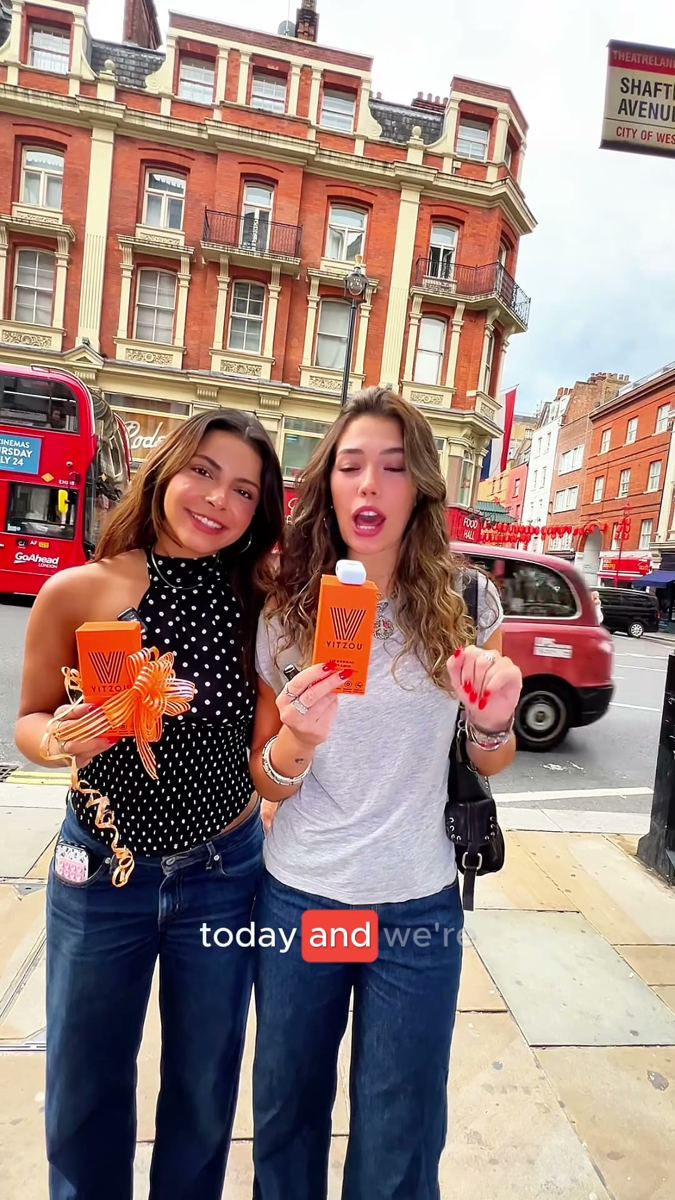
Vitzou street interviews, filmed by SwainUK in London.
For Vitzou, every video follows the same shape: a quick question, the product handed over, the honest reaction, and a short punchline to end on. The product stays in shot in every frame, and the edit is vertical with bold captions so it works with the sound off.
06 · The edit
How to cut them
The first two seconds: start on the reaction, not the walk-up.
Captions: burn them in, large and centred, highlighting the key word.
Length: keep each video short, one person or one pair per video.
Ending: finish on the product in hand or a clean score, never mid-sentence.
Series: the same opening and graphics on every video, so the series is recognisable.
FAQ
Common questions
Do I need a permit to film street interviews in London?
Not usually, if you're a small crew of five or fewer, handheld and not obstructing the pavement. Tell the borough film service, and remember parks and stations need permission.
Do people in a street interview need to sign a release?
For brand content, yes. Get written consent covering where and how long the video will be used before you publish it.
What microphone is best for street interviews?
A handheld microphone with a flag is the classic look and clearly shows you're filming. Two wireless lavaliers give cleaner sound for longer conversations.
Can I film street interviews in Dubai?
Yes, but consent rules are strict and commercial filming in public needs a permit. Get signed releases before filming and work with a licensed production company.
Written by Joshua Swain, who films street interviews, campaigns and podcasts in London and Dubai. See the portfolio.