London · Podcast video case study
Podcast Video Production in London: Cameras, Sound and Edits That Keep Viewers
How we filmed What Was I Gonna Say for Joice with three cameras in a garden room: the layout, the sound, the cut and the files a podcast actually needs.
- Words and camera
- Joshua Swain
- Published
- Reading time
- 5 min
- Filed under
- Case study
In brief
- Every episode used the same three angles, and that consistency is what lets an edit move quickly between them:
- We build the cameras, lights and sound around the room, so the host and guests can sit down and simply talk.
- People will watch a soft picture; they will not sit through bad sound.
- We switch angles on the gaps between words, not in the middle of them, and cut to the listener when a reaction tells the story better than the speaker.
- A real room with character beats a blank studio, as long as you can control noise.
Contents 7 sections
“A podcast is a conversation first. The cameras are there to catch it, not to interrupt it.”
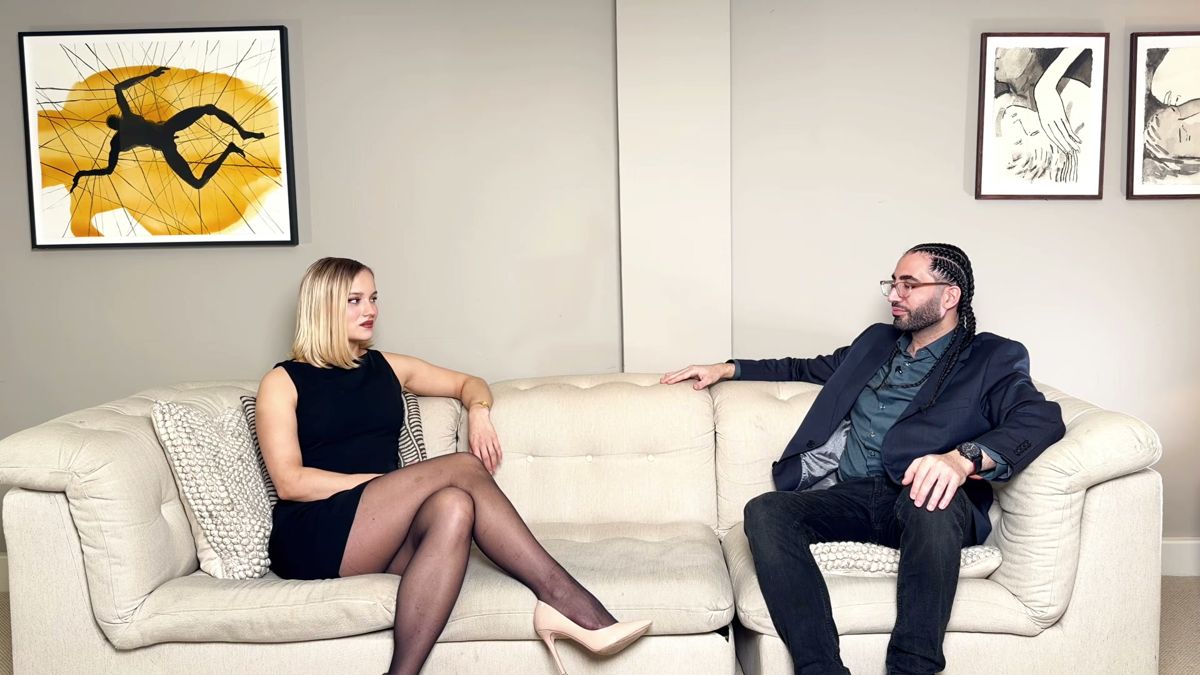
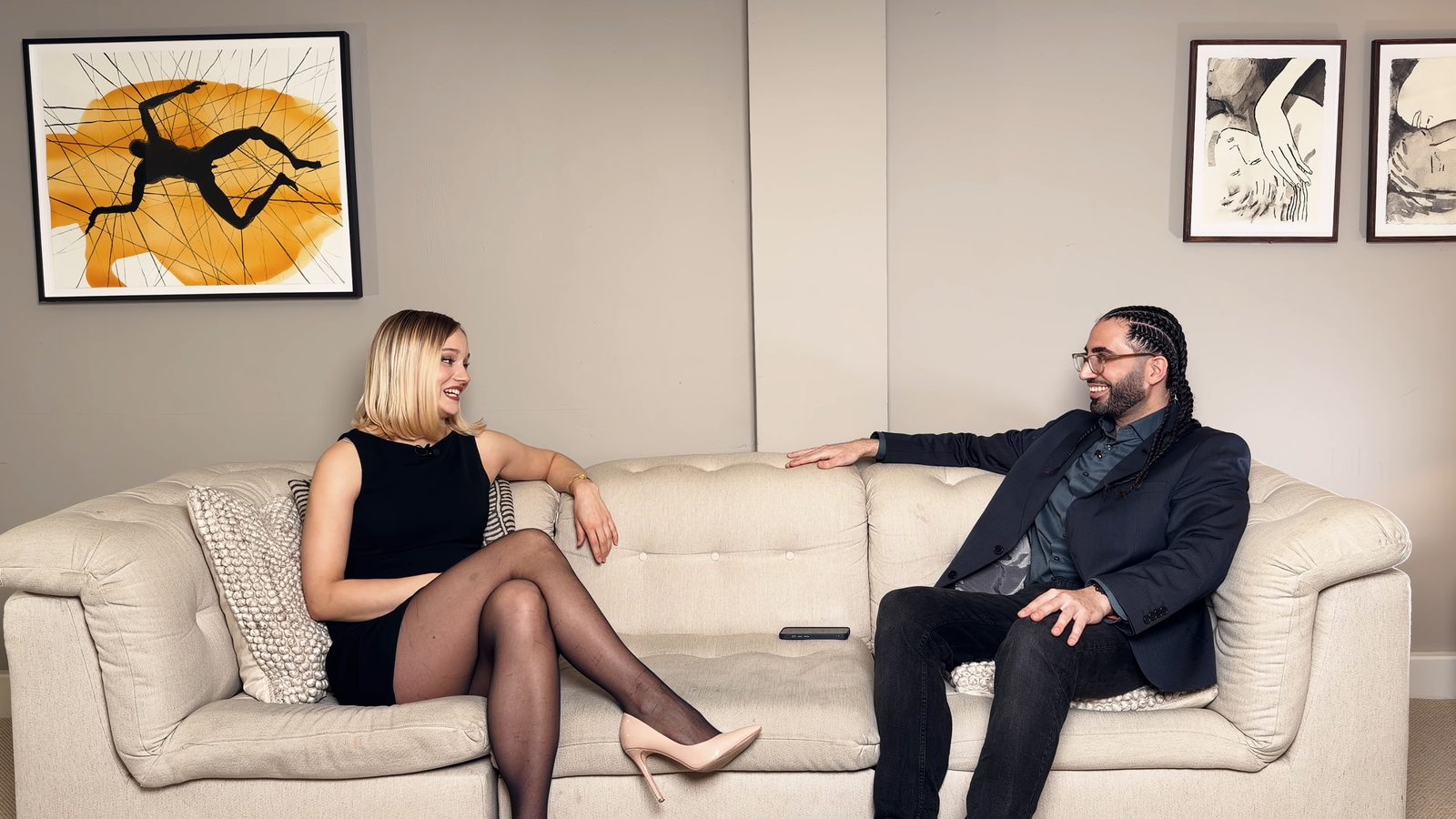
Most podcasts are now watched as well as heard. YouTube says more than a billion people a month watch podcast content there, so the video has to hold attention as well as the talk does. In summer 2026 we filmed What Was I Gonna Say for Joice, hosted by Estee Stimler: four episodes, three cameras, one garden room in London. This is how we set it up, how we recorded the sound and what we delivered, so you can plan your own podcast shoot.

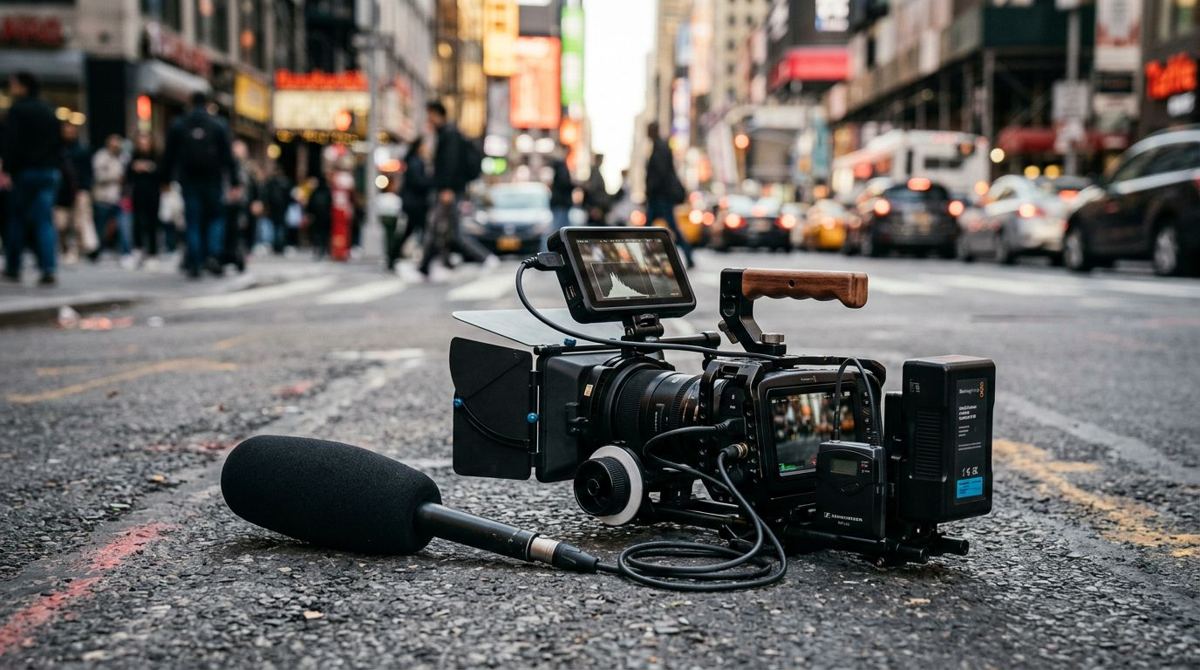
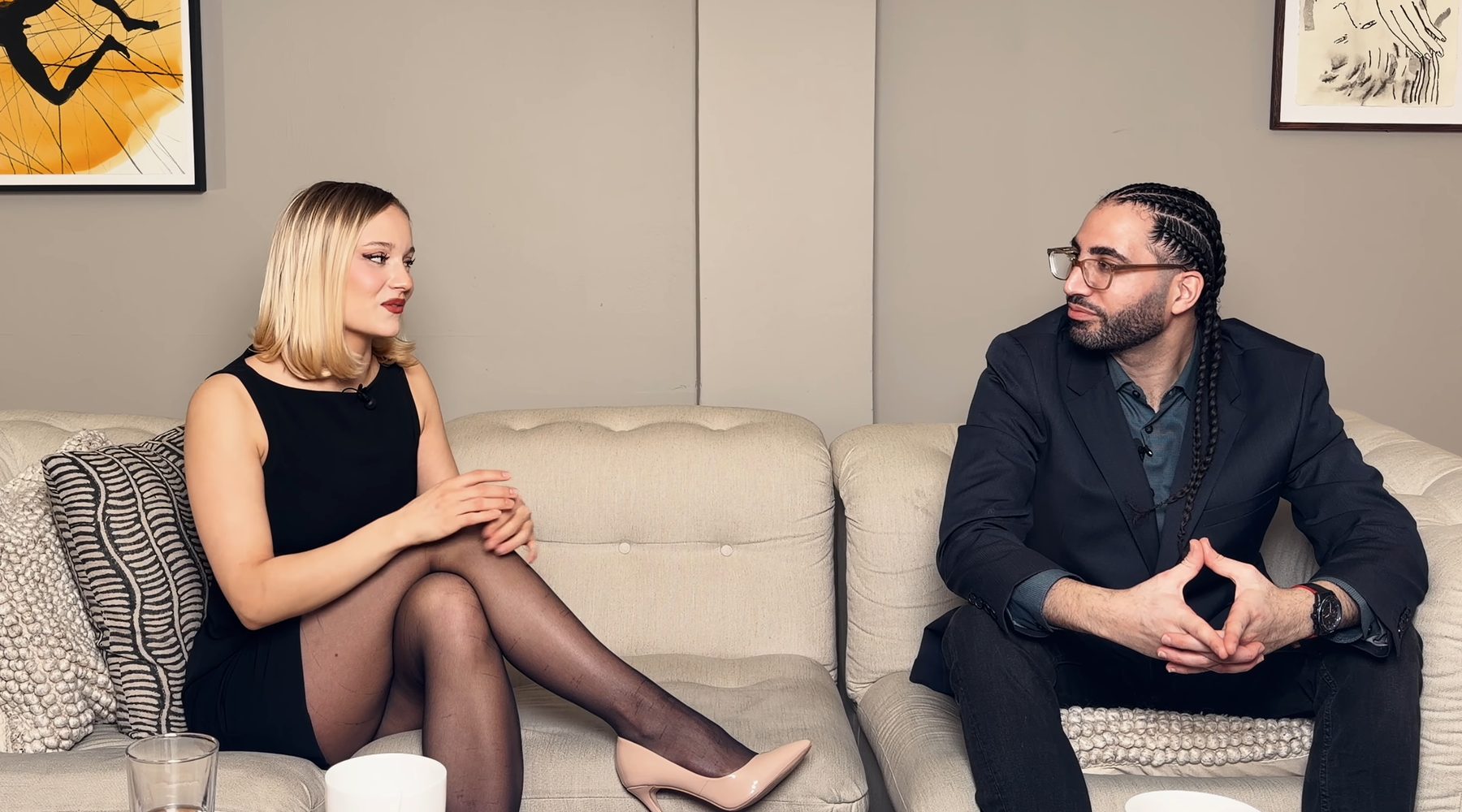
Artist Lyssa on her single camera, from our LYSSA interview series in Soho · SwainUK, 2026
A three-camera podcast setup that works in a real room
Every episode used the same three angles, and that consistency is what lets an edit move quickly between them:
The wide
Everyone in frame, so there is always a safe shot when people talk over each other. It also shows the room, which gives the show its look.
The host single
A tighter shot on the host for questions and reactions. Keep the background soft so the room does not compete with the face.
The guest single
The camera that carries most of the episode, because the guest does most of the talking. With two guests we framed them together as a two-shot.
A room with big windows looks beautiful but changes as clouds pass. The answer is to expose for the faces, let the windows sit bright and lock every camera's white balance, so the three angles still match when you cut between them.
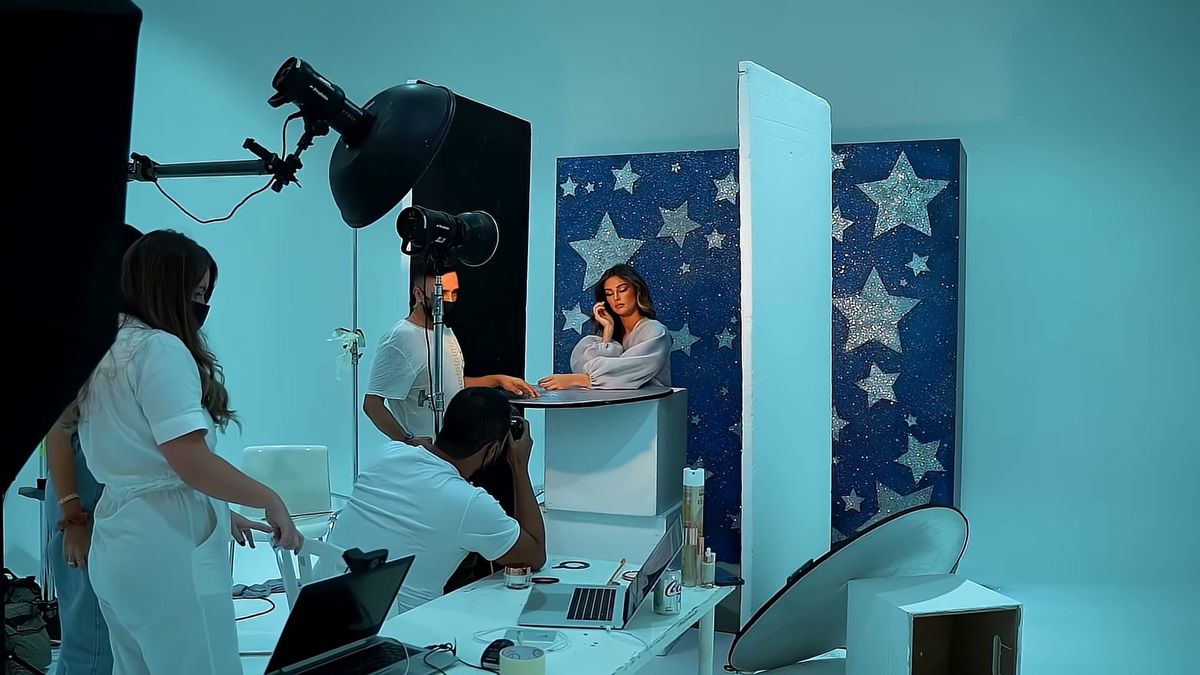
Behind the scenes on a podcast shoot
Most of the work happens before anyone presses record. We build the cameras, lights and sound around the room, so the host and guests can sit down and simply talk.
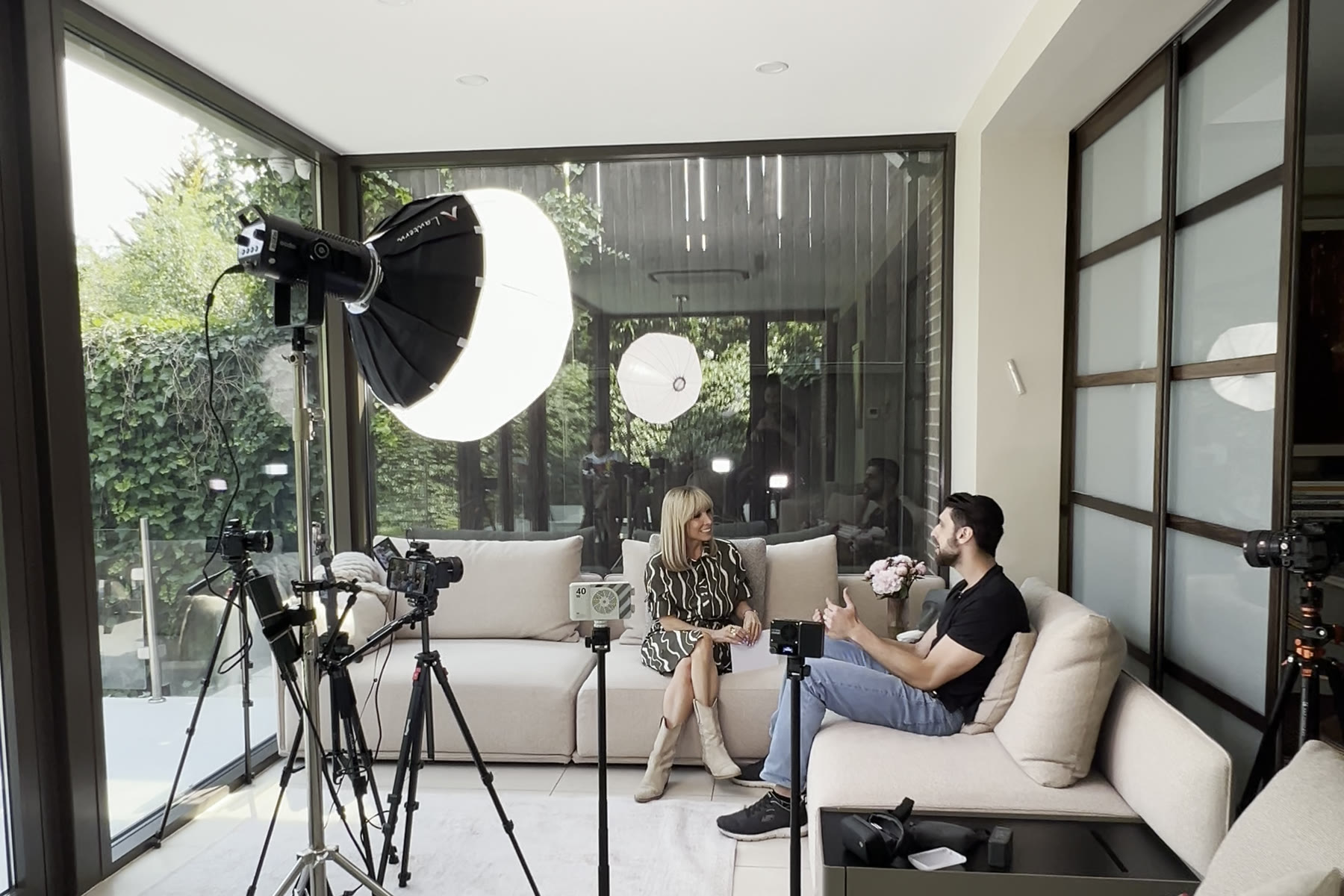
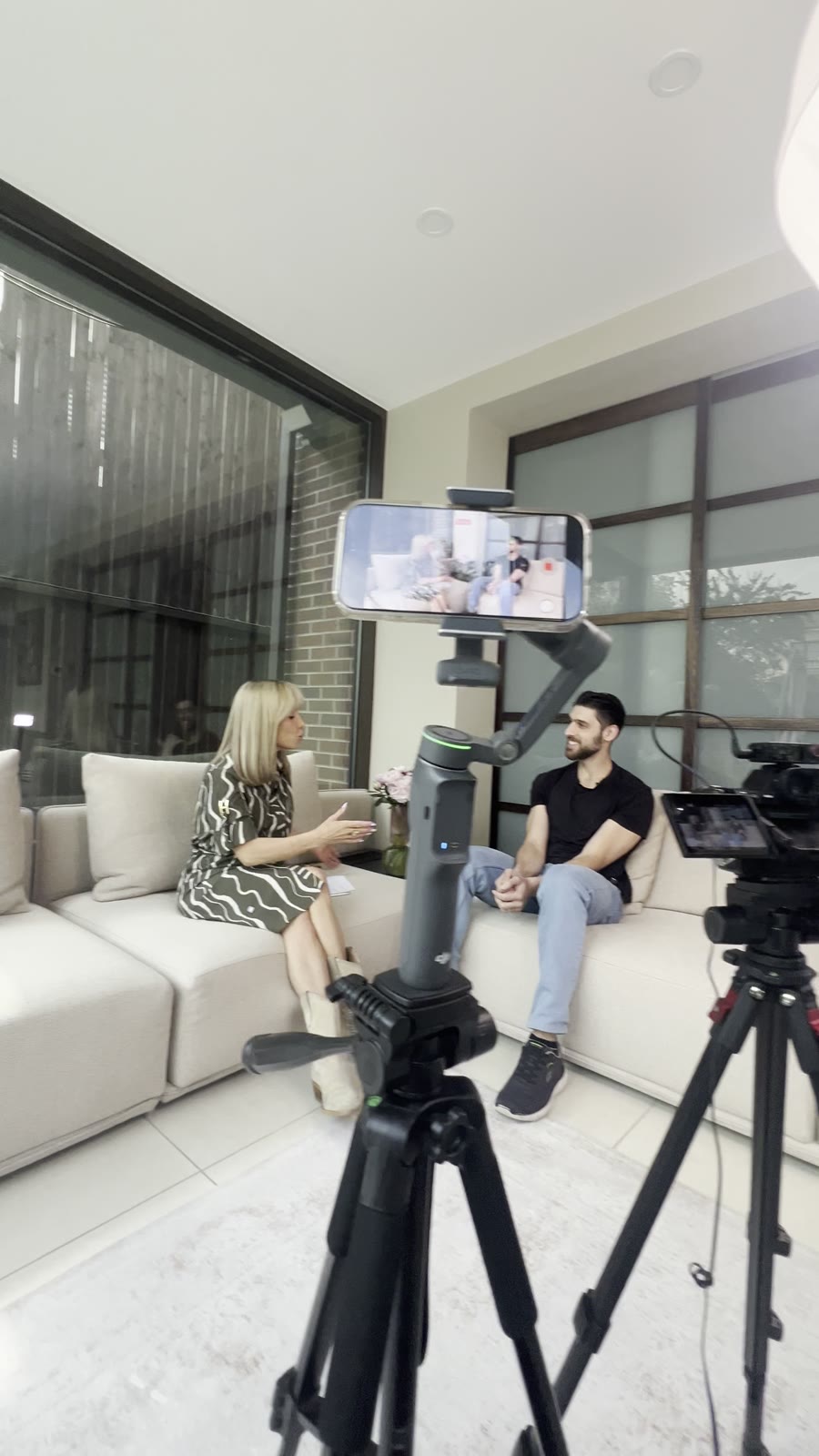
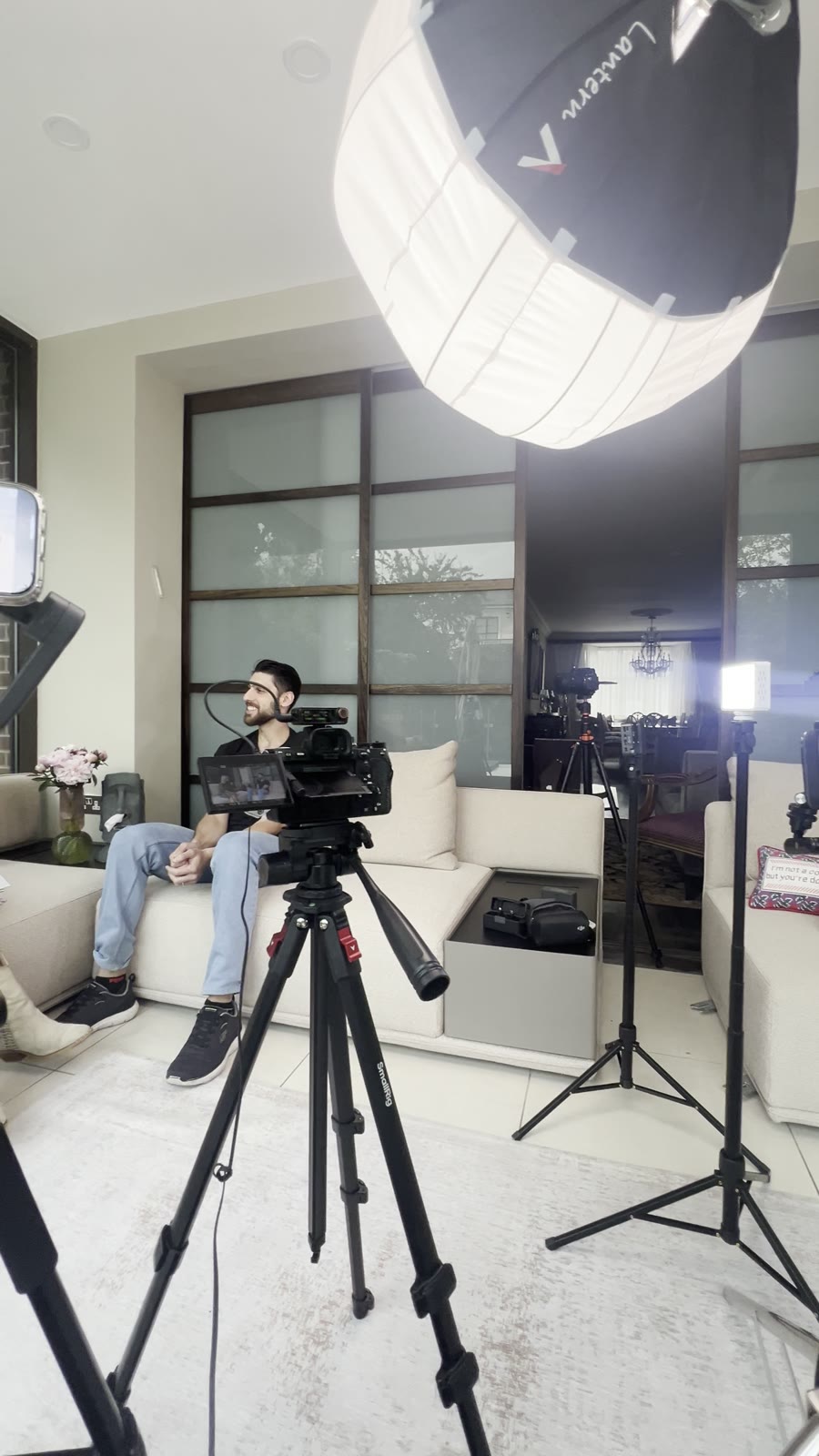
Left: a phone on a gimbal for vertical clips. Right: the guest's camera under the lantern light.
Light. A large lantern softbox gives soft, even light on the faces, with the windows left to glow behind.
Monitors. We watch the cameras on screens, so we can check focus and framing without stopping the conversation.
Kit check. Cameras, tripods, microphones and spare batteries are laid out and tested before we leave for the shoot.
Podcast sound: the part viewers notice first
People will watch a soft picture; they will not sit through bad sound. Each person wore their own small clip-on microphone. Record every mic on its own track, so a laugh or a cough on one never ruins another person's line. In the edit we balanced the voices and fixed any peaks, and we delivered a separate audio master for the podcast feeds.
| Problem | What we do |
|---|---|
| Guests talking over each other | One track per person, so each voice can be lifted or lowered |
| Sudden laughs and loud peaks | Recording levels with headroom, then a peak fix in the edit |
| Room echo in a glass room | Mics close to the mouth, soft furnishings, cushions and a rug in shot |
| Audio apps need their own file | A separate audio master, not just the video's soundtrack |
Editing a video podcast so people keep watching
A multi-camera edit is a rhythm. We switch angles on the gaps between words, not in the middle of them, and cut to the listener when a reaction tells the story better than the speaker. If one camera is moving or refocusing, we stay on another. One episode also had animated graphics added on top, so the finished show was ready to post rather than a raw recording.
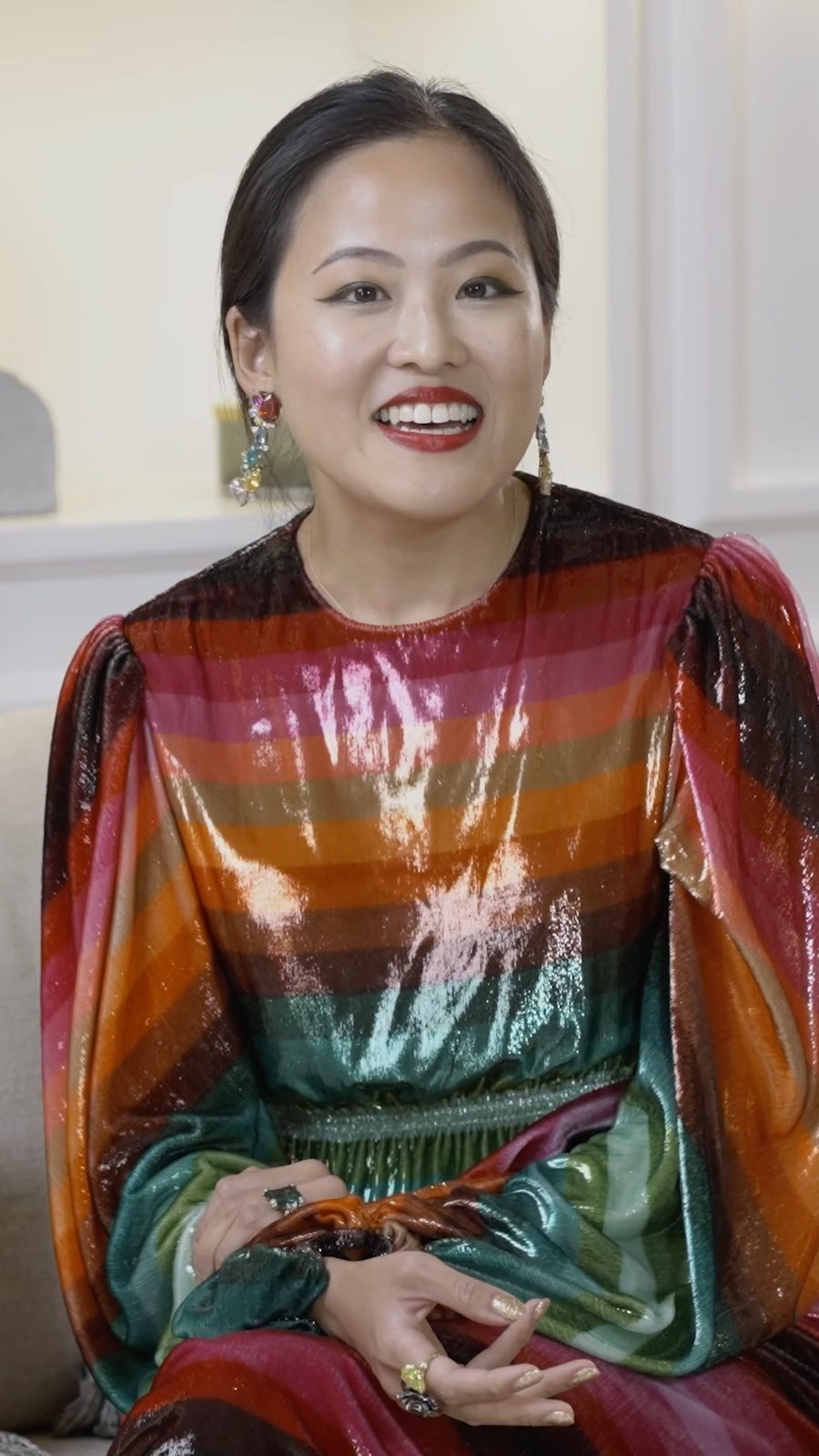
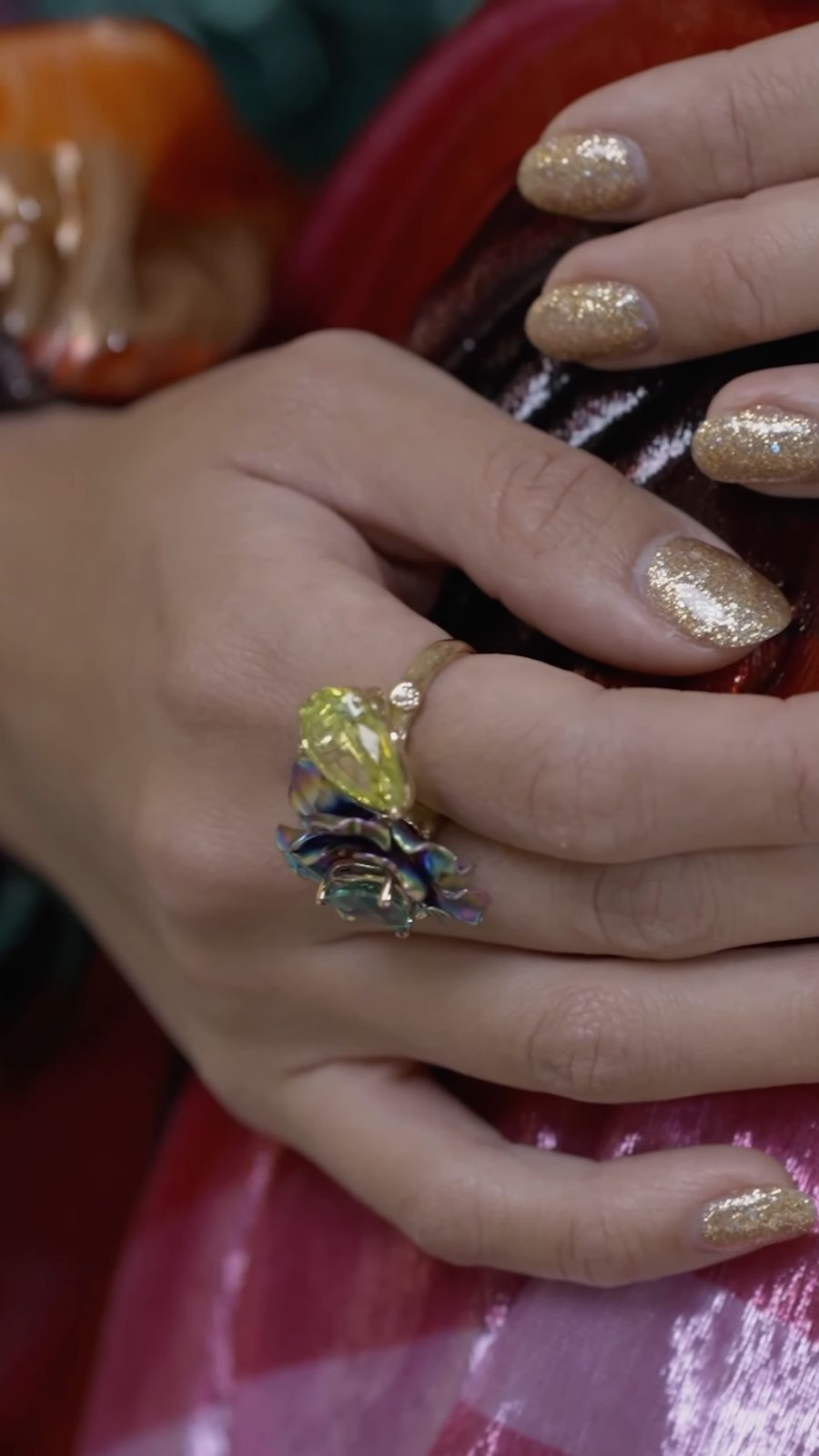
Left: jewellery designer Anabela Chan, talking to camera. Right: a detail shot of her rings and dress, ready to cut away to while she speaks.
For What Was I Gonna Say we delivered four finished episodes as HD video masters with podcast audio, and two alternative cuts of one episode so the client could choose. Short vertical clips for social come from the same footage, which is why the singles are framed with room above the head. Our guide to repurposing one shoot into many formats covers that side.1
Podcast filming in London: what to decide before the shoot
Location. A real room with character beats a blank studio, as long as you can control noise. Check for traffic, building work and air conditioning.
Number of guests. One guest needs three cameras; two guests can share a two-shot, as we did here.
Episodes per day. Batch several episodes in one session and change outfits or seating between them.
Delivery. Agree the files up front: full episodes, an audio master, and how many short clips.
If you are planning an interview-led series rather than a podcast, our LYSSA documentary series and street interview guide show other formats. To start your own, here is how to brief a production company.
Questions
How many cameras do you need for a video podcast?
Three is the practical standard for a host and one guest: a wide shot and a single on each person. With two guests you can frame them together as a two-shot and keep three cameras.
Do you record podcast audio separately from the video?
Yes. Each person has their own microphone on its own track, and we deliver a separate audio master for podcast apps alongside the video.
Can you film a podcast at our home or office in London?
Yes. A real room often looks better than a studio. We check it for noise and light first, then bring the cameras, microphones and lighting to suit it.
Can we get short clips for social media from the podcast?
Yes. We frame the single cameras so vertical clips can be cut from the same footage, and agree how many clips you need before the shoot.
How many episodes can be filmed in one day?
It depends on episode length, but batching several in one session is normal. Plan short breaks between them for outfit changes and a sound check.
Sources
Work with SwainUK
Planning a shoot like this?
Commercial film and photography in London and Dubai: concept, crew, lighting, shoot and edit, from one team.