
London · Guide for brands, photographers and filmmakers
“A studio gives you control. A location gives you a story. Book the one your brief can't live without.”
Studio or location is usually the first big decision on a shoot, and it shapes everything after it: the light, the schedule, the crew, the permissions and how the final pictures feel. This guide compares the two side by side, shows what each one is good at, and gives you a simple way to decide, using real SwainUK work as the examples: a white-studio foundation campaign and a hotel shoot with Kelly Rutherford for Code8 Beauty, Seacra skincare shot both on a set and on the coast, and a studio-built Eid campaign for Charlotte Tilbury.
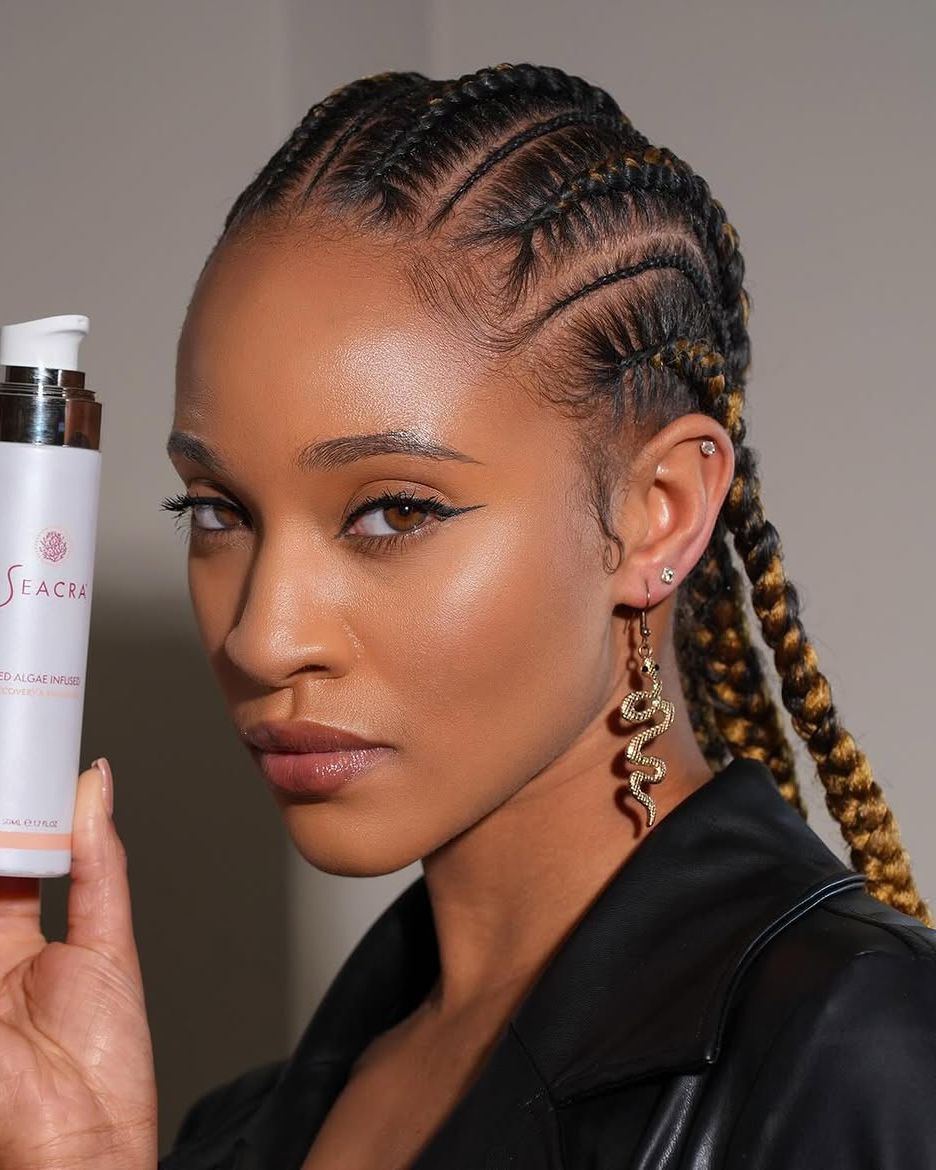
Seacra campaign portrait, photographed by SwainUK
01 · The comparison
Studio vs location at a glance
Neither option is better. They solve different problems. Put your brief next to this table and see which column it keeps landing in.
| Studio | Location | |
|---|---|---|
| Light | Built from nothing, identical from the first frame to the last | Whatever the place gives you, plus what you add to it |
| Weather and time | Irrelevant. You can shoot at night in winter | Decides your schedule. Daylight moves, rain stops play |
| Sound | Quiet and controlled | Traffic, guests, music, planes. Plan interviews carefully |
| Permission | Usually just the booking | The owner's consent, and for public land a filming permit |
| Continuity | Easy: the same background every time | Harder: light and crowds change shot to shot |
| What it says | Product, claim, clarity | Lifestyle, place, a story about a life |
| Best for | Packshots, beauty close-ups, shade ranges, e-commerce, billboards | Brand films, fashion, talent in their world, social content that feels real |
02 · The studio
When control is the brief

Charlotte Tilbury Eid campaign, Dubai: a starry set built inside a white studio, with the team checking frames on the tether.
Choose a studio when the product has to look exactly the same in every frame. The Code8 Day to Night Foundation campaign is the clearest example in this portfolio: a small white studio, models of different ages and skin tones all in white shirts, and one claim per shot. On set there was a large round softbox close to the model, tall black flags either side so the white room didn't flatten the face, and a round table topped with a silver reflector to bounce light back under the chin. The camera monitor in the behind-the-scenes clip reads f/5.6 and 5000K. A fixed white balance is what lets every shade of foundation be recorded the same way, which matters when the whole point of the film is the shade range. The full breakdown is in the Code8 behind the scenes vs final case study.
A studio is also a blank space you can build in. For Charlotte Tilbury's Eid campaign in Dubai, a large flat was painted deep blue, covered in glitter and silver stars and moved into a white studio. Stills were shot under strobes and reviewed on a tethered laptop, with the films made on the same set. That is very hard to do on location: strobes, a tether station and a painted backdrop need power, space and a door you can close. More in the Charlotte Tilbury billboard case study.
Repeatable light
Mark the light positions on the floor. If a second product or model comes in after lunch, it gets the exact same look.
Room to build
Backdrops, sets, overhead rigs and tether stations all need space and power. Studios are made for that.
No clock but yours
No sunset, no rain, no crowds. You can run long product sequences without chasing the light.
Watch the flatness
White walls bounce light everywhere. Flags and negative fill are what put shape back into a face.
03 · The location
When the place is part of the story
Choose a location when the brand needs to be seen in a life, not on a shelf. The Kelly Rutherford x Code8 campaign was shot in a London hotel, including the bar and a suite, with street scenes in the final film. The concept was "beauty, but simple", and a real hotel does that work for free: warm lamps, wood, glass and depth that would take days to build in a studio.
What makes a location shoot fast is adding very little to it. The whole Kelly Rutherford shoot was lit with one Aputure 300D and filmed on a Sony A9 Mark III with a 28-70mm f2 on a DJI RS4 Pro gimbal, and it was completed in three hours. The light only had to do the face; the room did the rest. The bar scene was shot from the side for a more dramatic look, with the practical lamps glowing behind. The story behind the campaign is in the Kelly Rutherford x Code8 post.
Recce at shoot time
Visit at the same hour you'll film. Window light at 9am and at 4pm are two different locations.
Use the practicals
Lamps, candles, shop windows and neon are free set dressing. Add one source for the face and let them glow.
Pack light
A gimbal and a zoom move between rooms without rebalancing. A small kit is quicker to clear when the venue needs a space back.
Always have a plan B
In London, assume it will rain. Know which shots move indoors and where.
Public places add permission. In London's Royal Parks, for example, any filming or photography needs permission from The Royal Parks first, and commercial use includes professional portfolios. Streets, hotels and private houses each have their own route; they're covered in shooting a commercial in London.
Sources: The Royal Parks, commercial filming and photography.
04 · One brand, both
Seacra: studio portraits and the coast


On set: soft warm light, a sofa and a grey wall. The face, the bottle and the box are the whole picture.
The strongest brands rarely pick one. Seacra's content shows both sides. The studio portraits keep everything quiet: a soft, warm key, a plain wall, a sofa for the model to lean on, and the bottle held at the face or beside its box. Those frames are built to be read in a second, so they become product pages, ads and the images people screenshot to find the product later.


On the coast: low sun, blue sky and the bottle on wet sand. Same product, a different job.
The coast shoot does the job a studio can't. Seacra's idea is the sea, and the creator video filmed by the water carries the line "Protected by the sea, not from it". Low sun on skin, the bottle standing in the wet sand, waves behind: the location is the brand story. The catch is that the sun sets the schedule, and the sea doesn't wait for a second take. The whole Seacra content mix, including the street interviews outside the Sondheim Theatre, is in the Seacra social content case study.
05 · Decide
A quick way to choose

Illustration: a white-cyc studio set up before the talent arrives.
Choose a studio if: the product or the shade has to match across every frame; you need a built set, a cyc or a tether station; the shoot runs past daylight; you need clean sound for a long product explanation; the output is a billboard, packshots or e-commerce.
Choose a location if: the brief is a story or a lifestyle; the place already looks like the brand; the talent is more natural in a real space; the content is for social and needs to feel lived in; you have a small crew and a short day.
Do both if: you need product truth and a brand world from one campaign. Shoot the controlled close-ups in the studio first, then move the talent to one location for the story frames. Keep the same hair, make-up and wardrobe so the two sets feel like one campaign.
Shooting stills and video on the same day changes the plan in either setting; see photographer and videographer on the same shoot.
06 · Planning
What to check before you book
| Studio checklist | Location checklist |
|---|---|
| Size of the floor and height of the ceiling for overhead or wide shots | A recce at the same time of day as the shoot |
| What lights, stands and flags are included, and what you bring | Written permission from the owner, and a permit for public land |
| Power for strobes, LEDs and a tether station | Power, or batteries for every light |
| A make-up area with good, even light | Somewhere private to change and do make-up |
| Load-in times and parking for kit | Noise: traffic, music, aircraft, other guests |
| Ventilation if hair spray, steam or smoke are used | Model releases for anyone recognisable in frame (see model release forms) |
| Wall or cyc paint, and whether it can be repainted | An indoor plan B for rain |
Watch
Studio and location films


More guides
Keep reading
FAQ
Common questions
Is a studio or location shoot better for a brand?
It depends on the job. A studio is better when the product, colour or claim has to look identical in every frame, or when you need to build a set. A location is better when the brand needs a story, a lifestyle or a real place around it. Many campaigns use both.
Do you need a permit to shoot on location in London?
Often, yes. Private places need the owner's written permission, and public land has its own rules. The Royal Parks, for example, require permission for any filming or photography, including for professional portfolios. Check the rules for each location before you book the crew.
Can you shoot a commercial on location with one light?
Yes, if the location already has good light and depth. The Kelly Rutherford x Code8 campaign was lit with a single Aputure 300D in a London hotel and finished in three hours. The light does the face; the room does the rest.
What should I check before booking a photo studio?
Floor size and ceiling height, what lighting and grip is included, power for strobes or LEDs, a make-up area, load-in and parking, ventilation, and whether the wall or cyc can be repainted for your colour.
Written by Joshua Swain, who shoots beauty, fashion and brand campaigns in studios and on location in London and Dubai. The hotel shoot is on the Kelly Rutherford x Code8 project page.