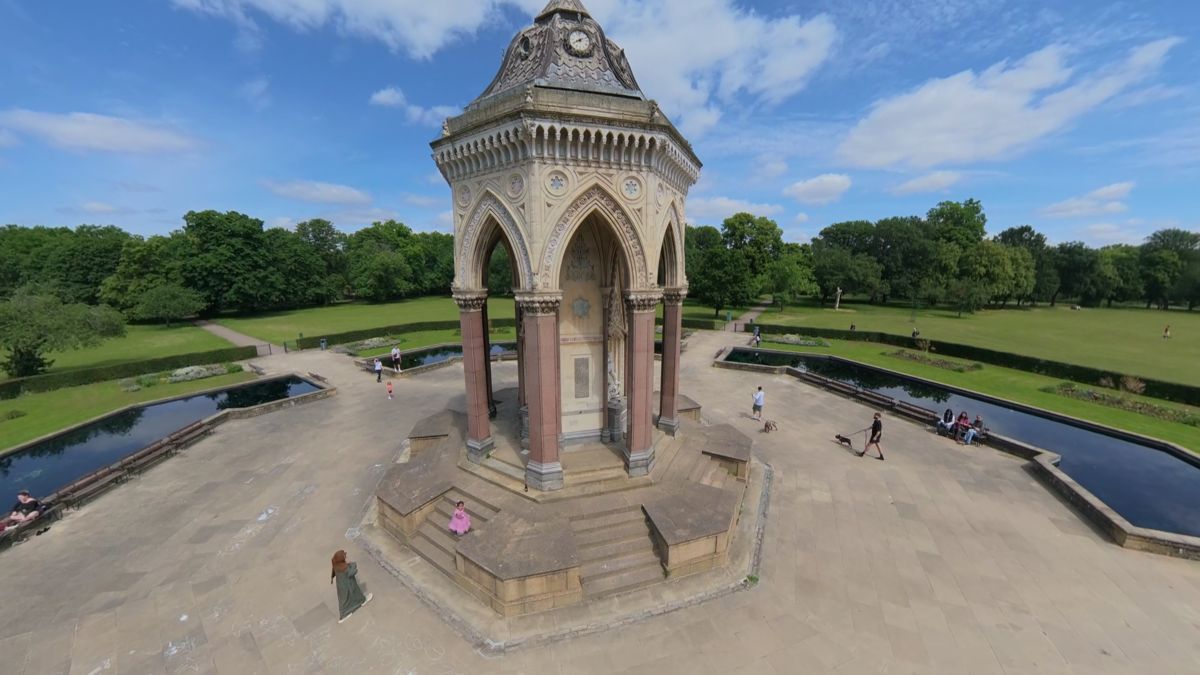
Dubai · FPV guide for agents, developers, hotels and filmmakers
“A walk-through shows rooms. A one-take fly-through shows how the rooms connect.”
An FPV real estate video is a single continuous flight through a property: in at the front door, through the living space, past the kitchen, out to the pool or the view, with no cut. Done well, the viewer understands the layout in under a minute. Done badly, it's a fast, shaky blur that makes a large home feel like a corridor. This guide covers how to plan the route, stage the property, handle glass, doors, ceilings and light, keep it safe, and cut it for listings and social, with frames from Joshua Swain's own FPV flights as worked examples.
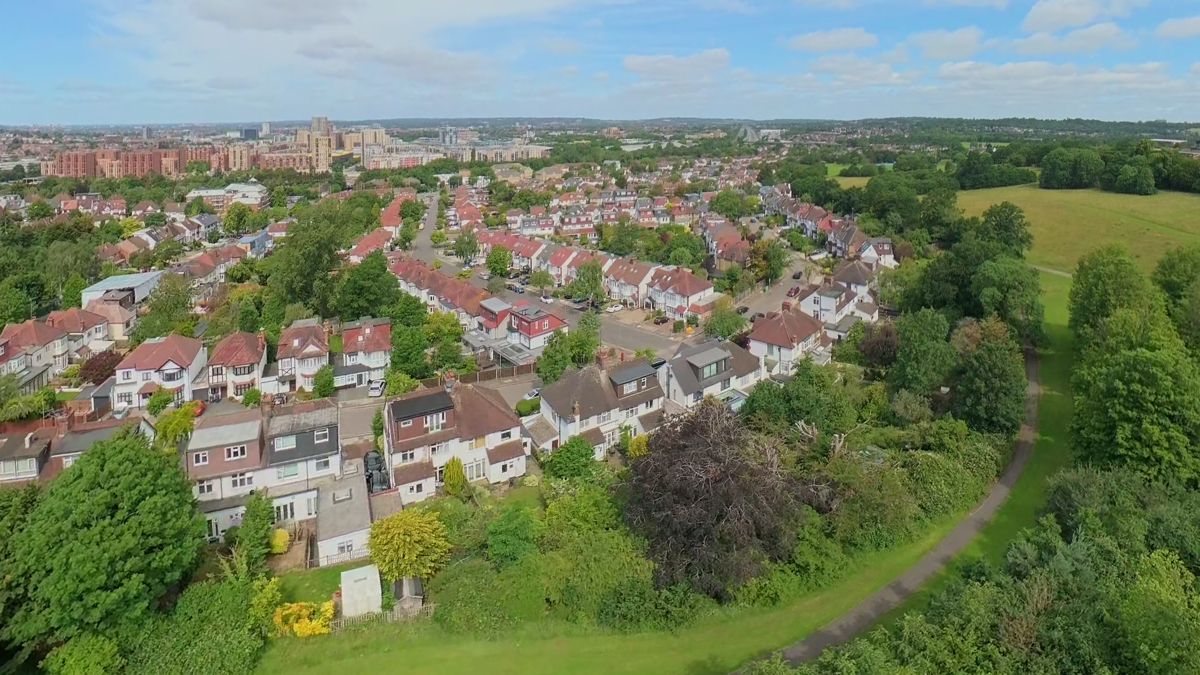
Street, gardens and green space in one frame: the context a property film opens on · Avata 360 flight, June 2026, SwainUK
01 · The choice
When FPV is the right tool for a property film
FPV is one of three ways to move a camera through a property, and it isn't always the best one. The question is what the buyer, guest or investor needs to understand.
| Tool | What it shows best | Use it for |
|---|---|---|
| FPV one-take | Flow and layout: how the entrance leads to the living space, the terrace and the view | Villas, penthouses, show homes, hotel arrivals, the opening of a listing film |
| Gimbal walk-through | Detail at eye level: materials, finishes, the kitchen, the bathroom | The body of most property films, and any room where a drone would feel rushed |
| Camera drone aerial | Location: the plot, the community, the beach, the skyline | Openers and closers, developments, resorts |
Most good property films use two of the three. The Dubai villa films on the SwainUK channel, for example, are one-minute pieces built around a front-door arrival, a long marble gallery hallway, a living room framed past a sculpture and the pool at blue hour. An FPV pass can join those moments into one flight, but the slow, considered frames are still what sell the finish. How those gimbal shots are planned and lit is in luxury property and hotel videography in Dubai.
02 · The route
Plan the flight like a floor plan
A one-take only works if the route makes sense to someone who has never been inside. Draw it on the floor plan before anyone touches a drone.
Start where a visitor starts
The gate, the front door or the lobby. Starting in the middle of the living room loses the sense of arrival.
One direction, no backtracking
Turning round to show a room you've passed confuses the geography. If a room doesn't fit the line, film it on the gimbal.
End on the hero
The view, the pool, the terrace at sunset. Whatever the agent leads with in the listing should be the last thing the flight shows.
Keep it short
Pick the five or six spaces that tell the story. A route that tries to visit every bedroom becomes a tour nobody finishes watching.
Walk the route at the speed the drone will fly it, phone in hand, and time it. Note every doorway, step, chandelier, glass panel and ceiling drop along the way. That walk is the most useful ten minutes of the day.
03 · Staging
Prepare the property for a fly-through
A drone sees everything at once, at speed, so staging matters more than it does for stills. An FPV flight SwainUK made through a Dubai tower shows the problems a property route meets: glass balustrades, a pool, a wall of windows, doors on several sides and coloured light changing from room to room.
Doors: open and wedged, every one on the route. A door that swings shut mid-flight ends the take.
Glass and mirrors: clean them, and check the angle. Mirrors and glazing show the drone and the pilot if the line passes them square on.
Air: ceiling fans off. Strong air-conditioning vents can push a small drone off its line indoors.
Lights: every light on, the same colour temperature throughout where you can, and no flicker from dimmers.
People: either nobody, or one person placed on purpose as scale, at the end of the route.
Clutter: cables, shoes, cleaning kit and personal photos away. Wide FPV lenses see into every corner.
04 · Light
Exposure for interiors with a view
The hardest property shot is a dark interior with a bright window at the end of it, and an FPV flight passes from one to the other in seconds. Some practical rules:
Lock it
Lock exposure and white balance for the brightest important space on the route. Automatic exposure pumping as you pass a window looks cheap.
Fly the dusk window
At blue hour the interior and the sky outside come closer in brightness, and lit pools and façades look their best. It's a short window, so rehearse first.
Watch coloured light
In the Dubai tower flight, rooms change from warm ceiling light to blue, red and green within seconds. That suits an event; for a sale, set the property to one neutral look.
Shoot a flat profile
A log or flat colour profile keeps detail in the windows and the shadows, and gives the grade room to match the gimbal footage.
05 · Outside in
The exterior: take-off, orbit and reveal
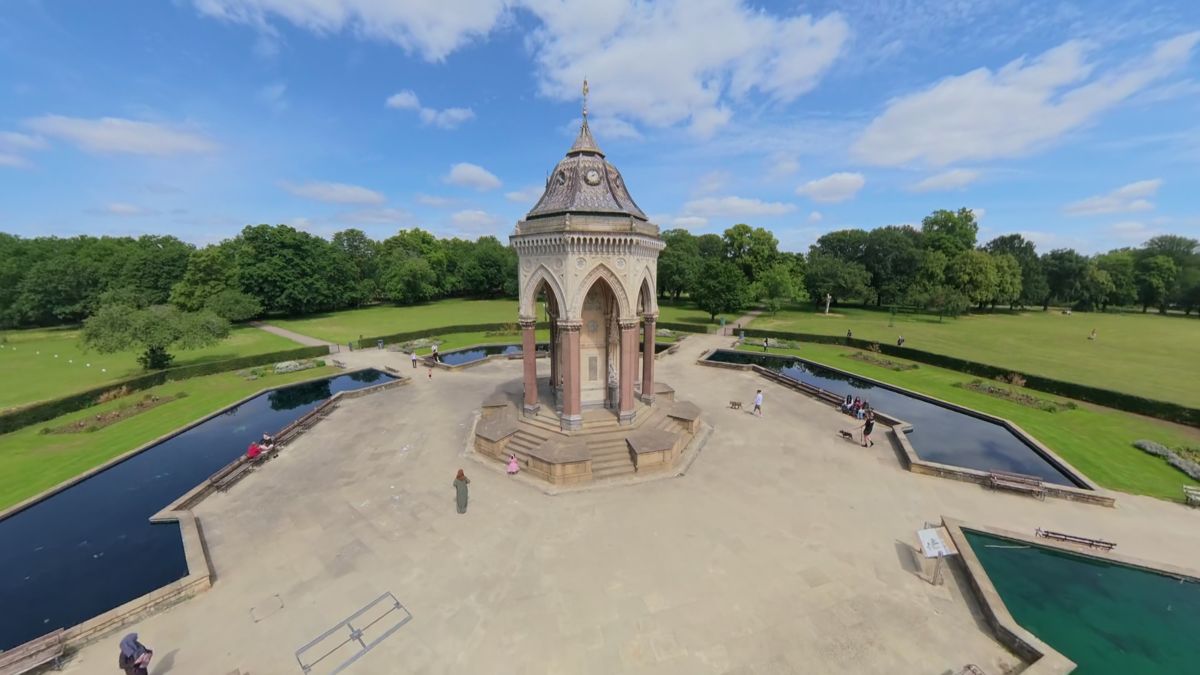
The approach: drop from the roofline and fly towards the building's entrance. Avata 360 one-shot flight, Victoria Park, London · SwainUK
The strongest property one-takes begin outside. The frames here come from a one-shot FPV flight Joshua flew on the Avata 360 around a Victorian fountain in Victoria Park, London. There's no property in it, but the moves are the same ones a villa or hotel opener uses: launch from a clean spot, a close orbit around the roofline to show the architecture, then a descent and approach that leads the eye to the entrance.


Take-off from a landing pad, then a slow orbit around the roof. Same flight, vertical version.
For a Dubai villa, the equivalent is a rise over the boundary wall, a pass along the façade and a line through the open front door. Keep the exterior part slow: the speed belongs inside, where walls give it scale. For the wider choice between FPV and a camera drone for aerials, see drone videographer in Dubai.
06 · Safety
Speed, ceilings, doorways and approvals
Inside a home, the drone is flying centimetres from glass, art and stone. Speed reads well on screen, but the safe speed is the one at which the pilot can stop before the next obstacle.
| Risk | What to do |
|---|---|
| Low ceilings and chandeliers | Fly the line at chest height, not head height, and route round light fittings rather than under them |
| Doorways | Slow down before each one and enter straight. A diagonal entry is how propellers meet door frames |
| Glass balustrades and windows | Mark them on the plan. Indoor sensors and the pilot's eye both struggle with clean glass |
| Staircases and voids | Air moves up stairwells. Practise the climb before the take |
| People | An empty property for the flight, a spotter at every blind corner, and a landing point at each stage |
Use a ducted, guarded FPV drone indoors, never a fast open-propeller freestyle build. The safety routine that applies at weddings and events applies here too, including the lesson from a near miss in Verona: see FPV for weddings and events. Commercial flying in Dubai also needs its own approvals, plus the owner's and often the building management's permission in writing. The current UK and Dubai position is kept up to date in drone rules for paid shoots, and the right drone for tight interiors is compared in Avata 2 vs Avata 360 vs Neo.
07 · The edit
Sound, cut and the vertical version


The vertical cut: frame the hero feature in the centre of the screen, with room above and below.
Music sets the speed
Choose the track before the flight. A calm piece wants a slower route; a fast one forgives quicker moves. Cut the flight to the music, not the other way round.
Sound design sells it
A door, water in the pool, a gust on the terrace. FPV audio is unusable, so build a light sound bed in the edit.
Speed ramps, sparingly
Slow down on the hero moments and keep the rest real. A whole film of ramps feels like a showreel, not a home.
Plan 9:16 at the start
Listings live on YouTube and the agent's site in 16:9, but most viewing happens on phones. Fly it once for each, or frame wide enough to reframe. The method is in shooting vertical-first.
Deliverables to agree: the full one-take in 16:9; a vertical cut for Reels, TikTok and Stories; a short opener for the main listing film; silent loops for the website and portals; and whether the raw flights are included.
For how FPV moves translate to brand and fashion work, see FPV for brands and fashion.
Watch
Property films and FPV flights
 Dubai luxury property film: Beig house
 Dubai luxury property video
 FPV inside a Dubai tower
 Avata 360 or the Avata 2
 Avata 2 vs Avata 360
 Avata 2 dove into the pond
 Almost crashed at a wedding in Verona
 Avata 2 in Verona
More guides
Keep reading
FAQ
Common questions
What is an FPV real estate video?
A property film shot as one continuous flight with a small FPV drone, usually from the entrance through the main living spaces to the view or the pool. It shows how the spaces connect in a way separate gimbal shots can't.
Is FPV safe to fly inside a house?
With a ducted, guarded drone, an empty property, a walked and rehearsed route, open and wedged doors, a spotter at blind corners and a pilot who flies slowly enough to stop before every obstacle, yes. Fast open-propeller drones don't belong indoors.
Do I need permission to fly a drone for a property video in Dubai?
Commercial drone flying in Dubai needs its own approvals on top of the owner's consent, and towers usually need building management permission too. Check the current rules before you promise FPV to a client.
How long should a property fly-through be?
Short. Pick the five or six spaces that tell the story and end on the hero feature. A tight one-take often works best as the opening of a longer film, with gimbal shots for the detail.
Written by Joshua Swain, who flies FPV and films property, events and brands in Dubai and London. More flights are in the FPV and drone portfolio. This is general information, not legal or aviation advice.