
London · FPV and drone comparison for filmmakers
“Three small DJI drones, three different jobs. Choose by the shot, not the spec sheet.”
The Avata 2, the Avata 360 and the Neo (now the Neo 2) all fit in a small bag and all fly with goggles, so they get compared as if they were the same thing. They aren't. We have flown all of them, and the clearest way to choose is by the shot you need to deliver: a deliberate FPV line, a 360 capture you reframe later, or a light follow-me drone that launches from your hand.
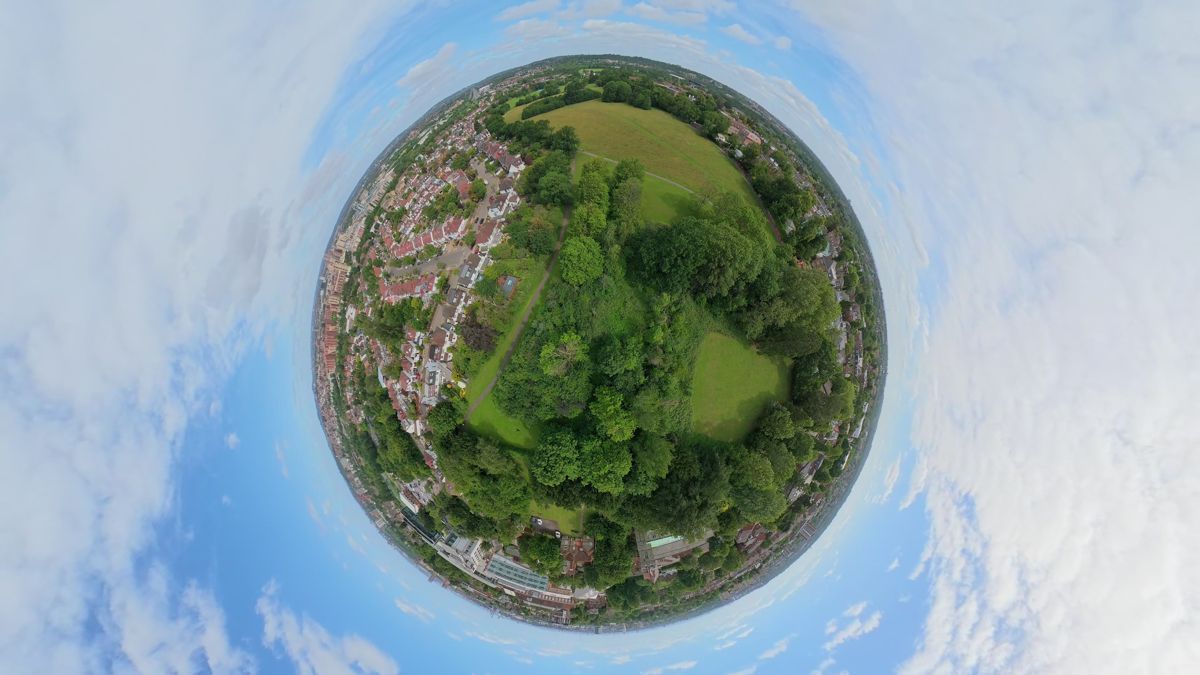
A "tiny planet" reframed from our own Avata 360 flight, June 2026 · SwainUK
01 · The numbers
Avata 2 vs Avata 360 vs Neo vs Neo 2: the specs that matter
These are DJI's own figures. Flight times are measured in ideal conditions, so expect less on a real shoot.
| Avata 2 | Avata 360 | Neo | Neo 2 | |
|---|---|---|---|---|
| Weight | About 377g | About 455g | About 135g | 151g |
| Camera | 1/1.3-inch, 155° FOV | Two 1/1.1-inch square sensors, 360° | 1/2-inch | 1/2-inch |
| Top video | 4K at 60fps | 8K 360; 4K at 60fps in single-lens mode | 4K at 30fps | 4K at up to 100fps |
| Obstacle sensing | None (positioning only) | Omnidirectional vision, forward LiDAR | None (downward positioning) | Omnidirectional vision, forward LiDAR |
| Flight time | About 23 min | About 23 min | About 18 min | About 19 min |
| Ways to fly | Goggles with RC Motion 3 or FPV Remote Controller 3 | Goggles 3/N3, or a standard DJI remote | Palm, phone app, remote, or goggles | Palm, app, RC-N3 remote, or Goggles N3 |
Sources: DJI, Avata 2 specs · DJI, Avata 360 specs · DJI, Neo specs · DJI, Neo 2 specs · The Drone Girl, Avata 360 launch · Heliguy, Neo 2 review.
02 · Avata 2
Avata 2: when the shot is a line you fly on purpose
The Avata 2 is a pilot's drone. The camera points where you fly, so every shot is a decision you make in the moment: the dive off a ledge, the low pass past a model, the one-take fly-through. That is exactly why it's harder. There's no obstacle avoidance, so the quality of the shot is the quality of your flying.
It's the drone in most of our FPV work, from a fashion test shoot on the Kent coast to a wedding in Verona, and the title of one of our Shorts sums up our view: "Avata 2 is better than Avata 360". For deliberate, story-led shots we still reach for it first. If you're starting out, the Avata 2 beginner guide has a practice plan.
03 · Avata 360
Avata 360: capture everything, choose the frame later

A flat, wide frame pulled from our Avata 360 footage in the edit.
The Avata 360, launched in March 2026, records the whole sphere around the drone, and you pick the angle in the edit. That changes the job: you fly a safe, simple path and find the shot afterwards, including frames no single camera could have pointed at, like the tiny planet above. DJI also gave it omnidirectional sensing, which the Avata 2 doesn't have.
Where it wins
Fly-throughs where you can't predict the best angle, reveals that turn around the subject, and creative effects in the edit.
What it costs you
More weight, bigger files and more time in post. A flat frame cut from the sphere uses only part of the 8K, so test that the reframed shot holds up at your delivery size.
Single-lens mode
It can also record a normal 4K frame at up to 60fps, so it isn't only a 360 camera.
04 · Neo and Neo 2
Neo and Neo 2: the drone you actually take everywhere


The Avata 2 vs Neo test, January 2025: the Neo in hand, goggles on.
The Neo is built for creators: it launches from your palm, follows you and flies without a remote at all. It can also fly FPV with goggles, which is how the "Avata 2 vs Neo" test was flown. The Neo 2 added the thing the original lacked, omnidirectional obstacle sensing, plus a two-axis gimbal and higher frame rates.

Sunset over north London, filmed on our Neo 2 in July 2026.
For a filmmaker, the Neo family is a B-camera, not a replacement for an FPV drone: behind-the-scenes, creator-style follow shots, a quick establishing aerial when the big drone stays in the bag. The smaller 1/2-inch sensor shows in low light and in high-contrast scenes.
05 · Choosing
Best FPV drone for filmmakers: choose by the job
| The job | Our pick | Why |
|---|---|---|
| Fashion or brand film with planned FPV moves | Avata 2 | Precise lines, low passes, a look you control in camera |
| Venue fly-through, one take, angles unknown | Avata 360 | Reframe later, omnidirectional sensing |
| Behind-the-scenes, creator content, travel | Neo 2 | Palm launch, follow modes, light enough to carry always |
| Wide landscape aerials, zoom, night | None of these | Use a camera drone. See Mavic 4 Pro for filmmakers |
Whichever you choose, all four weigh more than 100g and carry a camera, so in the UK each needs a Flyer ID and an Operator ID, and paid work near people has its own distance rules. The drone rules guide covers it. More side-by-side tests are on Joshua's FPV channel, Swainuk FPV.
Watch
The comparisons on the channel


 Avata 360 or the Avata 2?
 DJI Neo 2 free flight story, part 1
 DJI Neo 2 free flight story, part 2
 DJI Neo 2 free flight story, part 3
More guides
Keep reading
FAQ
Common questions
Is the Avata 2 better than the Avata 360?
For deliberate FPV shots you plan and fly yourself, we prefer the Avata 2. The Avata 360 is better when you can't predict the best angle and want to choose it in the edit, and it adds omnidirectional obstacle sensing.
Avata 2 vs Neo: which should I buy?
Buy the Avata 2 if you want to learn FPV and fly commercial shots. Buy a Neo or Neo 2 if you want a light follow-me drone for creator content and behind-the-scenes.
Does the DJI Neo 2 have obstacle avoidance?
Yes. DJI lists an omnidirectional monocular vision system with forward LiDAR and downward infrared sensing. The original Neo only has downward positioning.
What is the best FPV drone for filmmakers?
For most paid work, a cinewhoop-style drone like the Avata 2 is the most versatile. Add a 360 drone for complex fly-throughs and a camera drone for wide aerials and zoom.
Written by Joshua Swain, who flies FPV and camera drones for commercial work in London. More flights are in the FPV and drone portfolio.