London · For photographers, filmmakers and brands
“Anyone can generate a face now. That's exactly why a real one is worth more.”
AI images are fast and cheap, and audiences can increasingly tell. In Getty Images' research, nearly 90% of people want to know when an image was made with AI, and 98% say authentic images and video matter for trust. This guide is for photographers pitching against AI, and for brands deciding where AI helps and where only a real shoot will do.
Real model, real skin · Waterproof
01 · The numbers
What audiences actually say
The gap between those two numbers is the opportunity. People don't reject AI outright; they reject being fooled by it. A brand that shows a real person, a real product and a real result has something a generated image can't offer: proof.
Source: Getty Images VisualGPS report.
02 · Where each fits
When AI helps, and when only a real shoot will do
| Job | AI is fine | Shoot it for real |
|---|---|---|
| Concept and moodboards | Yes, to explore a look quickly | |
| Backgrounds and set ideas | Yes, for planning and mock-ups | |
| Illustrations of objects and places | Yes, if labelled | |
| Faces, skin, hair | Yes. This is where trust is won or lost | |
| Beauty and skincare results | Yes. Claims must reflect the real product | |
| Product on a person | Yes. Fit, scale and texture have to be true | |
| Testimonials and people's stories | Always real |
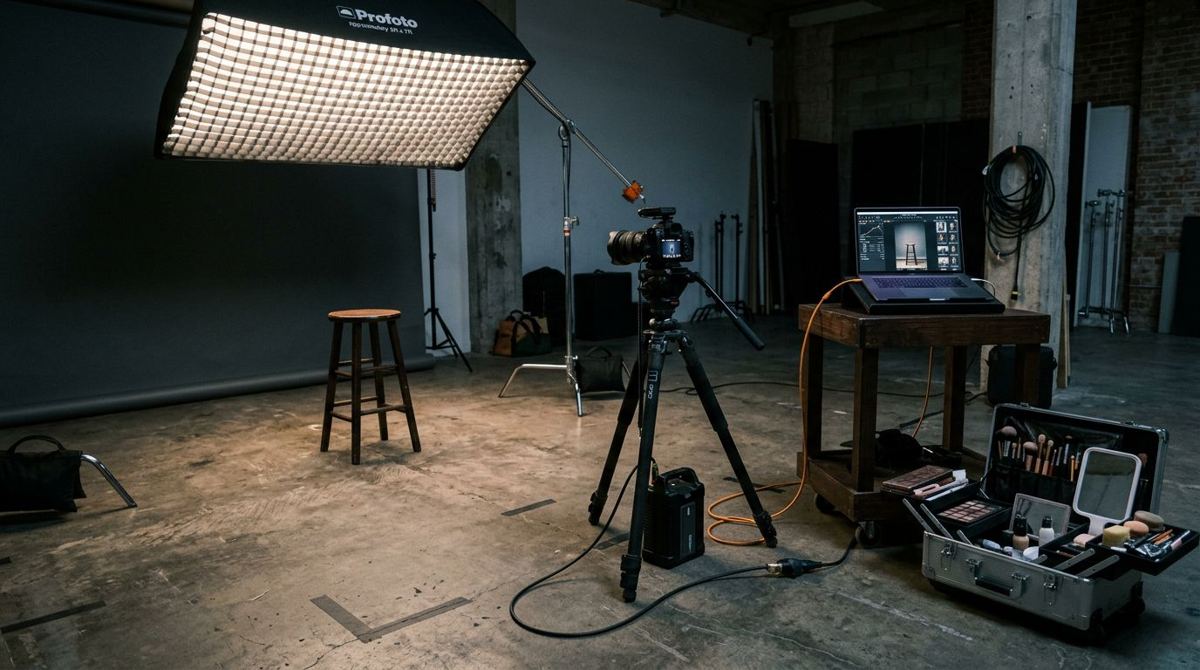
A useful rule: AI for ideas and objects, real people for anything a customer will believe. On this blog, for example, the illustrations of kit and sets are AI and labelled as such; every face is a real person from a real shoot.
03 · Beauty rules
Filters and the UK advertising rules
In the UK, the Advertising Standards Authority has told brands and influencers not to apply filters to images promoting beauty products if the filter is likely to exaggerate the product's effect. That applies to AI retouching too. Cleaning a stray hair is fine; changing what the product appears to do is not.
Keep the texture
Retouch blemishes and stray hairs, but keep pores and skin texture. If the product is a foundation, the finish on screen must be the finish in real life.
Keep the before and after honest
Same light, same angle, same camera settings, and no filter on either frame.
Source: Campaign Asia, ASA guidance on beauty filters.
04 · For photographers
How to sell real work in the AI era
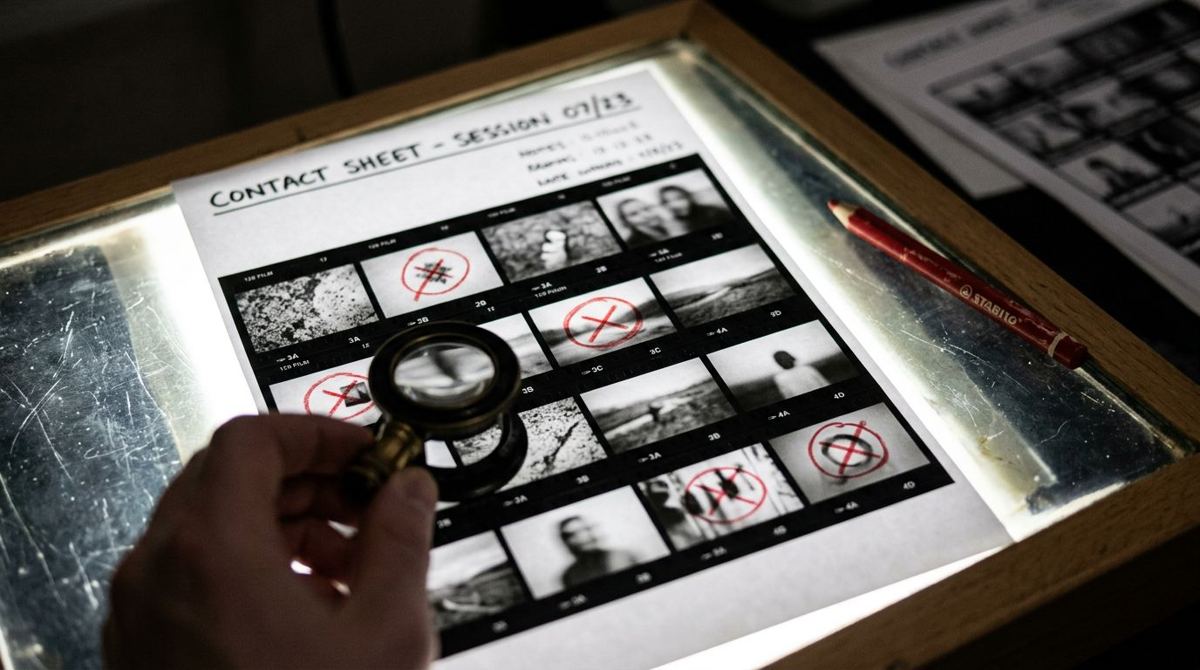
Illustration (AI): proof lives in the process.
Show the process
Behind-the-scenes clips, the make-up chair, the lighting set-up. A BTS film is the simplest proof that a person was really there.
Credit everyone
Model, make-up, hair, stylist, agency. A full credit list is something no generated image has.
Keep the RAW files
Original camera files with their metadata show where and when an image was made. Keep them, and offer them if a client needs proof.
Use AI where it saves time
Moodboards, concept frames, planning. Then shoot the real thing. Clients care about the result, and real people are the result.
05 · Worked example
Waterproof: a shoot built around "real"
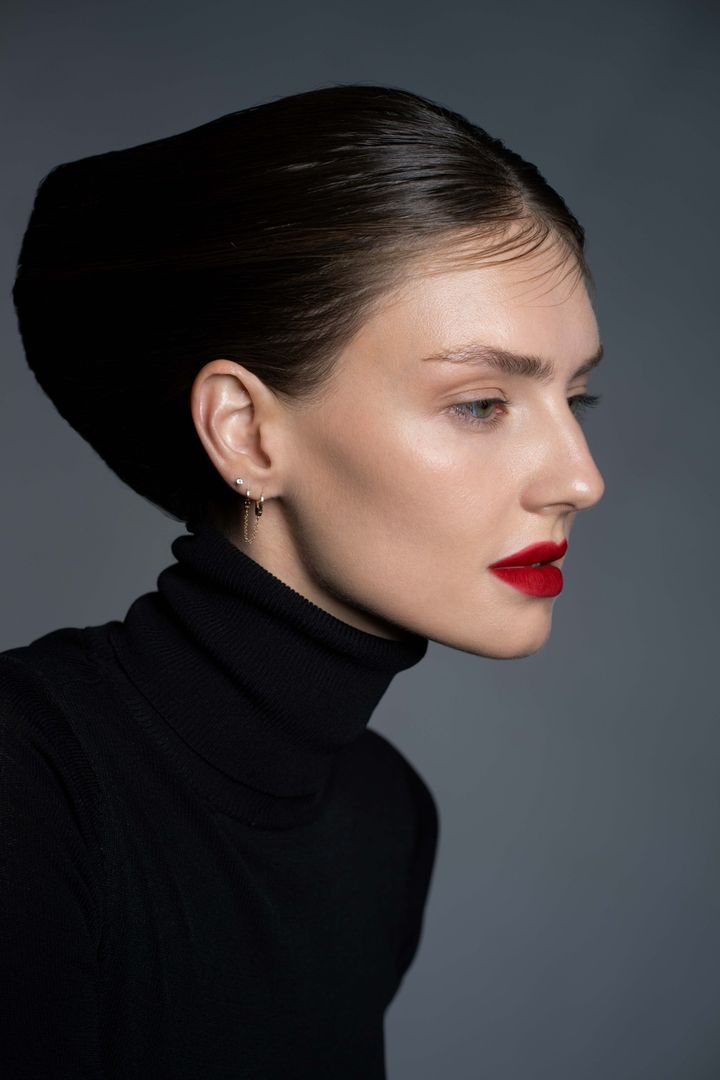
The Waterproof editorial was planned around one line: anyone can generate a red lip, nobody can generate the person wearing it.
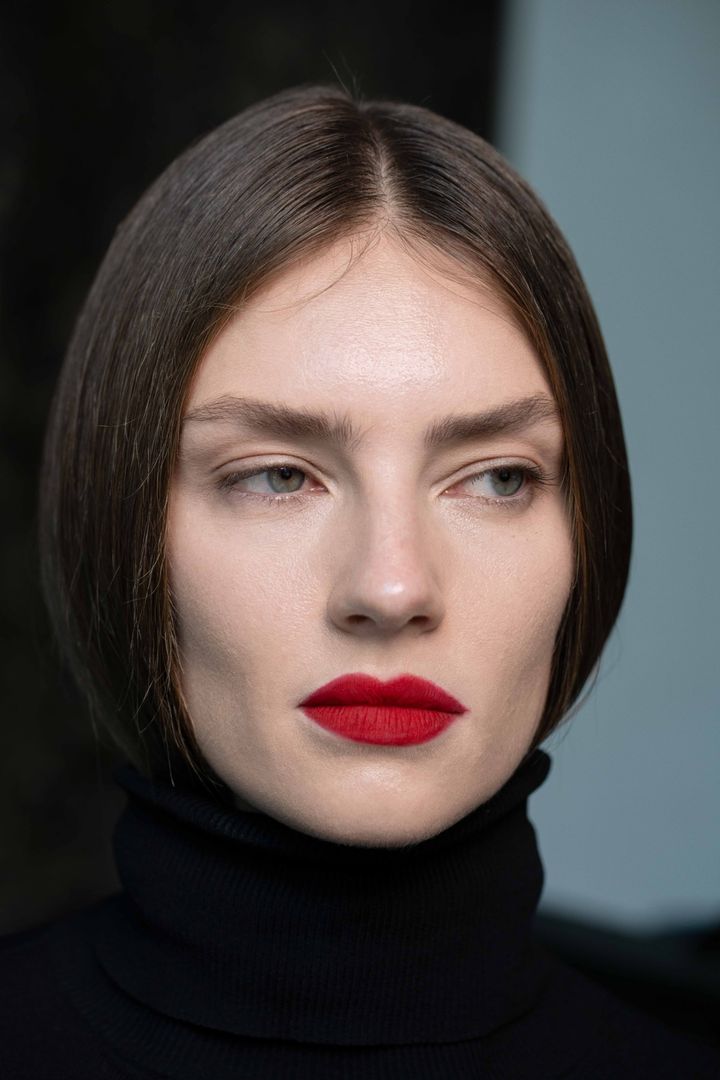
A real model, real water on the skin, a lipstick that genuinely didn't move, and a behind-the-scenes film where the model tells the story herself. The retouching cleaned the frame but kept every pore. That combination is the whole pitch.
Watch: Joshua Swain on this question in LYSSA Episode 2: "If a machine made it, who bled for it?"
06 · Disclosure
If you use AI, say so
Label it. "AI illustration" in the caption or the image description.
Keep people real. Don't generate faces for testimonials, reviews or results.
Tell the client. Agree in writing which parts of a job are AI-made.
Keep the files. Save the prompts and the originals with the job.
FAQ
Common questions
Do consumers trust AI-generated ads?
They want to know when AI is used. In Getty Images' research nearly 90% want disclosure, and 98% say authentic images and video are pivotal to trust.
Can I use AI images in beauty advertising in the UK?
Not in a way that exaggerates what the product does. The ASA has told brands and influencers not to use filters that exaggerate a beauty product's effect, and the same thinking applies to AI retouching.
When is AI imagery a good choice?
For moodboards, concept frames, backgrounds and illustrations of objects or places, clearly labelled. Faces, skin and product results should be real.
How can photographers prove their work is real?
Behind-the-scenes footage, full team credits, original RAW files with metadata, and a consistent body of work.
Written by Joshua Swain, who shoots beauty and commercial work in London and Dubai. See the portfolio.